
Why Georgia Properties Lose Ground After Construction — What Erosion Control Actually Requires
New construction is the highest-risk moment for erosion on a Georgia property. The topsoil that took decades to build up is disturbed and compacted. Vegetation that was holding the soil in place is gone. And Georgia's rainfall — averaging 50 inches per year, often falling in intense summer storm events — starts working on the exposed ground immediately. Without active erosion control measures installed before the rain comes, Georgia properties lose meaningful amounts of topsoil within the first two years after construction, and that loss compounds every subsequent season.
Erosion control isn't a landscaping preference — it's a functional necessity on any disturbed Georgia property. The consequences of inadequate control are predictable: topsoil loss that makes future landscaping increasingly difficult, sediment loading that clogs drainage structures, slope instability that undermines hardscaping foundations, and eventually structural risk to retaining walls and the slopes they're holding. The solution is straightforward when addressed early. It becomes significantly more expensive and complex after the problem has progressed.
What Erosion RequiresWhy Georgia's Clay Soil Accelerates the Problem
Georgia's Piedmont region — which includes Gwinnett, Forsyth, Hall, and surrounding counties — is characterized by red clay subsoil that becomes nearly impermeable when compacted. Water hitting compacted clay doesn't absorb — it sheets. That sheeting becomes runoff that moves across the surface at velocity, picking up loose soil particles as it goes. On a newly graded slope, even a moderate rain event can transport several inches of topsoil downhill in a single storm. Over a season, that movement reshapes the grade in ways that undermine planted beds, shift paver bases, and deposit sediment in drainage structures that weren't designed to receive it.
The additional challenge specific to construction-disturbed sites: the topsoil removed during grading is rarely replaced at the correct depth. Many builders spread a thin layer of topsoil over the compacted subgrade and call the grading complete. Three inches of topsoil over compacted clay does not support the root establishment needed to anchor the surface against Georgia's rainfall. Sod installed in those conditions establishes slowly and incompletely, leaving gaps that become runoff channels within the first season.
"Georgia's clay doesn't hold soil after construction — it sheds it. Every storm on an unprotected slope is a deadline."
What Erosion Control Actually Requires — Not What It Usually Gets
Effective erosion control on a Georgia property requires a layered approach that addresses the problem at multiple scales simultaneously. At the immediate surface: erosion control blankets or hydromulch applied as soon as grading is complete, before seeding — not after. These materials stabilize the surface during the germination window when nothing else is holding the soil. At the drainage path level: silt fencing and sediment traps at the downslope boundary to capture soil before it leaves the property or enters drainage infrastructure. At the root level: proper soil depth restoration before seeding or sod installation so vegetation can establish with enough root mass to provide meaningful structural hold.
What erosion control usually gets instead: a straw bale at the bottom of the slope, silt fence installed along the property line as a regulatory checkbox, and sod laid directly on compacted subgrade. These measures satisfy inspection requirements without solving the erosion problem — and homeowners discover the difference during the first significant storm event after completion. The straw bales move. The silt fence fills up and overtops. The sod peels from the slope it was never anchored to.
- Erosion control blankets applied immediately after grading — before seeding, not after
- Topsoil depth restoration to minimum 6 inches before any planting or sod installation
- Sediment traps and proper silt fence placement at drainage outlets — not property lines
- Slope stabilization plantings with deep-rooting species for long-term hold on grades above 15%
- Retaining structures for slopes where surface vegetation alone cannot provide adequate hold
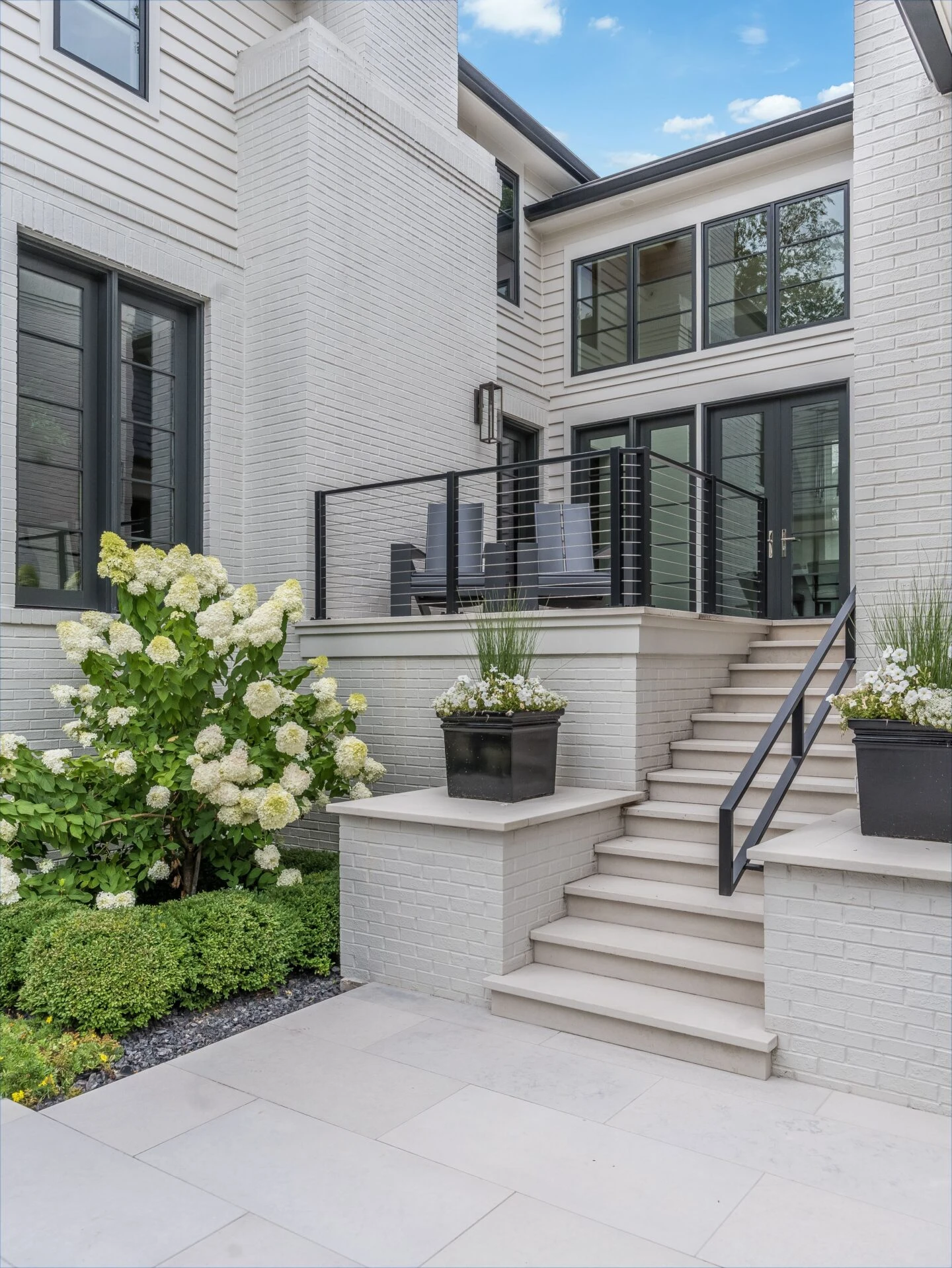
Timberstone addresses erosion as the first priority on disturbed Georgia properties — because the window between grading and the first storm is short.
When Erosion Has Already Started — What the Repair Requires
On properties where erosion has already progressed — visible rilling, exposed tree roots, sediment accumulation at the base of slopes, or undermined paver or wall edges — the repair scope is significantly larger than prevention would have been. Active erosion repair on Georgia properties typically requires re-establishing grade on affected slopes, restoring the soil profile, implementing subsurface drainage where water is concentrating, and then re-establishing vegetation with appropriate stabilization measures. On slopes with significant grade change, this often includes engineered retaining structures to hold the corrected grade while vegetation re-establishes.
Timberstone Landscape is based in Grayson, Georgia, and we assess erosion conditions across the Northeast Atlanta region as part of our site analysis on every project. We serve Gwinnett, Forsyth, Hall, Jackson, Fulton, and surrounding counties. Whether you're at the pre-construction planning stage or dealing with active erosion on an existing property, the right conversation starts with a site visit. See our landscaping services or our hardscaping services to understand how we address both the surface and structural requirements.
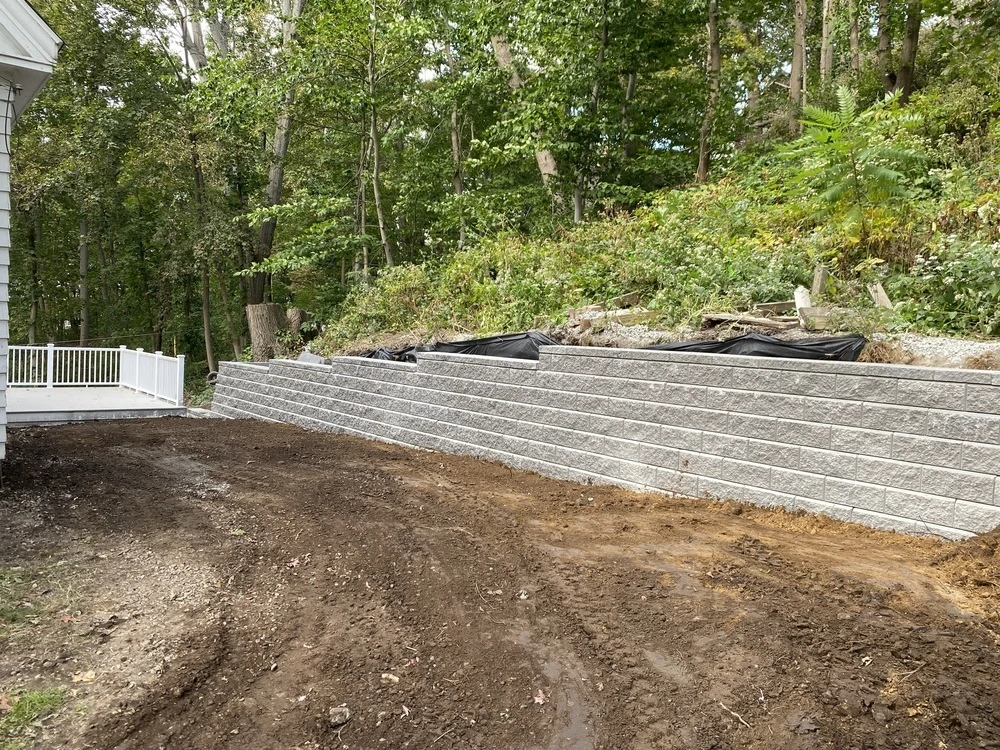
Timberstone stops erosion before it compounds — with the soil preparation, stabilization, and drainage measures that Georgia's rainfall actually demands.
Erosion Stopped — Before It Gets Worse
Free site evaluations. We assess what's actually causing soil loss and what's needed to stop it — before the problem compounds.
Request a Free ConsultationTimberstone Landscape is based in Grayson, Georgia and serves the greater Northeast Atlanta region within 40 miles: