
What Flowery Branch GA Hardscaping Projects Actually Require to Last
Every hardscaping installation looks good on the day it's completed. The distinction between the work that holds up — that still looks as intended in year eight, year twelve, year fifteen — and the work that starts showing problems within two to three years comes down to a handful of non-negotiable preparation steps that happen before the first paver is ever set. Flowery Branch homeowners who understand these requirements are the ones who get the project done once and never call anyone back.
Flowery Branch sits in Hall County along Lake Lanier's southern shore, and the soil conditions in this area present a specific set of considerations. The terrain includes both the red clay common throughout Northeast Georgia and pockets of high-organic fill soils near older developments that compress unpredictably under load. Neither is a disqualifying condition — but both require that the base preparation respond to what's actually in the ground, not what a standard spec sheet assumes.
The Four RequirementsBase Preparation — The Phase That Determines Every Other Outcome
The base is where hardscaping projects succeed or fail, and it's entirely invisible once the project is complete — which is exactly why it's where quality shortcuts most commonly occur. A proper base for a residential paver patio starts with excavation to the appropriate depth: six to eight inches for patios and walkways, eight to twelve inches for driveways. The exposed subgrade is then evaluated — if soft spots or organic material are present, they must be addressed with additional excavation and fill before any aggregate goes in.
The aggregate base itself must be installed in lifts — three to four inches at a time — with mechanical compaction applied to each lift before the next goes in. This compaction-in-layers approach is what creates a uniformly dense base rather than a loosely consolidated one. Skip the compaction between lifts, and you have aggregate that feels solid on the surface but settles unevenly over time as the lower material consolidates under load. The result is the differential settlement — one corner of the patio lower than the other, individual pavers rocking — that plagues under-prepared installations.
"The compaction is the work you can't see and can't undo later. When it's right, the patio stays level for twenty years. When it's wrong, you know by year two — and there's no fix short of starting over."
Drainage, Compaction, and Joint Sand — The Three Details That Finish the System
Drainage is the second non-negotiable. A paver installation without positive slope and a designed drainage path will hold water in joints and along the base perimeter, which accelerates base erosion, promotes weed and moss growth, and in Flowery Branch's climate — with significant summer rainfall accumulation — can saturate the base material enough to cause heaving during cold snaps. The minimum slope is a quarter inch per foot, directed away from any structure. On sites where slope direction conflicts with the desired layout, drainage swales or collection channels must be integrated into the design.
Polymeric joint sand is the third requirement that separates installations that hold together from those that require annual maintenance. Standard sand joints wash out with rain, allow weed germination, and permit insect penetration. Polymeric sand, activated with water after installation, hardens to a semi-rigid matrix that resists all three failure modes. It adds modest cost to the project and eliminates the ongoing labor of re-sanding and weeding that becomes a consistent annual task with untreated joints.
- Subgrade evaluation before any base material goes in — soft spots and organic material must be removed and replaced
- Compaction in 3–4 inch lifts — every lift separately compacted to minimum 95% proctor density
- Positive drainage slope of 1/4-inch per foot minimum — verify before bedding sand is screeded
- 1-inch bedding sand layer screeded flat before paver placement — not tamped or disturbed after screeding
- Polymeric joint sand swept and activated with water — this step is not optional on any lasting installation
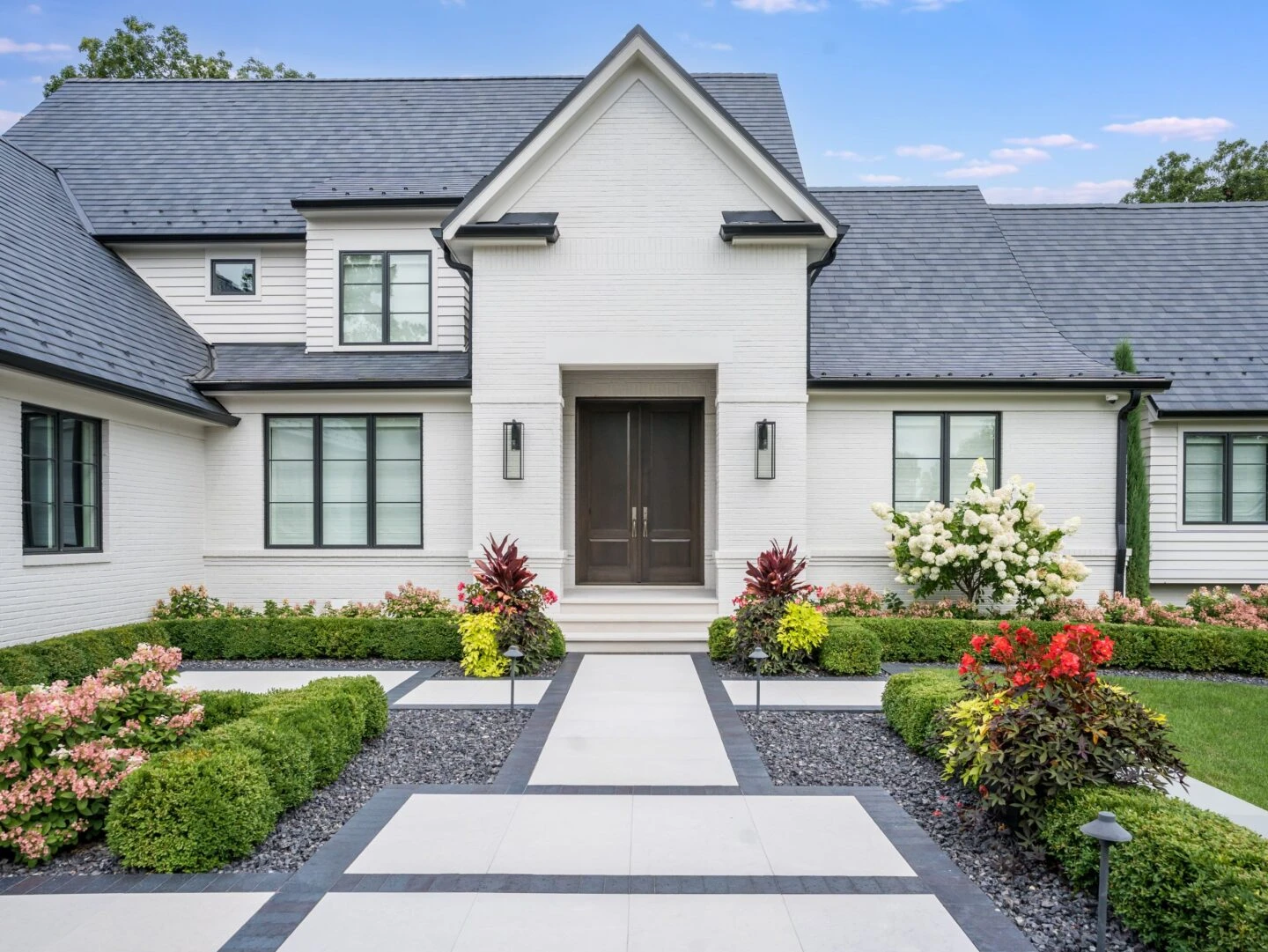
The preparation phase — excavation, compaction, drainage grading — is where the work that lasts gets built. Everything visible comes after.
Why Flowery Branch Homeowners Should Ask the Right Questions Upfront
The difference between a quality hardscaping contractor and an inadequate one often isn't visible in the finished product at the end of day one. It becomes visible at the end of year three when one installation still looks exactly as it did on completion day and the other has two sections that need leveling and joints that have washed out twice. By then, the warranty conversation is complicated and the cost of correction falls entirely on the homeowner.
The right questions to ask before signing any hardscaping contract in Flowery Branch: What is the specified base depth? How many compaction lifts will be done, and with what equipment? What slope will be established, and where does drainage discharge? What joint sand product is specified? If a contractor can answer those questions with specifics, they understand what lasting installation requires. If they can't, the base preparation is likely to be whatever they can complete fastest.
Timberstone Landscape operates throughout the Northeast Atlanta region, including Hall County and Flowery Branch, from our base in Grayson, Georgia. As a Techo-Bloc Preferred Contractor, we document our base specifications on every project — not as a marketing point, but because it's how we hold ourselves accountable to the standard that lasting installations require. Our hardscaping services are backed by a design-build process that specifies every technical detail before we start.
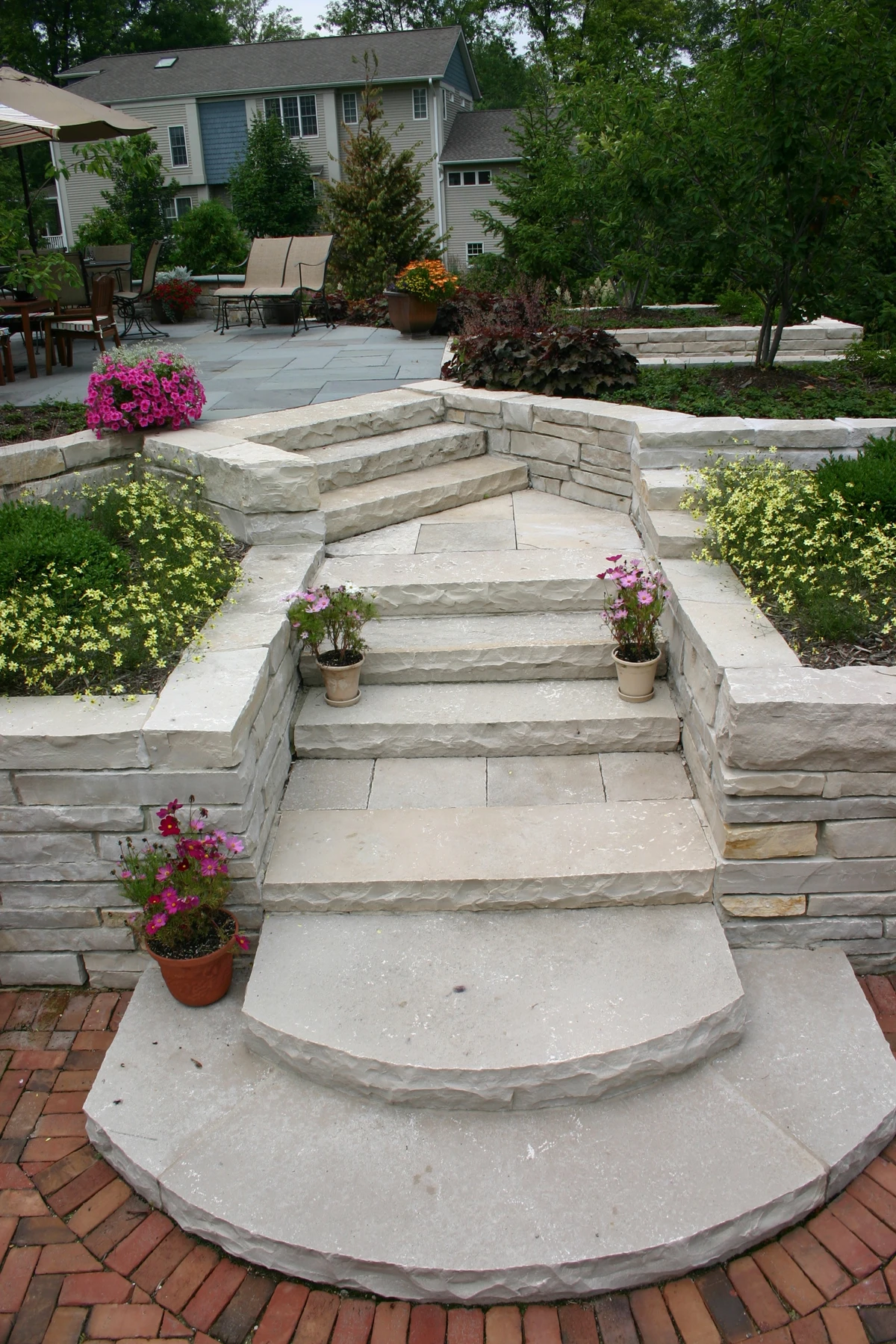
Flowery Branch hardscaping built to last — every non-negotiable step followed so the finished installation holds its quality through a decade of Georgia seasons.
Get Hardscaping That Actually Lasts in Flowery Branch
We serve Flowery Branch, Hall County, and all of Northeast Atlanta. Free consultation — we'll tell you exactly how we'd build your project.
Request a Free ConsultationTimberstone Landscape is based in Grayson, Georgia and serves the greater Northeast Atlanta region within 40 miles: