
Why Woodstock, GA Retaining Walls Need More Than a Stack of Blocks — What a Structural System Looks Like
A stack of retaining wall blocks holds dirt until it doesn't. The difference between a wall that holds for twenty years and one that fails after the first significant rain event isn't the block — it's everything that was done before the block was placed. Cherokee County properties with slope need retaining systems, not just retaining walls.
The distinction matters. A wall is a vertical face of material. A system is the wall plus the drainage design behind it, the base preparation beneath it, the geogrid reinforcement woven back into the hillside, and the batter angle that resists the lateral load of the soil mass it's holding. Woodstock properties deal with Georgia's clay-heavy soil, which becomes significantly heavier and more expansive when saturated. That saturated soil mass exerts hydrostatic pressure on a wall face that, without proper drainage design and structural reinforcement, will eventually cause the wall to bow, slide, or overturn.
System ComponentsWhat a Proper Retaining Wall System Includes
Drainage is the first and most critical component. Water-saturated clay soil exerts dramatically more lateral force than dry soil. The solution is a drainage aggregate layer — typically clean crushed stone — placed directly behind the wall face, combined with perforated drain tile at the base to carry accumulated water away from the wall. Weep holes through the wall face provide secondary pressure relief. Without these elements, every heavy rain event adds to the cumulative pressure on the wall face until something gives.
"A stack of blocks tells you what height the wall reaches. A structural system tells you how long it holds."
Base Preparation and Geogrid Reinforcement
The base course of a retaining wall must be set below the frost line on compacted subgrade material. Organic soil compresses under load — organic soil under a retaining wall means the base course shifts, and when the base course shifts, the wall above it follows. Timberstone Landscape excavates past the organic layer to firm subgrade on every retaining project, then compacts a base aggregate before setting the first course. That foundation is what determines whether the wall holds its position over decades of seasonal soil movement.
For walls exceeding three feet, geogrid reinforcement is essential. Geogrid layers — placed horizontally between courses and extended back into the hillside at engineered intervals — distribute the lateral soil load across a broader area rather than concentrating it entirely at the wall face. The result is a wall that resists overturning because it's mechanically anchored to the slope, not just stacked against it. We're based in Grayson, Georgia, and we apply this engineering standard to every Cherokee County retaining project we build. See our hardscaping services or our landscaping services for grading and drainage work that completes the system.
- Drainage aggregate layer behind wall face — prevents hydrostatic pressure buildup in clay soil
- Perforated drain tile at wall base — carries saturated water away from the wall system
- Base excavation below frost line into compacted subgrade — prevents foundation shift
- Geogrid reinforcement at engineered intervals — required for walls above three feet
- Batter angle calculated for wall height and soil load — resists lateral force and overturning
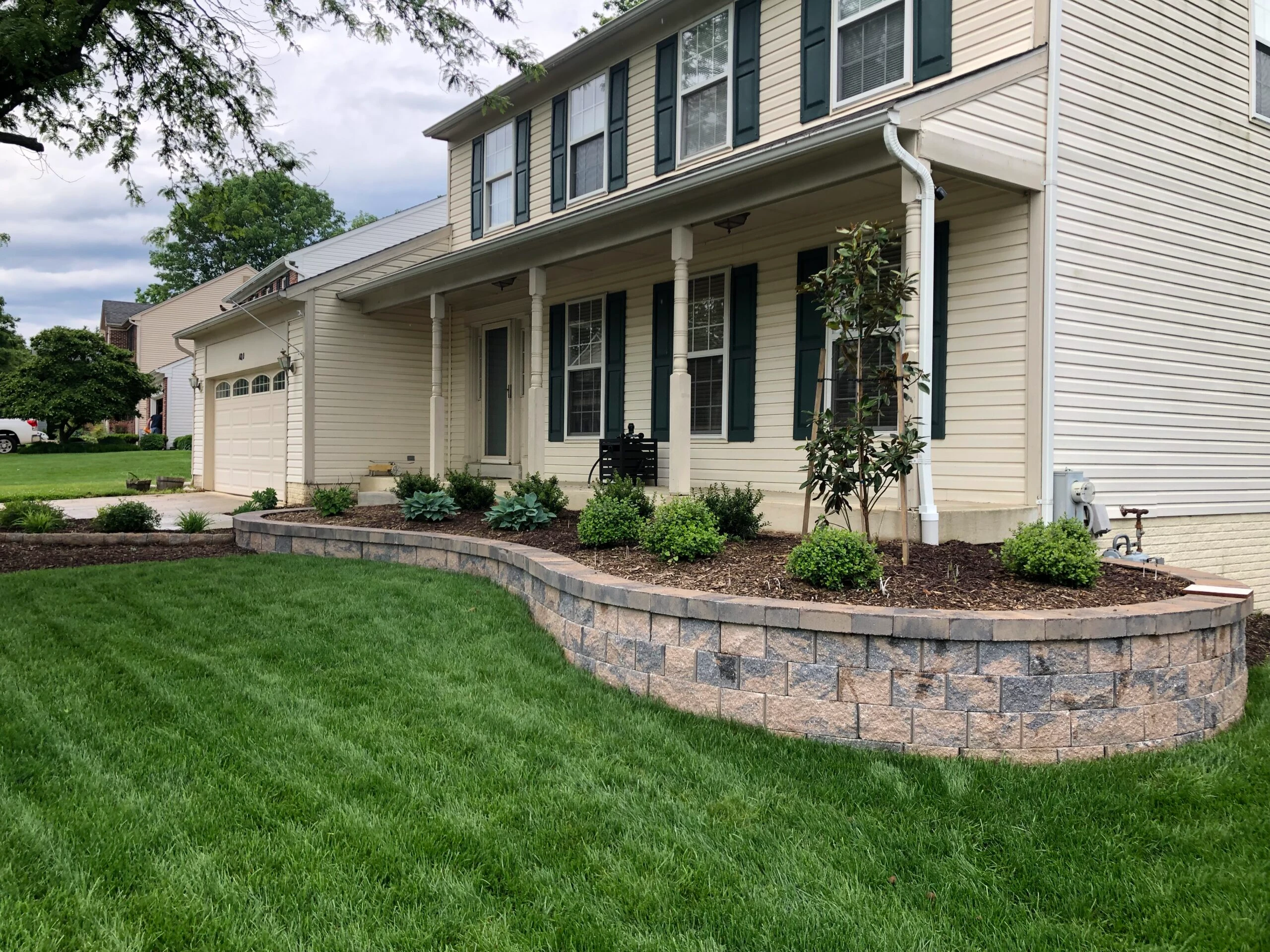
Retaining system engineering — drainage, base prep, and geogrid reinforcement calibrated to Cherokee County soil and slope conditions.
What a Well-Built Retaining System Does for the Property
A retaining system that's engineered correctly does more than hold dirt. It creates usable flat space from grades that would otherwise be difficult to develop. It controls surface water, directing it away from structures and planted areas. It defines outdoor living zones. It contributes to the visual structure of the landscape in a way that a simple slope never can. Woodstock properties with significant grade changes are among the best candidates for retaining system work, because the transformation in usable space and landscape quality is considerable.
Timberstone Landscape approaches retaining projects with structural engineering as the first priority and aesthetic design as the second — but both are addressed. The walls we build in Cherokee County hold correctly and look intentional within the landscape. We use Techo-Bloc retaining products where appropriate, as a Techo-Bloc Preferred Contractor with access to their full retaining wall line and technical specifications. The result is a system you're confident in — not one you're watching for signs of movement every spring.
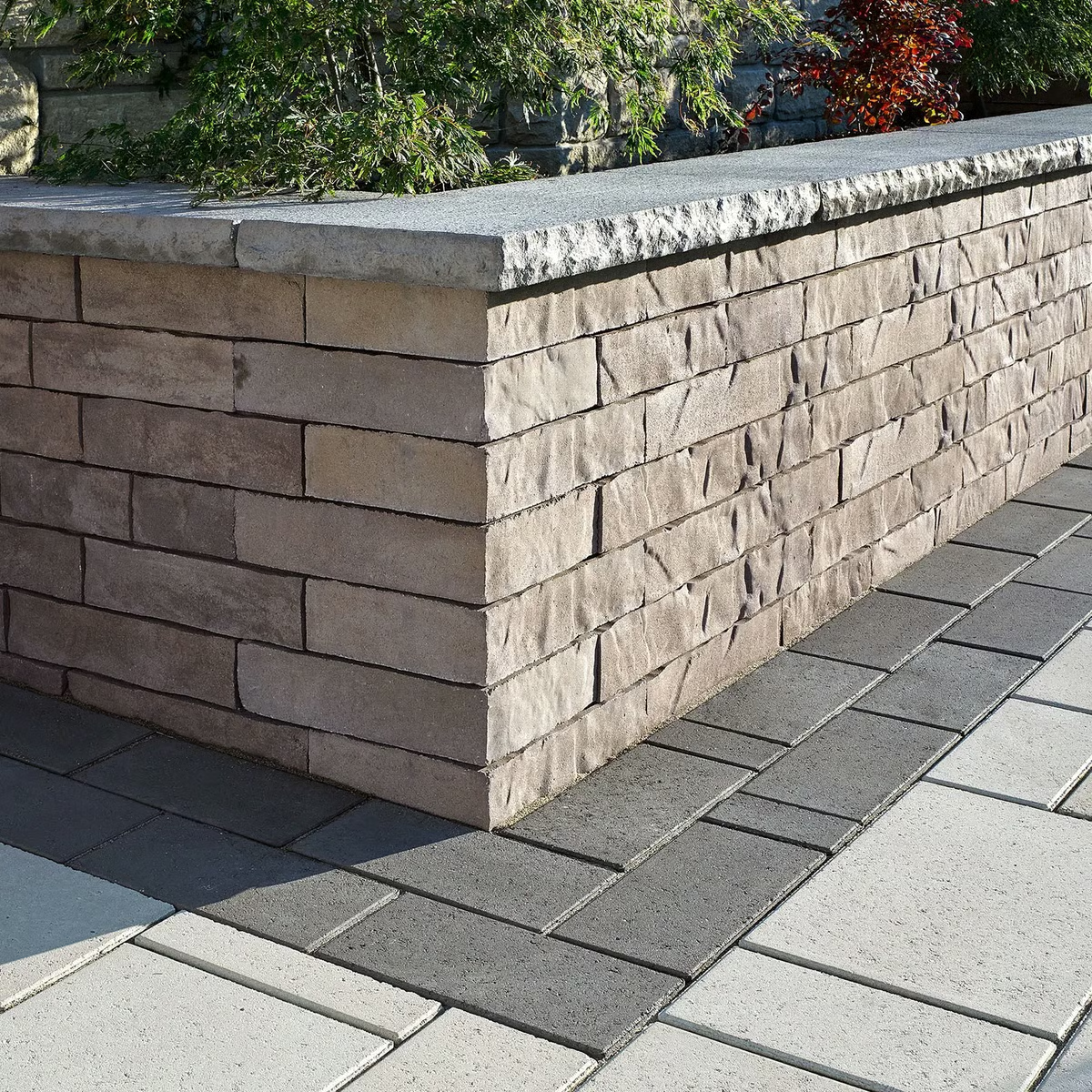
Every Timberstone retaining system is engineered from the base up — because structural integrity starts below grade.
Woodstock Retaining Walls — Built as Systems, Not Stacks
Free site assessments for Woodstock properties with slope. We design for structural integrity, not just visual height.
Request a Free AssessmentTimberstone Landscape is based in Grayson, Georgia and serves the greater Northeast Atlanta region within 40 miles: