
How Outdoor Steps and Stairs Add Value to Northeast Atlanta Properties
Every grade change on a Northeast Atlanta property that requires a step is a design opportunity that most homeowners treat as a functional necessity and leave at that. The reality is that stair systems — front entry approaches, backyard level transitions, pool deck descents, walkway grade changes — are among the highest-ROI elements in residential hardscaping because they are seen and used constantly, because they set the tone for every approach to the home or outdoor space, and because they are almost always under-designed when left to the default minimum.
The properties in Gwinnett, Forsyth, Hall, and surrounding counties that make the best impression consistently have stair systems that feel as though they belong exactly where they are — proportioned correctly for the approach, built from materials that coordinate with the surrounding hardscaping and the home's exterior, and detailed at the nose and riser face in ways that reflect design intention rather than the fastest way to get from one elevation to the next. These are not accident. They result from treating the step as a design element, not an afterthought.
The Design PrinciplesProportions, Materials, and the Details That Make Stair Systems Succeed
The proportional standard for outdoor steps is different from interior stairs, and getting it right is the difference between a staircase that feels comfortable and one that feels like an obstacle. The standard outdoor stair proportion — 7-inch riser height, 11-inch minimum tread depth — creates a comfortable stride that doesn't require shortening your step or overly extending your stride. Deeper treads (12 to 14 inches) read as more generous and leisurely, appropriate for main entry approaches and entertaining-focused backyard transitions. Shallower treads or taller risers read as utilitarian and create the sense of being rushed from one level to the next.
Material selection for stair systems should coordinate with — but need not be identical to — the adjacent paving. A front entry approach where the walkway uses a running bond paver can incorporate a bullnose cap stone at the stair edges that introduces a material contrast without creating a mismatch. A backyard terrace transition might use the same paver product as the patio surface but in a different format — a longer format for the tread, a standard format for the riser face — to create a visual distinction between the horizontal and vertical planes.
"The front entry stair is the first hardscaping element every visitor encounters. It sets the expectation for the entire property. A stair that's properly proportioned, built from the right material, and detailed at the nose with intention signals that everything behind it was approached with the same care."
ROI and the Market Value Case for Quality Stair Systems
The return-on-investment argument for quality outdoor stair systems is strongest in two contexts: front entry approach stairs and backyard terrace transition stairs in properties with significant outdoor living spaces. Front entry stairs are visible in every marketing photo and every showing — they establish first impressions that affect how buyers perceive the property's overall quality and maintenance history. Backyard terrace stairs in outdoor living systems affect how the space functions and how livable it feels to a buyer walking through it for the first time.
The gap in cost between a minimum-spec stair system and a properly designed one — correctly proportioned, built from quality materials, detailed at the nose and riser face — is modest relative to the overall project cost. But the gap in how each reads and how each performs over time is significant. Northeast Atlanta's market rewards quality hardscaping installation, and the stair systems that look like they were designed are the ones that contribute to that reward most reliably.
- Standard outdoor stair proportion: 7-inch riser, 11-inch minimum tread — verify these dimensions on every stair project
- Tread overhang at the nose (1–1.5 inches) creates shadow lines and visual definition that make stairs read as designed rather than utilitarian
- Bullnose or profiled cap stone at the stair edge prevents edge chipping and improves the visual finish significantly
- Stair material should coordinate with, but need not match exactly, the adjacent paving — subtle differentiation reads well
- Front entry stair systems have among the highest ROI in residential hardscaping — they're in every photo and every first impression
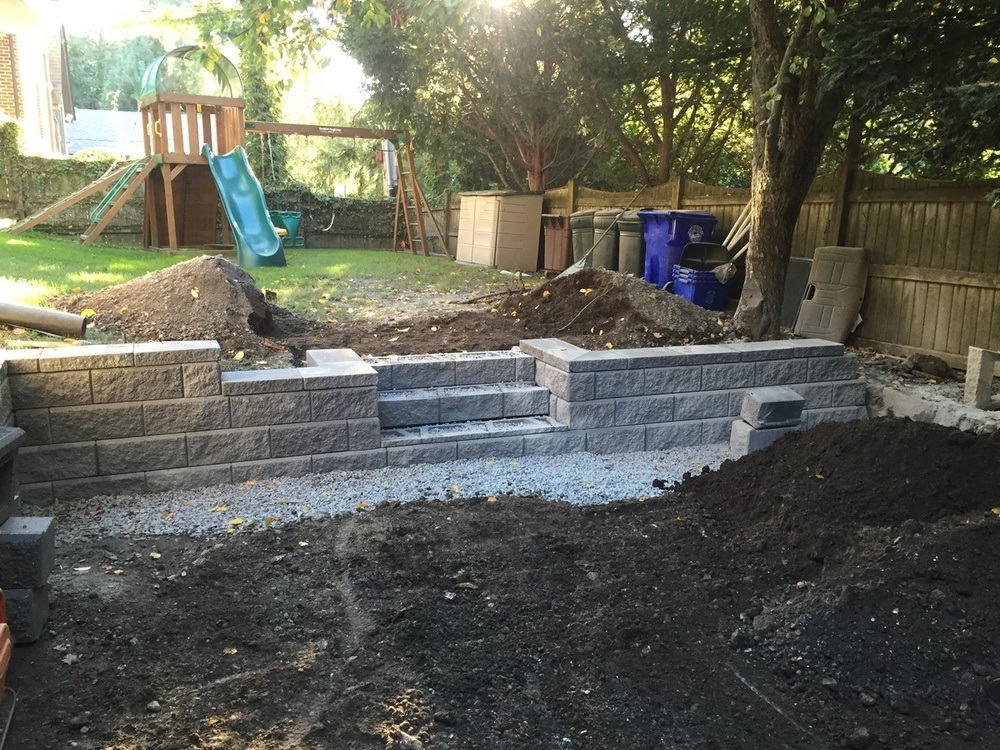
Outdoor stair systems in Northeast Atlanta — properly proportioned, correctly detailed, built from materials that belong with the surrounding hardscaping.
Common Stair Design Failures in Northeast Atlanta Properties
The most common outdoor stair failure in Northeast Atlanta isn't structural — it's proportional. Builder-installed concrete steps, which typically use 8-inch risers and 10-inch treads to minimize material cost, feel steep and rushed. The back edge of the tread often terminates flush with the riser below rather than overhanging slightly, which eliminates the shadow line that makes a stair look finished. The riser face is often raw concrete rather than a capped or veneered surface. The result is stairs that are functional but contribute nothing to the property's design quality.
The second failure is material inconsistency — front entry steps in red brick running against a paver walkway in cool gray, or backyard terrace steps in raw concrete block against travertine paving. These disconnects read as components sourced from different projects rather than elements of a coherent design. They're the result of treating each hardscaping element independently rather than as part of a coordinated system.
Timberstone Landscape designs and builds outdoor stair systems throughout the Northeast Atlanta region — from Grayson and Gwinnett County through Forsyth, Hall, Barrow, and Cherokee counties, and into the Fulton County market. As a Techo-Bloc Preferred Contractor, we build stair systems that are engineered for durability and designed for impact. Our hardscaping services include stair design and installation as part of every integrated hardscape project, and our design-build process ensures that every step is proportioned, detailed, and coordinated with the full project from day one.
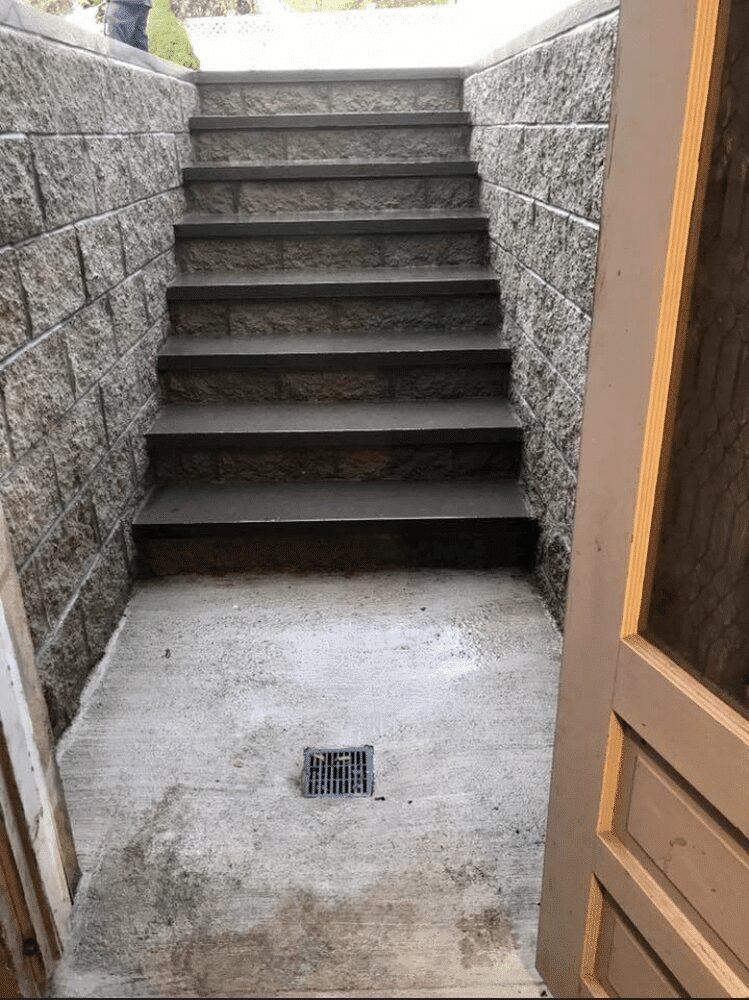
Northeast Atlanta outdoor stair systems — where every grade change becomes a design element that adds to the property's character rather than simply solving a functional problem.
Design Outdoor Steps That Add Real Value
We serve Grayson, GA and all of Northeast Atlanta. Free consultation includes stair proportion and material coordination guidance for your specific project.
Request a Free ConsultationTimberstone Landscape is based in Grayson, Georgia and serves the greater Northeast Atlanta region within 40 miles: