
Why Seasonal Color Planning Transforms Georgia Landscapes From Good to Extraordinary
Most Georgia landscapes look their best in spring and spend the rest of the year fading into a monotone backdrop of green. A landscape designed with deliberate seasonal color planning — choosing plants specifically for their contribution to each of the four seasons — looks extraordinary in March, remains interesting in July, and earns its place in October and December. The difference between a good Georgia landscape and a truly memorable one is almost always a thoughtful seasonal planting strategy.
Georgia's climate is genuinely generous to landscape designers willing to think beyond the standard spring-color palette. Mild winters mean that many plants with ornamental bark, evergreen structure, or winter berries remain fully visible and visually active when landscapes in colder climates go completely dormant. Long, warm summers support a range of flowering perennials and ornamental grasses that peak when spring bloomers have finished. Autumn in northeast Atlanta delivers real foliage color — not just from native trees but from carefully chosen shrubs, ornamental grasses, and late-season perennials. A well-planned Georgia landscape doesn't have an off-season — it has four distinct acts.
Building the Four-Season Color Framework
Seasonal StrategyThe foundation of seasonal color planning in a Georgia landscape is dividing the plant palette by season and ensuring that every season has at least two to three strong contributors. This is not about adding more plants — it's about making smarter selections from the outset so that each plant earns its place across multiple seasons or peaks at a different point in the calendar year than its neighbors.
- Spring anchor plants: Dogwood, redbud, azalea, and cherry laurel deliver Georgia's most familiar spring color. Layer early bulbs — daffodils, tulips, allium — beneath them for color from late February through April before these larger plants fully leaf out.
- Summer transition plants: Crape myrtles, oakleaf hydrangeas, Black-eyed Susans, coneflowers, and ornamental grasses carry color from May through September when spring performers are resting. These are the workhorses of a Georgia summer landscape.
- Autumn performers: Beautyberry, Virginia sweetspire, Knockout roses in their second bloom, and native fothergilla deliver color from September through November. Japanese maples and native dogwoods offer foliage transitions that anchor the autumn landscape.
- Winter interest plants: Nandina with red winter berries, Leyland or Emerald Green arborvitae for evergreen structure, ornamental grasses with dried plumes, and the exfoliating bark of river birch or crape myrtle keep the landscape visually active through the dormant season.
"A Georgia homeowner who plants only for spring is essentially designing a landscape that peaks for six weeks and spends the other forty-six weeks as an afterthought. Seasonal color planning changes that equation completely."
The Georgia Summer Color Problem — and How to Solve It
Summer Planting StrategySummer is where most Georgia landscapes lose their color story. The spring azaleas and dogwoods finish by late April, and if the landscape wasn't designed with summer performers, there's a long stretch of heat and monotone green from May through September. Northeast Atlanta's combination of heat, humidity, and afternoon thunderstorms demands plants that are specifically heat-tolerant rather than simply warm-season performers.
The most reliable summer color plants for Georgia landscapes include crape myrtle — which blooms from June through August and provides both flower color and eventual autumn bark interest — along with daylilies, which naturalize easily in Georgia's red clay once established. Ornamental grasses such as Maiden Grass, Karl Foerster, and Hameln reach their full height and begin producing plumes in August, bridging the gap between summer color and autumn interest. For shaded areas, impatiens and caladiums perform reliably in Georgia heat but require annual replanting; for a lower-maintenance approach, shade-tolerant perennials like astilbe and liriope provide summer color without annual replanting costs.
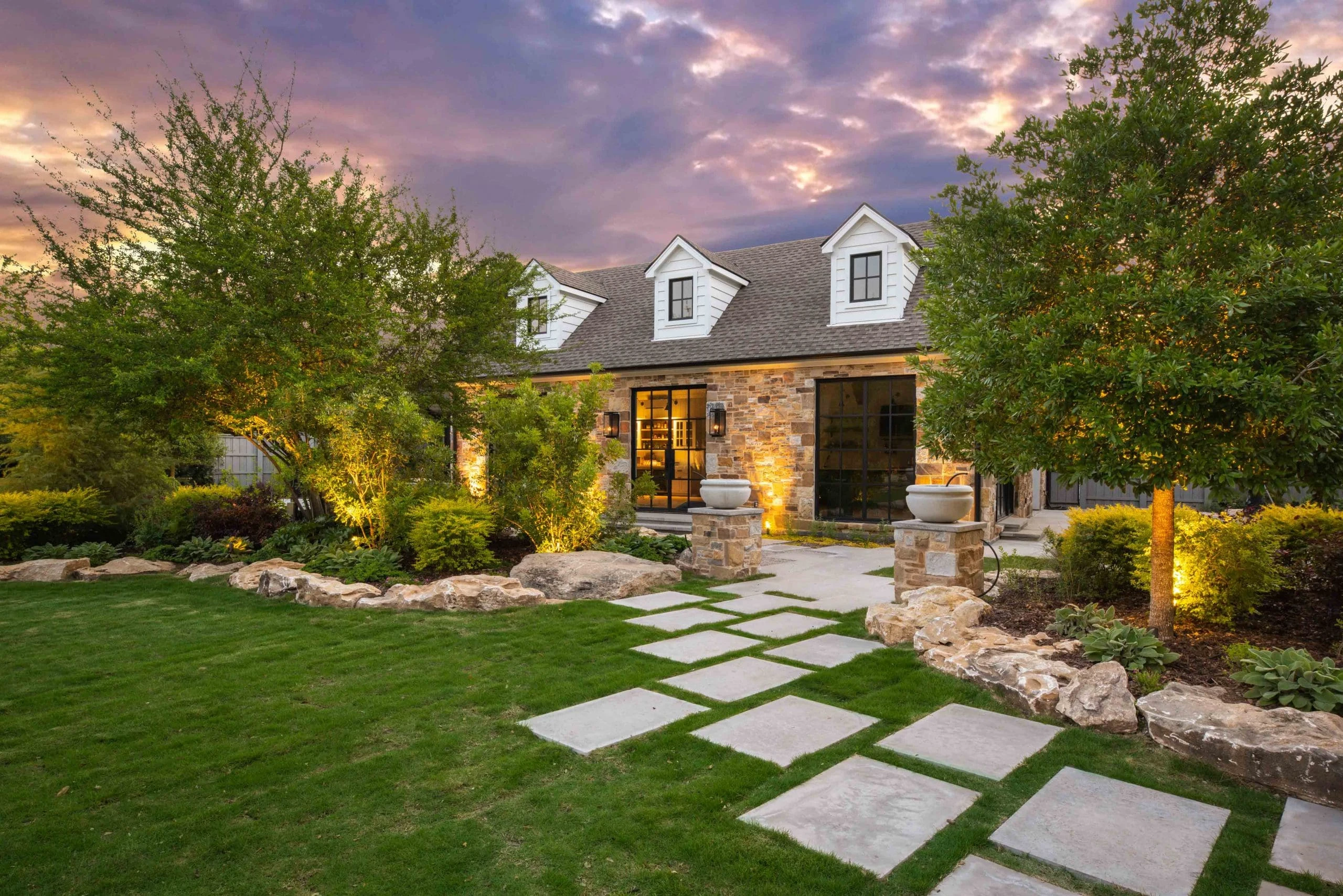
Thoughtful plant selection creates visual interest across all four Georgia seasons — not just spring.
Autumn and Winter — The Overlooked Seasons in Georgia Landscape Design
Year-Round InterestGeorgia homeowners consistently underinvest in autumn and winter color because spring is the season when most landscaping decisions get made. Standing in the nursery in March surrounded by blooming azaleas and flowering dogwoods, it's easy to overlook the fact that you're selecting plants for a twelve-month landscape, not a six-week spring showcase. Intentionally designing for autumn and winter interest requires thinking ahead to how the landscape will look when those spring performers are long finished.
Beautyberry — Callicarpa americana — is one of Georgia's most underused native shrubs. It produces clusters of vivid purple berries in September and October that are genuinely striking and attract birds. American beautyberry is virtually indestructible in Georgia's climate, tolerates part shade, and grows to six to eight feet without requiring significant irrigation once established. Pairing it with the late-season golden foliage of Virginia sweetspire creates an autumn combination that rivals the spring color show.
For winter interest, the approach shifts from flower color to structural elements: evergreen texture, ornamental bark, berry color, and the architectural silhouette of dried grasses. A landscape that includes a mix of broadleaf evergreens — camellias, Gardenias, Hollies — alongside fine-textured ornamental grasses and multi-stem trees with exfoliating bark remains visually active through January and February. Camellia japonica blooms in Georgia from November through March, providing winter flower color that most homeowners don't realize is available.
Why Timberstone Plans Color Across All Four Seasons
The Timberstone ApproachAt Timberstone Landscape, every planting plan we deliver for Grayson and northeast Atlanta properties is reviewed against a seasonal color calendar before installation. We map out which plants contribute in which months, identify the gaps, and select plants specifically to fill those gaps — not simply to add plant count or visual density. The result is a landscape that earns attention year-round, not just during the spring window that every Georgia landscape briefly enjoys.
As a Techo-Bloc Preferred Contractor (Techo-Pro), our expertise extends beyond planting into the full landscape design — integrating planting beds, hardscape elements, and seasonal color into a unified property design. The relationship between a well-designed paver patio and a surrounding landscape planned for four-season color is direct: the hardscape provides the frame, and the planting provides the living artwork that changes across the seasons. When both are designed together by the same team with the same seasonal calendar in mind, the result is cohesive in a way that separately contracted hardscape and landscape rarely achieves.
Timberstone Landscape serves homeowners throughout Gwinnett County, Forsyth County, Hall County, and the broader northeast Atlanta corridor. We provide full-service landscape design and installation, including seasonal color consultation, for residential properties in Grayson, Loganville, Snellville, Lawrenceville, Buford, Braselton, Sugar Hill, Cumming, and surrounding communities.
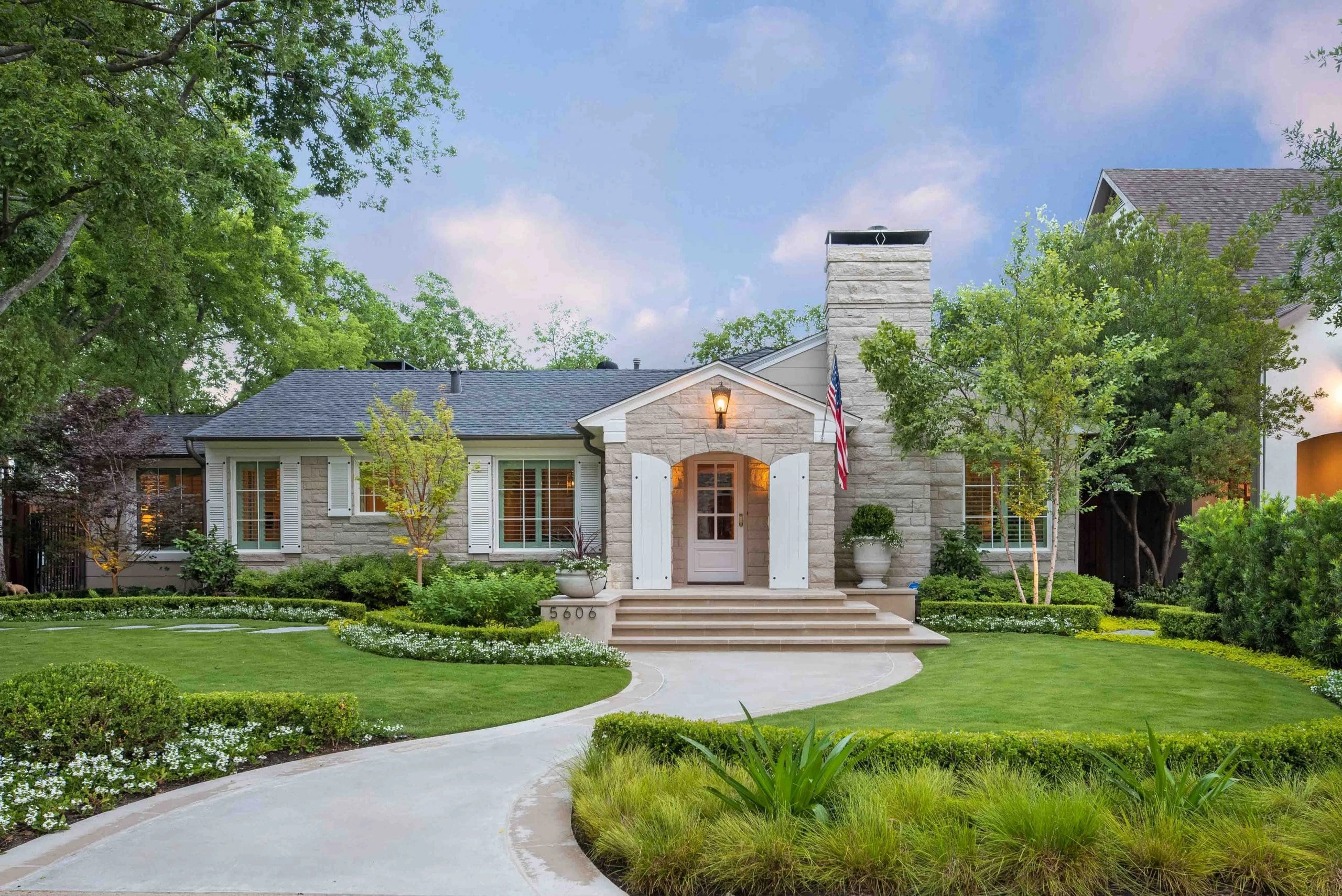
Ready for a Landscape That Looks Extraordinary All Year?
Let's design a seasonal color plan for your property that keeps your landscape beautiful from February through December.
Call Us NowTimberstone Landscape serves Grayson, GA and the surrounding Northeast Atlanta region within 40 miles: