
Why Roswell, GA Retaining Walls Fail at the Wrong Time — And What Proper Engineering Prevents
Retaining walls don't give much warning before they fail. They hold, and then they don't. For Roswell homeowners with sloped properties, that moment — typically after a heavy rain event — means soil displacement, structural damage, and emergency repair costs that dwarf what proper installation would have cost from the start.
Georgia's combination of clay-heavy soil, seasonal rainfall intensity, and freeze-thaw temperature variation creates a specific and demanding set of conditions for retaining wall systems. Most retaining wall failures in Fulton County aren't caused by poor materials. They're caused by inadequate drainage behind the wall, insufficient base depth, and lack of structural consideration for the hydrostatic pressure that builds when water-saturated soil has nowhere to go. These are engineering problems, not material problems — and they're solved at design, not at installation.
Why Walls FailThe Three Causes of Premature Retaining Wall Failure
The first cause is drainage. Hydrostatic pressure — the force of water-saturated soil pressing against a wall face — is the primary structural threat to any retaining system. Without proper drainage aggregate behind the wall and adequate weep holes or drain tile to relieve that pressure, even a structurally sound wall will eventually bow, shift, or overturn under sustained saturation. This is the most common failure mode in Georgia because the rainfall is significant and the clay soil retains moisture aggressively.
"Most retaining walls that fail do so not because of what was stacked — but because of what wasn't done behind and below it."
Foundation and Base — Where Wall Integrity Begins
The second failure cause is inadequate base preparation. A retaining wall's base course must be set below the frost line and on compacted, stable material. In Fulton County, that means excavating past the organic layer and into firm subgrade before the first course is placed. Walls that start on soft or uncompacted material shift as the soil settles — especially under the added weight of saturated backfill. Once a base course moves, the wall above it follows, and no amount of top-course adjustment corrects a compromised foundation.
The third cause is batter angle and geogrid reinforcement. Taller walls — anything over three feet — require structural reinforcement layers woven back into the hillside to prevent overturning. Geogrid at specified intervals, calibrated to wall height and soil load, distributes the lateral force across a broader area rather than concentrating it at the wall face. Timberstone Landscape designs reinforcement schedules specific to each project's dimensions and soil profile. We're based in Grayson, Georgia, and we've built retaining systems across Fulton County that are engineered to handle Georgia's specific conditions — not generic regional averages.
- Drainage aggregate and weep holes behind wall face — eliminates hydrostatic pressure buildup
- Base excavation below frost line into compacted subgrade — prevents foundation shift
- Geogrid reinforcement at engineered intervals — required for walls exceeding three feet
- Batter angle calibrated to wall height and soil load — resists overturning forces
- Techo-Bloc Preferred Contractor installation — materials and methods meet manufacturer spec
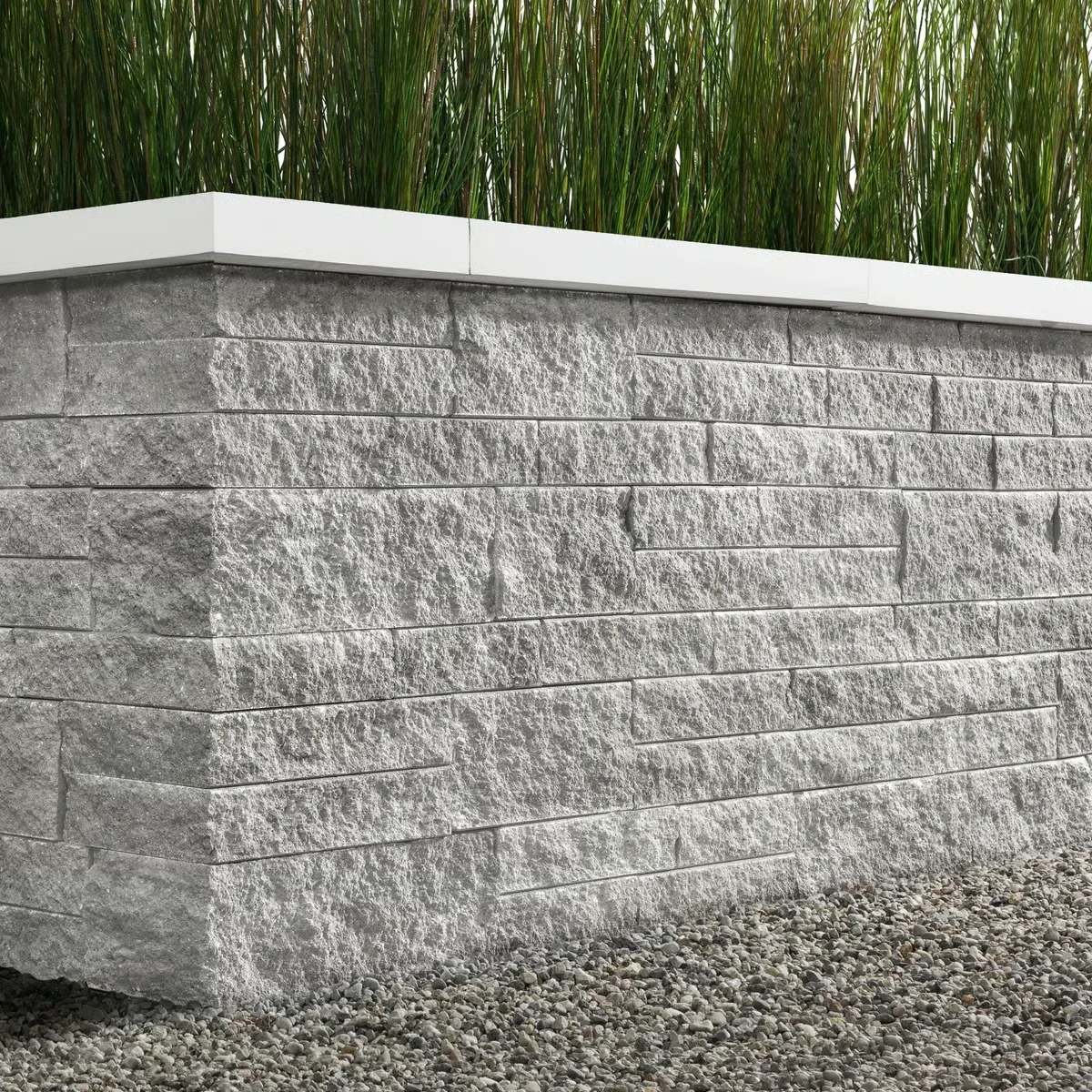
Structural retaining wall engineering — drainage, base prep, and geogrid reinforcement specified for Roswell's soil and rainfall conditions.
What a Properly Engineered Retaining Wall Provides
Done correctly, a retaining wall isn't just a problem solution — it's a property asset. Structurally engineered retaining walls create usable flat space on sloped lots, define outdoor rooms, manage water flow, and add significant visual structure to landscapes that would otherwise be difficult to develop. Roswell properties with grade changes are candidates for this kind of transformation, and the difference between a wall that functions for decades versus one that fails within five years is entirely in the engineering and installation methodology.
Timberstone Landscape assesses each wall project with structural criteria first — height, soil conditions, drainage requirements, surcharge load from above. The aesthetic design follows from those constraints, not the other way around. A wall that looks right but isn't engineered correctly is a liability. A wall that's both engineered correctly and designed intentionally is an investment. See our hardscaping services or our landscaping services for properties that need grading and drainage work alongside retaining wall installation.
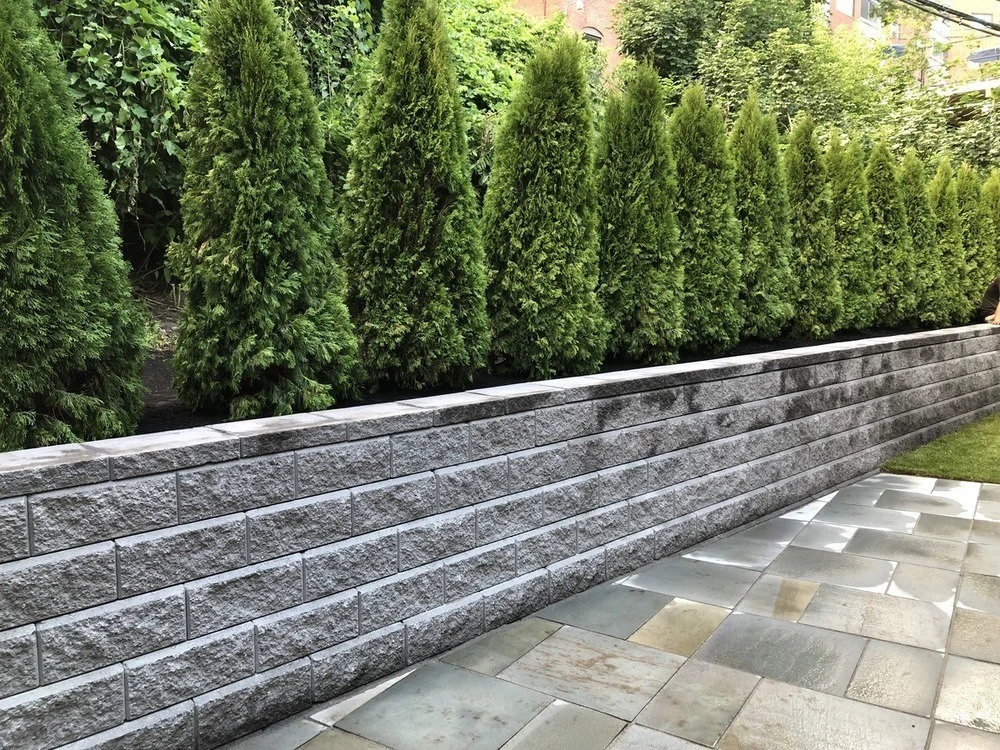
Retaining walls built to structural engineering standards — drainage, base, and geogrid specified for Georgia's soil and climate.
Roswell Retaining Walls Engineered to Not Fail
Free structural assessments for Roswell properties. We identify why walls fail — and build to prevent it from the start.
Request a Free AssessmentTimberstone Landscape is based in Grayson, Georgia and serves the greater Northeast Atlanta region within 40 miles: