
Why Paver Driveways in Georgia Outperform Concrete Over the Long Term
The concrete driveway failure timeline in Georgia follows a pattern so consistent that experienced hardscaping contractors can predict it from the installation date alone. First crack within five to seven years. Widening transverse cracking and surface scaling by year ten. Differential settlement and joint failure by year twelve to fifteen. By year twenty, you're managing a driveway that looks old, feels unstable in sections, and signals deferred maintenance to every visitor — and to every potential buyer — who pulls up to the house. Paver driveways, properly installed, don't follow that timeline.
The reason the concrete failure timeline is so reliable in Georgia is that our climate subjects concrete to conditions that accelerate its natural aging cycle. The combination of hot, wet summers with significant thermal cycling through late fall and winter creates continuous stress on a rigid material that cannot flex under load or movement. Georgia's clay-dominant soil profile moves with moisture content changes, and a concrete slab sitting on that soil absorbs every movement the soil makes — translating it into cracking, heaving, and settlement that no surface repair can correct at the structural level.
The Performance TimelineHow Georgia's Climate Destroys Concrete and Leaves Pavers Intact
Concrete's fundamental vulnerability is its rigidity. When the soil beneath a concrete slab shifts — and in Georgia clay soils, it shifts every time the moisture content changes — the concrete slab must either crack or heave to accommodate that movement. There is no third option. The control joints cut into concrete slabs at installation are designed to direct where this cracking occurs, but they don't prevent it. Once a crack forms, water infiltrates it, accelerates the base erosion beneath it, and widens the crack through repeated freeze-thaw cycling until the slab section begins settling differentially.
Paver driveways work on a different structural principle. The individual units are separated by joint sand rather than being a continuous rigid mass, which means they can accommodate minor soil movement by shifting slightly rather than cracking. The aggregate base beneath them distributes loads and accommodates drainage in ways that a concrete slab over clay cannot match. And when localized settlement does occur — as it eventually does in any installation — the remedy is lifting the affected pavers, correcting the base material, resetting, and re-sanding. The repair is invisible, costs a fraction of the failed area, and leaves the surrounding installation undisturbed.
"A concrete driveway that's cracked and patched looks like it has a history of problems. A paver driveway that needed two individual units reset looks exactly the same as it did the day it was installed — there's no visual evidence of the repair."
The Twenty-Year Total Cost Comparison
The upfront cost of a paver driveway in Georgia is typically 20 to 40 percent higher than new concrete — a real difference that deserves honest consideration. But the relevant comparison for a capital improvement like a driveway isn't year-one cost. It's the total cost of ownership over the useful life of the installation, and on that metric, the comparison typically reverses over a twenty-year window in Georgia's climate.
A concrete driveway requiring patching at year seven costs between two and five thousand dollars for acceptable patch work, depending on scope — and the patches are visible. A full concrete replacement at year fifteen to twenty adds the original installation cost plus demolition and disposal. A paver driveway with minor isolated settlement in year ten might require two hundred to five hundred dollars in base correction and resetting work. No demolition. No disposal. No visible patch seam. The gap between twenty-year concrete cost and twenty-year paver cost, in Georgia's climate, typically favors pavers by a meaningful margin — not counting the visual and market-value difference at all.
- Concrete driveways in Georgia clay soil typically show first cracking within 5–7 years and significant degradation by year 12–15
- Paver systems flex slightly with soil movement rather than cracking — individual units shift, they don't fracture
- Isolated paver repairs are invisible — concrete patches always show, and they show progressively worse as they age
- Paver driveways for vehicle traffic should specify 8,000+ PSI products — standard residential concrete is typically 4,000 PSI
- Total 20-year cost comparison in Georgia typically favors pavers when concrete replacement and patching costs are included
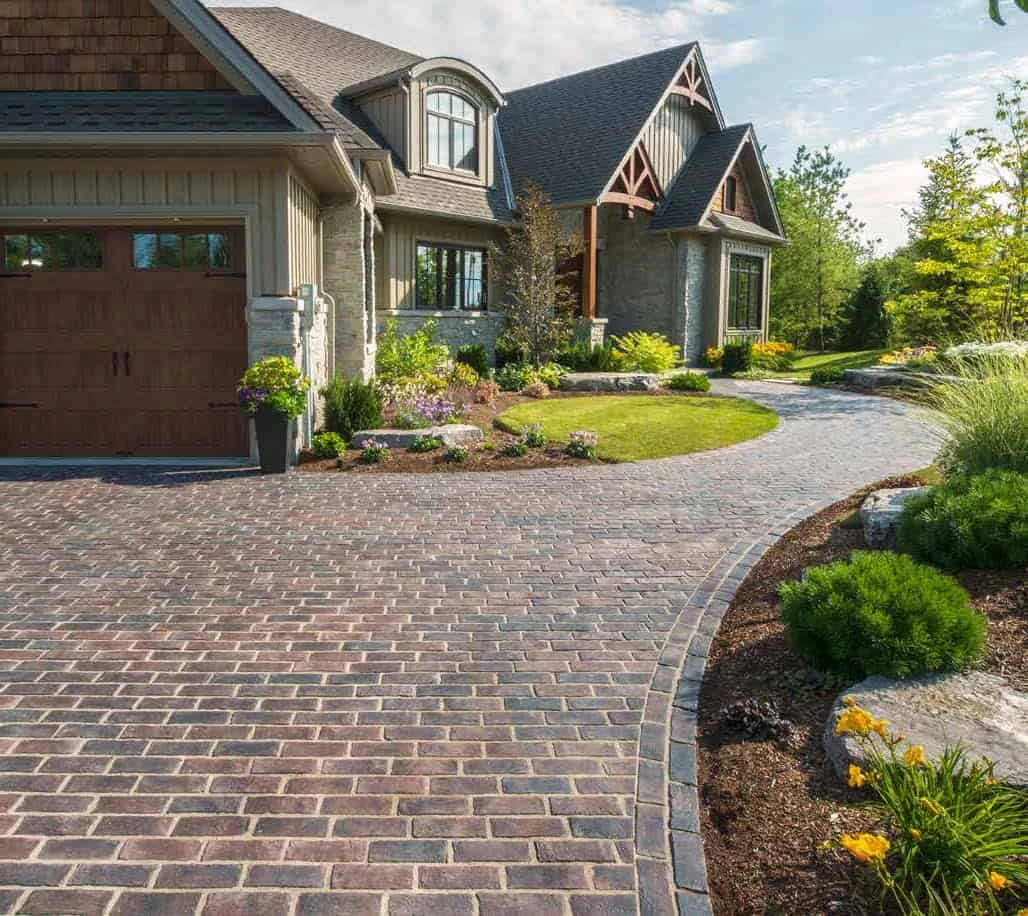
The performance difference between a paver driveway and concrete becomes visible over time — pavers age well in Georgia's climate while concrete accumulates damage.
Why Northeast Atlanta Homeowners Are Making the Switch Now
The timing of the switch from concrete to pavers in the Northeast Atlanta market is being driven by the convergence of aging concrete stock and a real estate market that rewards curb appeal. Many of Gwinnett, Forsyth, and surrounding counties' residential driveways are now at or past the point where concrete degradation is visible from the street. The homeowners making the replacement decision now are doing so with a clear understanding that paver systems installed today won't require revisiting in fifteen years — while another concrete driveway will follow the same failure timeline and put them in the same position again.
Timberstone Landscape serves the full Northeast Atlanta region from our base in Grayson, Georgia — including Gwinnett, Forsyth, Hall, Fulton, Cherokee, Barrow, and Walton counties. As a Techo-Bloc Preferred Contractor, we install driveway paver systems engineered for vehicle loads and Georgia's climate demands. Our hardscaping services include full driveway assessment and replacement, and our design-build process ensures proper base depth, drainage, and material specification from day one.
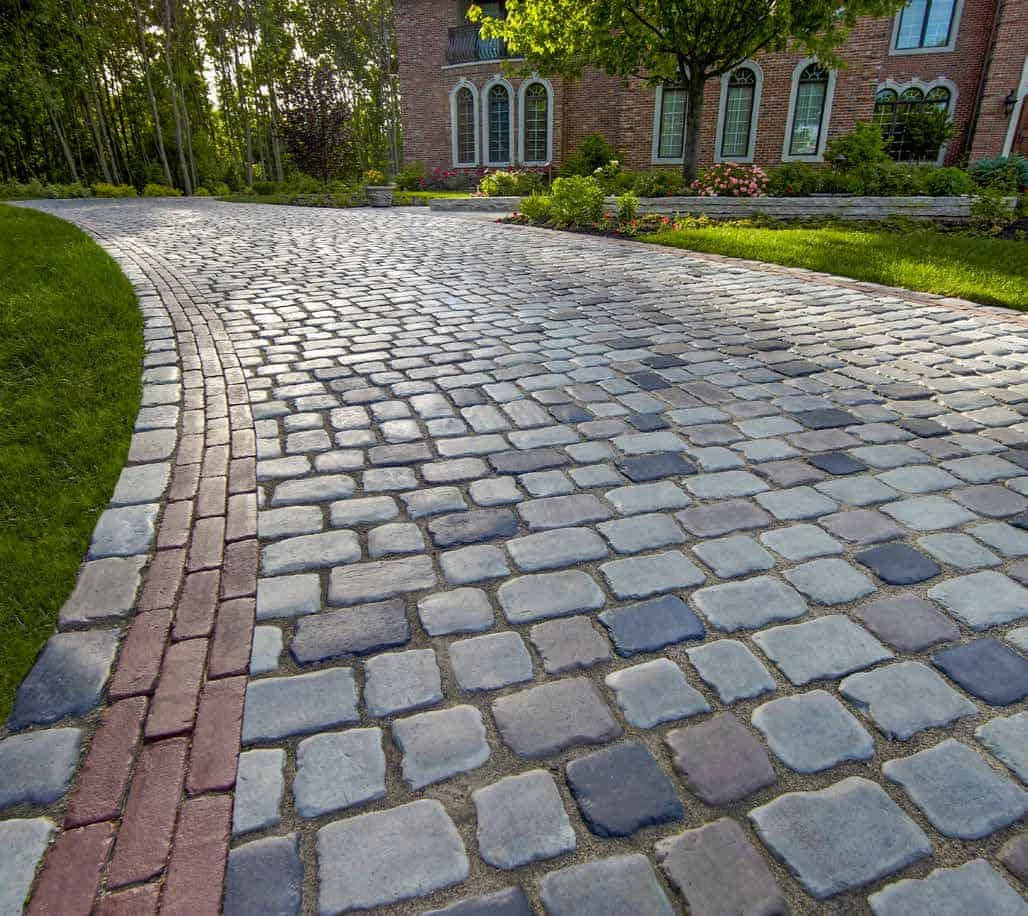
Georgia paver driveways — built for the climate, designed for the long term, and repaired without visible evidence when the rare need arises.
Replace Your Concrete Driveway the Right Way
We serve all of Northeast Atlanta. Free consultation includes an assessment of your existing driveway and a clear recommendation on scope.
Request a Free ConsultationTimberstone Landscape is based in Grayson, Georgia and serves the greater Northeast Atlanta region within 40 miles: