
What Makes Pathway Lighting in Georgia More Than Just an Aesthetic Addition
Pathway lighting is often categorized as decorative — a finishing touch that makes a garden path look polished in photographs. The reality is more layered than that. A well-designed pathway lighting system serves safety, wayfinding, and curb appeal functions simultaneously, and the failure to think through all three is why so many installed systems look good in the catalog and perform poorly in the field.
In Georgia's residential context — where evening entertaining, pool access, outdoor kitchens, and multi-zone patio layouts create real foot traffic after dark — pathway lighting is functional infrastructure. A guest navigating from a driveway to a backyard patio at 8pm in October is relying on pathway lighting to do exactly what its name implies: illuminate the path. Aesthetic considerations matter, but they follow function.
Fixture SpecificationThe Fixture Spacing and Height Formula for Georgia Pathways
The most common mistake in DIY pathway lighting is over-spacing. Fixtures placed 15 to 20 feet apart create pools of light separated by dark gaps — a visual pattern that reads as incomplete and creates genuine trip hazards in the dark zones between fixtures. The correct maximum spacing for residential pathway lighting is 10 to 12 feet, measured center-to-center along the path edge. At this spacing, the light cones from adjacent fixtures overlap slightly, creating continuous illumination without hot spots or dark zones.
Fixture mounting height matters equally. Pathway bollards at 18 to 24 inches above grade project light forward and down effectively, but they also place the light source in a position where it can shine directly into the eyes of seated guests nearby. The preferred height for most residential pathway applications is 12 to 18 inches above grade — low enough to keep the light source out of the seated sightline while still providing adequate ground coverage. Fixtures that mount even lower, at 6 to 8 inches, function more as ground-plane markers than pathway illuminators and require closer spacing to be effective.
"Pathway lighting at 10-foot spacing, 15-inch height, and a 60-degree beam angle is not a design preference — it is a performance specification derived from how light behaves at grade level and how people navigate in the dark."
Beam Angle, Glare Control, and Liability Reduction
Beam angle is the most overlooked specification in residential landscape lighting purchases. A fixture with a wide beam angle — 90 degrees or more — spreads light broadly but also projects it upward and outward in ways that create glare for anyone within line of sight. The recommended maximum beam angle for pathway fixtures is 60 degrees. This keeps the light cone pointed primarily downward and forward, illuminating the walking surface without creating the discomfort that sends guests indoors.
The liability dimension of pathway lighting is real and underappreciated. A Georgia homeowner who entertains guests regularly is responsible for providing reasonably safe access to their property after dark. An unlit pathway with an elevation change, a step, or an uneven paver surface is a foreseeable trip-and-fall hazard. Well-documented, professionally installed pathway lighting that meets the specification thresholds above demonstrates a standard of reasonable care that unlit or inadequately lit pathways cannot.
- Maximum fixture spacing: 10–12 feet center-to-center along path edge
- Optimal mounting height: 12–18 inches above grade
- Maximum beam angle: 60 degrees to control glare
- Light source: 2700K–3000K warm white LED for residential comfort
- Fixture material: brass or copper for longevity in Georgia humidity; avoid aluminum near irrigation zones
- Transformer capacity: plan for 25% expansion headroom when sizing the transformer
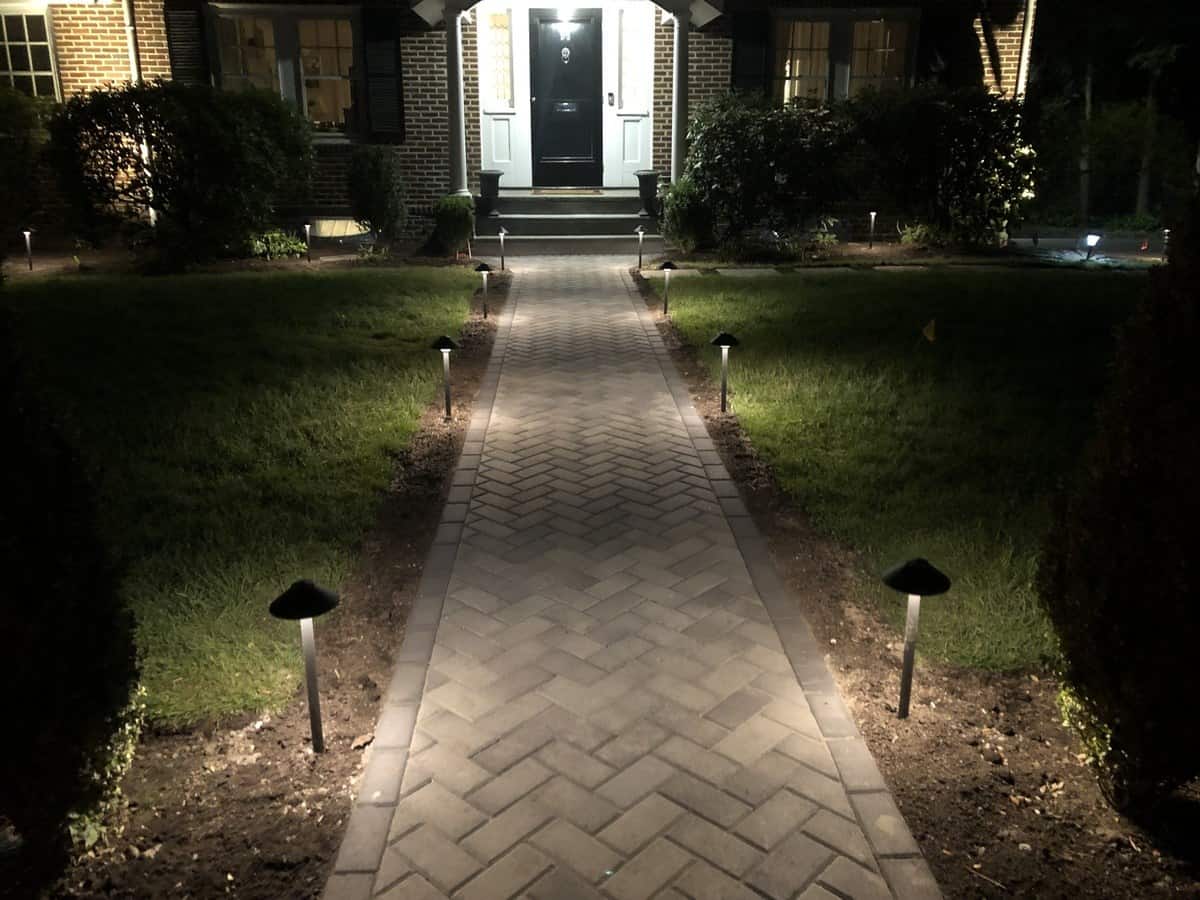
Pathway lighting at correct spacing and height delivers continuous illumination without dark gaps — the specification is what separates a functional system from a decorative one.
Pathway Lighting as Part of a Complete Outdoor Design
The most effective pathway lighting systems are designed in relationship to the larger lighting plan, not in isolation. A pathway from the driveway to the front door should respond to the entry lighting, the uplighting on the facade, and the scale of the landscape on either side. A garden path through a planting bed should be lit at a lower intensity than a primary circulation route. These relationships require a designer's eye — the ability to see the whole composition after dark rather than solving each fixture placement problem independently.
Timberstone Landscape designs pathway lighting systems as part of comprehensive outdoor lighting plans for properties across Gwinnett, Forsyth, Hall, Fulton, and surrounding counties in Northeast Atlanta. As a Techo-Bloc Preferred Contractor based in Grayson, GA, our approach to landscape lighting is always integrated with the hardscape and planting design — never a standalone product decision. Review our hardscaping services and our design-build process to understand how we approach complete outdoor environments.
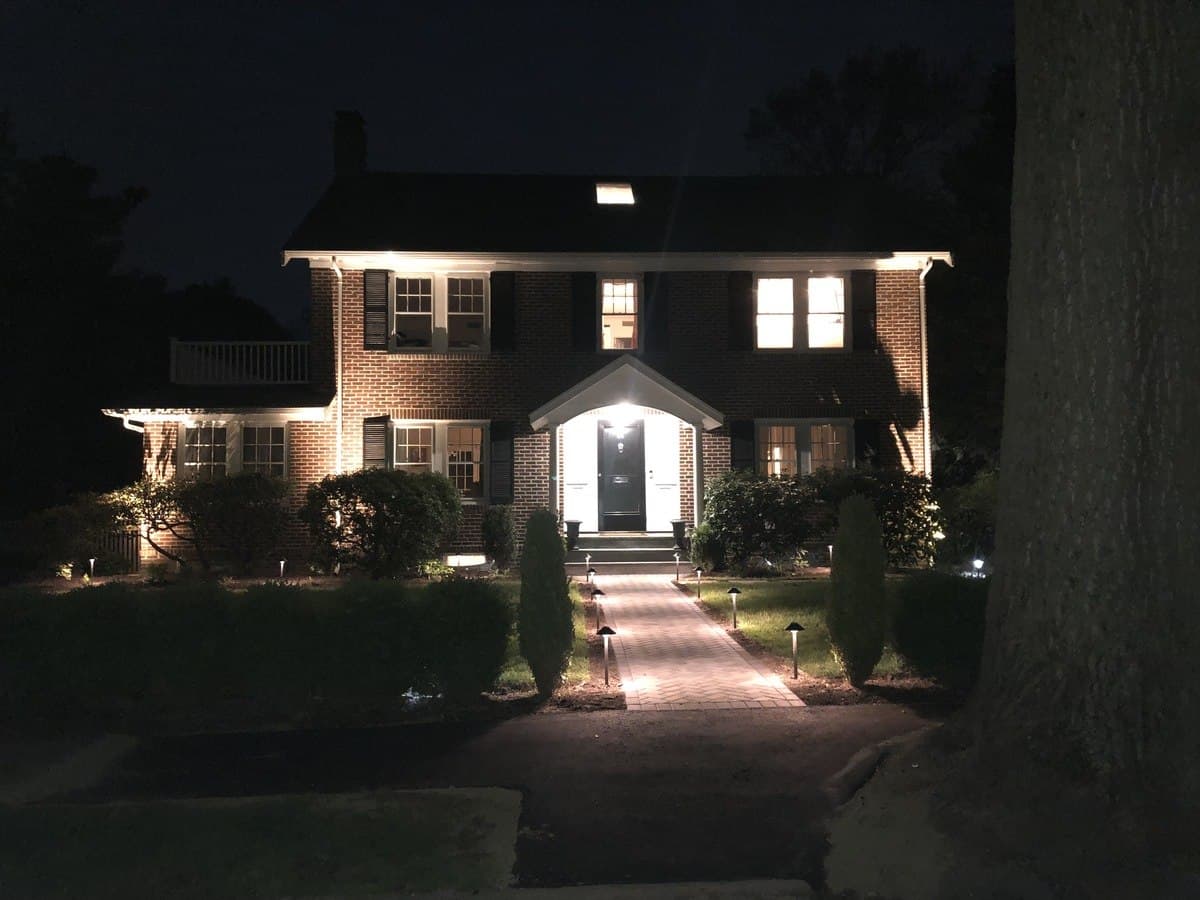
Pathway lighting done right serves three functions — safety, wayfinding, and curb appeal — without any single function compromising the others.
Design Pathways That Guide and Protect
Free consultations. Serving Northeast Atlanta within 40 miles of Grayson.
Request a Free ConsultationTimberstone Landscape is based in Grayson, Georgia and serves the greater Northeast Atlanta region within 40 miles: