
How to Layer Outdoor Lighting for a Georgia Patio or Garden Setting
Single-layer outdoor lighting — just pathway fixtures, or just uplights on trees, or just a string light system over the patio — produces flat results that feel incomplete regardless of how well each individual fixture is placed. The professional approach to outdoor lighting treats the night landscape as a three-dimensional composition and addresses it with three distinct layers: ambient, task, and accent. Each layer serves a different purpose, and together they create a cohesive environment rather than an arrangement of isolated bright spots.
Understanding why layering matters requires understanding what each layer does and, critically, what happens when it is missing. A patio with only uplighting looks dramatic from a distance but feels dark and undifferentiated at eye level when you are actually sitting in it. A patio with only task lighting over the grill and prep area illuminates the cooking zone brilliantly while leaving the dining and conversation areas in shadow. The layers need each other to produce a complete result.
The Three LayersLayer One — Ambient: The Foundation Light Level
Ambient outdoor lighting establishes the general light level of the space — the baseline illumination that allows people to see and move through the area comfortably without relying on specific task or accent sources. In an interior space, ambient light typically comes from ceiling fixtures. In an outdoor setting, ambient light comes from a combination of downlighting from overhead structures (covered pergola fixtures, wall sconces on the house exterior, post-mounted lanterns) and the soft fill light created when accent fixtures illuminate surrounding surfaces and vegetation.
The key characteristic of good ambient outdoor lighting is that it should feel sourceless — you should be able to perceive that the space is well-lit without being able to identify where the light is coming from. This is achieved through diffusion: using fixtures with frosted lenses, positioning fixtures so they illuminate surfaces rather than projecting into open space, and ensuring that the light from multiple sources blends into an even field rather than creating distinct pools.
"The reason single-layer outdoor lighting always feels incomplete is that each layer — ambient, task, accent — creates a different quality of light that the other two cannot replicate. Remove one layer and the entire composition loses dimension."
Layer Two — Task and Layer Three — Accent
Task lighting in an outdoor setting addresses specific functional zones: the grill and prep counter of an outdoor kitchen, the steps leading from the patio to the yard, the entry door and welcome area near the back gate. Task fixtures are directional, focused, and positioned to eliminate shadows in the specific locations where work or navigation happens. They are not the lights you notice — they are the lights that allow you to do things without noticing that you need light to do them.
Accent lighting is the layer that creates visual interest and depth. Uplighting on specimen trees, grazing light along a stone retaining wall, illuminating the face of a pergola column, or backlighting an ornamental grass planting all serve to create focal points that the eye moves between in the night landscape. Accent lighting is what makes outdoor lighting feel designed rather than merely functional. It is also the layer that provides the most creative latitude — the selection of accent targets, beam angles, and color temperatures determines the personality of the illuminated landscape.
- Ambient layer: overhead and perimeter sources that establish baseline light level without visible glare
- Task layer: directional fixtures at cooking zones, steps, entries, and circulation points
- Accent layer: uplights, wall grazers, and feature fixtures that create focal points and depth
- Layer interaction: ambient and accent fill each other's shadows; task light should not bleed into ambient zones
- Color temperature consistency: stay within 2700K–3000K across all three layers for visual cohesion
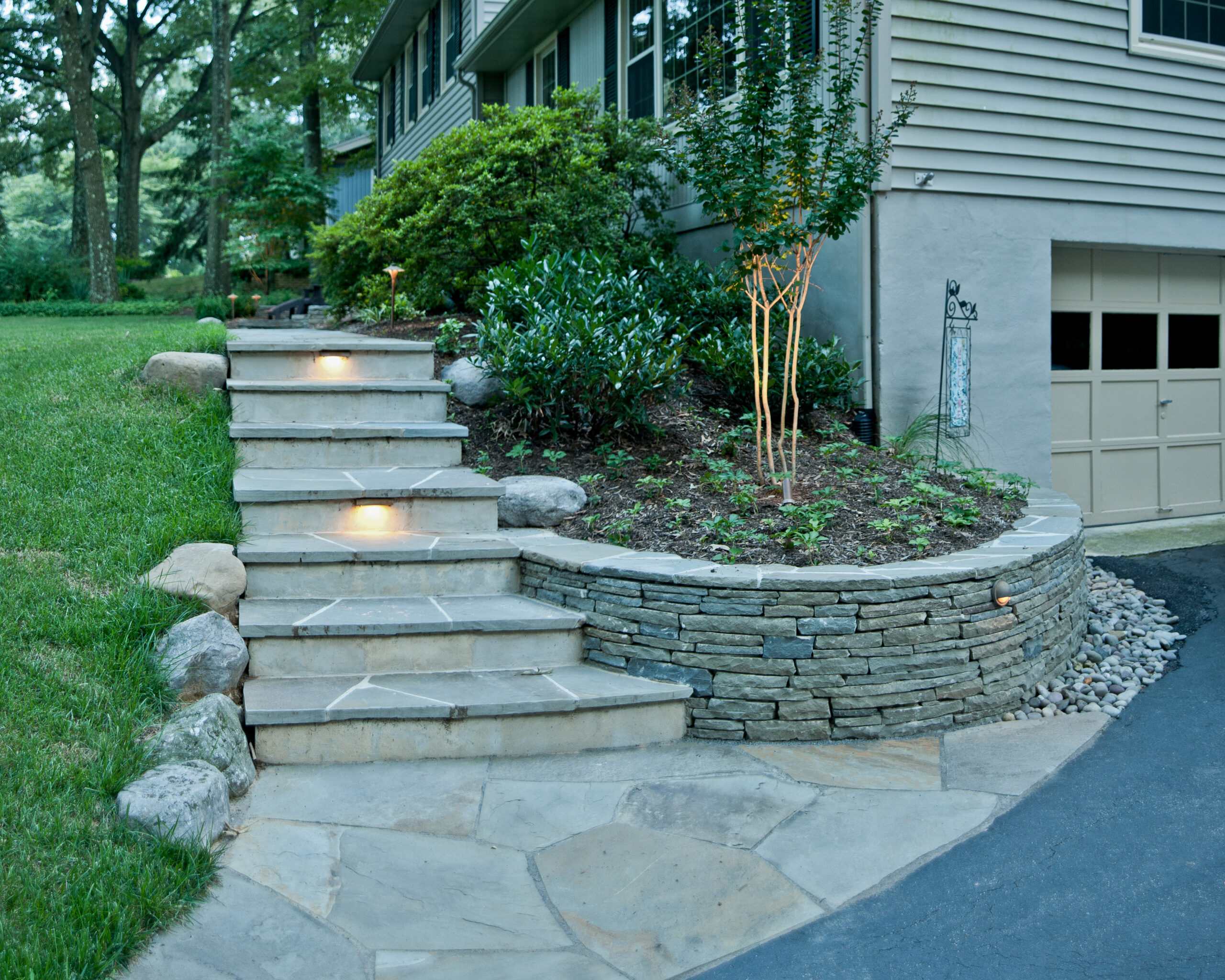
Layered outdoor lighting creates depth and dimension — each layer contributes what the others cannot, producing a complete nighttime composition.
Applying the Three-Layer Approach to Georgia Outdoor Living Spaces
In practice, designing a three-layer system for a Georgia patio begins with the ambient layer — identifying the overhead and perimeter sources that will establish baseline light, then working inward to task zones, and finally identifying the accent targets that will give the space its character. The sequence matters because the ambient layer informs how much supplemental task and accent light is needed. A well-designed ambient layer reduces the burden on task lighting and lets accent fixtures provide subtle punctuation rather than filling gaps.
Timberstone Landscape designs three-layer outdoor lighting systems for residential properties throughout Gwinnett, Forsyth, Hall, Fulton, and surrounding counties in Northeast Atlanta. As a Techo-Bloc Preferred Contractor based in Grayson, GA, our outdoor lighting designs are developed in parallel with the hardscape and landscape design — not retrofitted after construction. This integration is what allows the layers to work together coherently rather than being added as afterthoughts. Explore our hardscaping services and our design-build process.
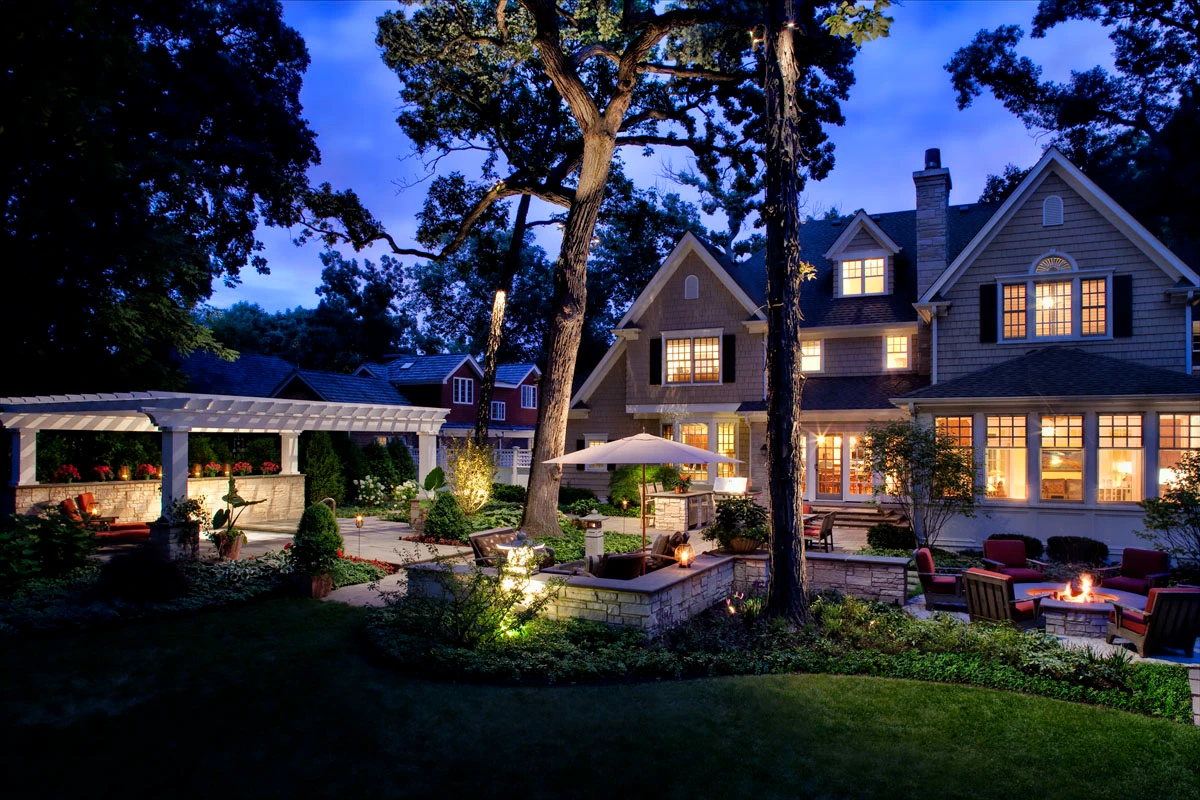
When all three layers are present and balanced, outdoor lighting produces an environment that feels as comfortable and intentional as any interior space.
Design a Complete Lighting Environment
Free consultations. Serving Northeast Atlanta within 40 miles of Grayson.
Request a Free ConsultationTimberstone Landscape is based in Grayson, Georgia and serves the greater Northeast Atlanta region within 40 miles: