
How Much Does a Retaining Wall Cost in Georgia — What's Driving the Price and What Cuts It Short
Retaining wall pricing in Georgia generates more confusion than almost any other hardscaping project. A homeowner can receive quotes for the same visible wall that vary by fifty percent, and neither contractor explains why the number is what it is. The honest explanation comes down to what happens behind and below the wall — and whether the contractor is accounting for it correctly.
Retaining wall cost in Northeast Atlanta typically ranges from $40 to $80 per linear foot for residential segmental wall systems, depending on wall height, drainage requirements, geogrid reinforcement, base engineering, and material selection. That range isn't primarily about contractor margin — it's about whether the drainage aggregate, drain tile, geogrid reinforcement, and base depth are being specified correctly for the wall's actual structural requirements. The quote at the low end of the range may not be including the engineering components that determine whether the wall holds or fails.
What Drives the PriceWall Height — The Primary Cost Multiplier
Wall height is the single largest driver of retaining wall cost, for reasons that are structural rather than material. Taller walls require more geogrid reinforcement layers, deeper base preparation, and more precise batter angle specification. A two-foot decorative garden wall and a four-foot structural retaining wall are completely different engineering problems, even if the facing material is the same. The four-foot wall is holding a significantly larger mass of soil with a significantly higher hydrostatic pressure potential — it requires engineering that a two-foot wall doesn't. Pricing those two walls the same way is either a mistake or an omission.
"The cheapest retaining wall quote is often the one that left out the engineering. You find out later — usually after a heavy rain."
Drainage and Geogrid — Where Budget Cuts Create Structural Failures
Drainage aggregate placement and drain tile installation are non-negotiable on any wall in Georgia's clay soil environment. Without proper drainage behind the wall face, hydrostatic pressure builds during rain events and pushes the wall outward. The cost of omitting drainage — a relatively modest line item — shows up as wall movement, bowing, or failure within a few seasons. Similarly, geogrid reinforcement for walls above three feet is a structural requirement, not an upgrade. Eliminating it reduces wall cost but transfers the structural risk entirely to the homeowner.
Timberstone Landscape, based in Grayson, Georgia, is a Techo-Bloc Preferred Contractor and builds retaining walls to structural engineering standards on every project. We don't omit drainage or geogrid to hit a price point. We explain what each component costs and why it's required — and we present the honest cost of a wall that's actually built to hold. See our hardscaping services or our landscaping services for grading work that completes the solution.
- Wall height: primary cost driver — taller walls require more geogrid layers and deeper base engineering
- Drainage aggregate and drain tile: non-negotiable in Georgia clay — omitting this causes wall failure
- Geogrid reinforcement: required for walls above three feet — a structural component, not an option
- Material selection: Techo-Bloc retaining collections vary in price; spec should match application load
- Site access and excavation: slope, access limitations, and existing soil conditions affect labor cost
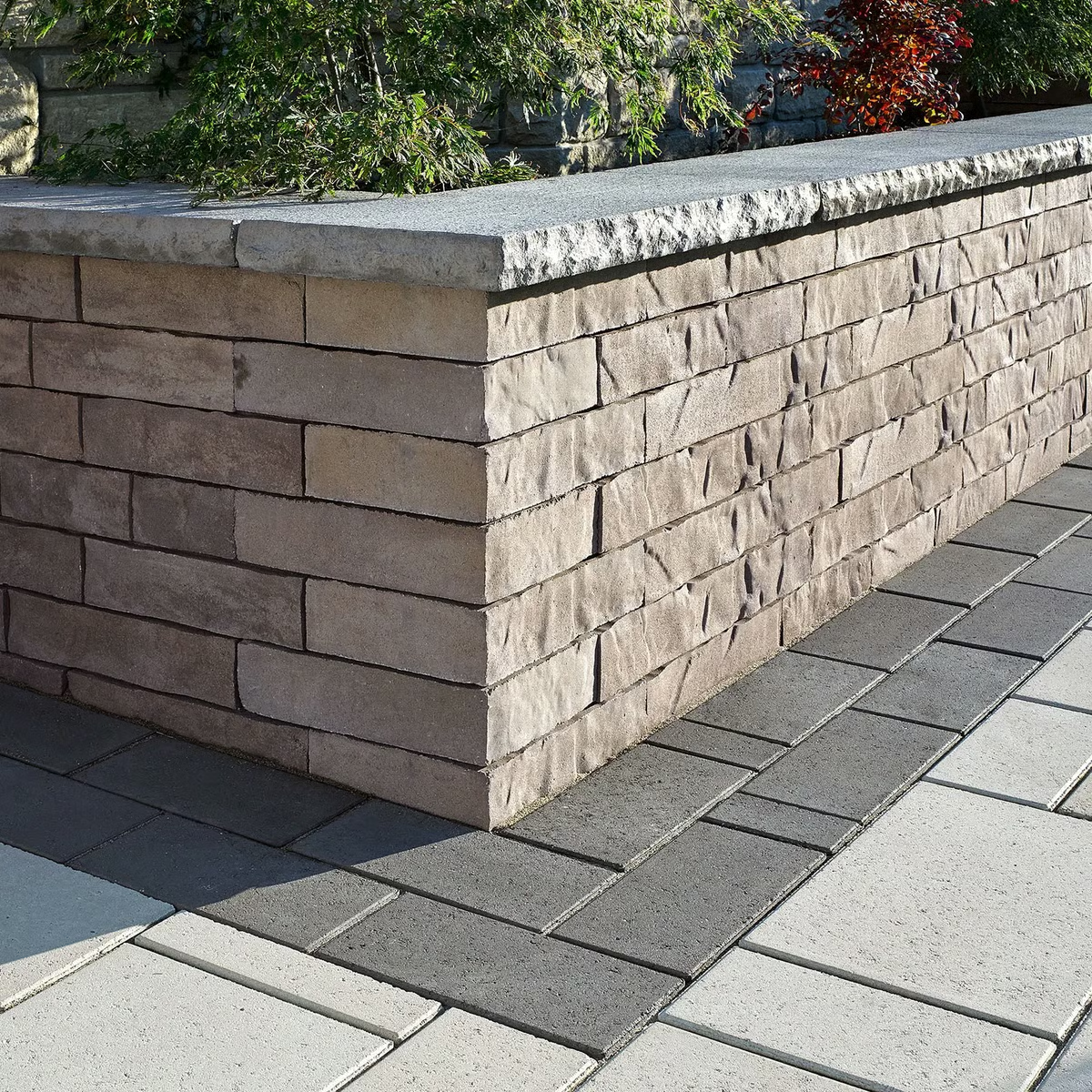
Transparent retaining wall pricing — what each component costs and why it's required, explained before the proposal is presented.
What the Price Difference Between Quotes Actually Means
When two retaining wall quotes differ significantly for the same visible wall, the difference is almost always in the engineering components — the elements the homeowner can't see after the wall is built. The contractor who quotes lower may be using shallower base depth, omitting drainage aggregate, skipping drain tile, reducing geogrid frequency, or using a lower-grade block product. Each of those decisions reduces upfront cost and increases the probability of premature failure. The higher quote may be the one that actually builds a wall that holds for twenty years.
The right way to compare quotes is not by the total number but by what each quote includes. Ask both contractors to specify: base excavation depth, aggregate specification, drainage method behind the wall, geogrid reinforcement schedule, and block selection rationale. A contractor who can answer those questions specifically is building a wall. A contractor who can't — or who gives vague answers — is stacking blocks and pricing accordingly.
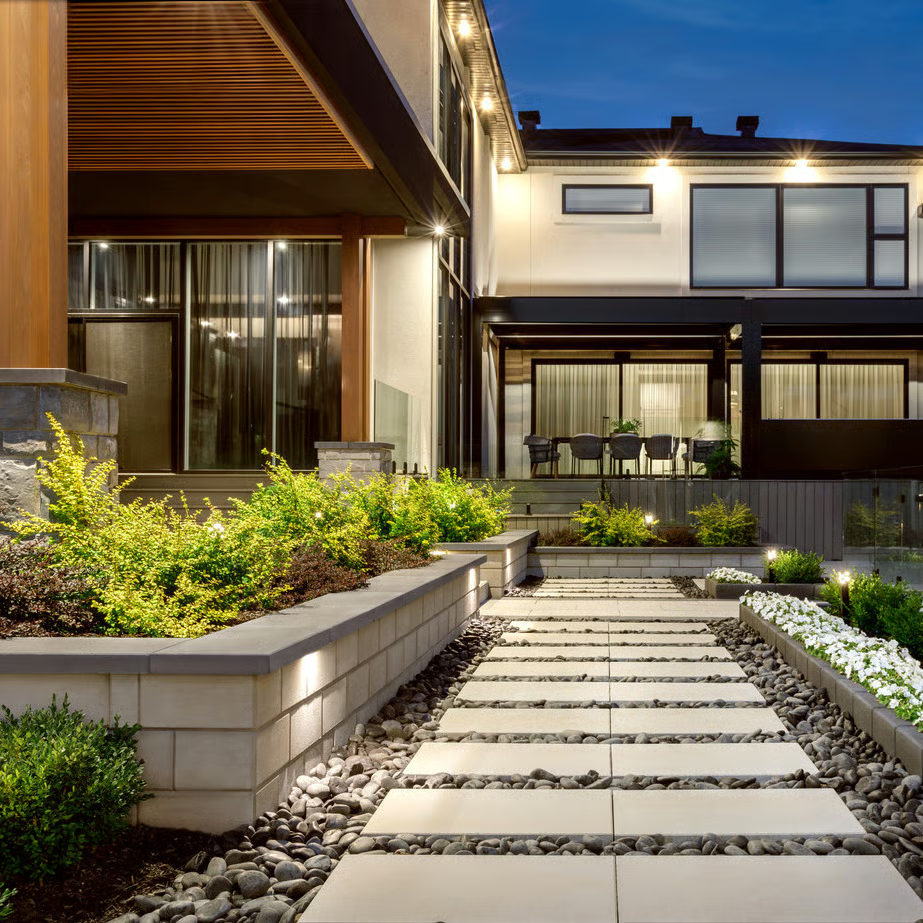
Retaining wall pricing that includes the engineering — because what you can't see after install day is what determines whether the wall holds.
Retaining Wall Pricing — Transparent From the First Call
Free site evaluations with cost-honest conversations. We tell you what drives retaining wall pricing in Georgia before you commit.
Request a Free EvaluationTimberstone Landscape is based in Grayson, Georgia and serves the greater Northeast Atlanta region within 40 miles: