
How Canton GA Homeowners Are Choosing Plants That Thrive in Georgia's Summer Heat
Canton's Cherokee County sits at the upper edge of Georgia's Piedmont region, where clay soils, hot and humid summers, and the periodic drought stress of July and August create a plant selection challenge that the nursery industry does not fully acknowledge. Most of what is on display in a garden center in April has been grown in ideal nursery conditions and chosen for immediate visual appeal — not for its track record in Georgia clay during a 95-degree August. The homeowners who build durable Canton landscapes learn to choose differently.
The difference between a plant that survives a Georgia summer and a plant that thrives through it is not about species alone — it is about the match between the plant's actual requirements and the conditions at the specific planting location. A crape myrtle thriving in full sun at a Cherokee County roadside may fail completely in a shaded, poorly drained side yard two blocks away. The plant did not fail. The selection decision failed.
Plant Selection PrinciplesGeorgia Clay, Summer Heat, and Drought Tolerance — The Selection Framework
Cherokee County's predominant soil type is Cecil clay loam — a red, heavy clay soil that drains slowly when saturated and cracks when dry. This creates a challenging dual-stress environment for most plants: wet feet in spring, root-drying conditions in summer. The plants that perform best in this context are those adapted to variable moisture — not plants requiring consistent moisture (most annuals and perennials from the Pacific Northwest or Mountain West) and not plants requiring excellent drainage (Mediterranean herbs, lavender, many succulents).
Native and regionally adapted plants have the advantage of evolutionary adaptation to exactly these conditions. Drought-tolerant native shrubs like beautyberry (Callicarpa americana), native viburnums, and switchgrass (Panicum virgatum) tolerate both wet periods and dry spells because they evolved in the same alternating conditions. Non-native plants that perform consistently in Cherokee County clay are typically species from similar climate analogs — the mid-Atlantic states, the lower Midwest, or Japan's humid temperate zones — where hot summers and clay soils are equally characteristic.
"The most expensive plant selection mistake in Georgia is choosing based on how something looks at the nursery in April. The question that matters is how it performs in Cherokee County clay in August — and that question requires knowing the plant, not just the label."
Foundation Planting, Spacing, and the Mature Performance Standard
Foundation planting — the shrubs and perennials placed against the house foundation — is where the mature size mistake most consistently appears in Canton landscapes. Homeowners choose compact-looking shrubs in gallon containers that are described as "dwarf" varieties, plant them 18 inches from the foundation, and discover three years later that "dwarf" in nursery terminology often means 4 to 6 feet at maturity, which is still large enough to block windows, retain moisture against the foundation wall, and require annual pruning to stay manageable.
The foundation planting principle that produces durable results is simple: plant at one-half of mature width from the foundation wall, and one-half of mature width from adjacent plants. A shrub that reaches 4 feet wide at maturity should be planted 2 feet from the foundation and 2 feet from the nearest neighbor. At installation, this spacing looks extremely sparse. At year five, it looks appropriate. At year ten, it looks intentional. The alternative — planting for immediate visual density — looks great for two years and requires replacement or heavy pruning indefinitely thereafter.
- Georgia clay performers: native beautyberry, viburnums, switchgrass, oakleaf hydrangea
- Drought-tolerant for Cherokee County: crape myrtle, muhly grass, salvia, rudbeckia, sedums
- Foundation spacing rule: plant at 1/2 mature width from wall and from adjacent plants
- Avoid in heavy clay: lavender, rosemary, Mediterranean herbs — poor drainage tolerance
- High-value woody plants: plant in fall for root establishment before summer heat stress
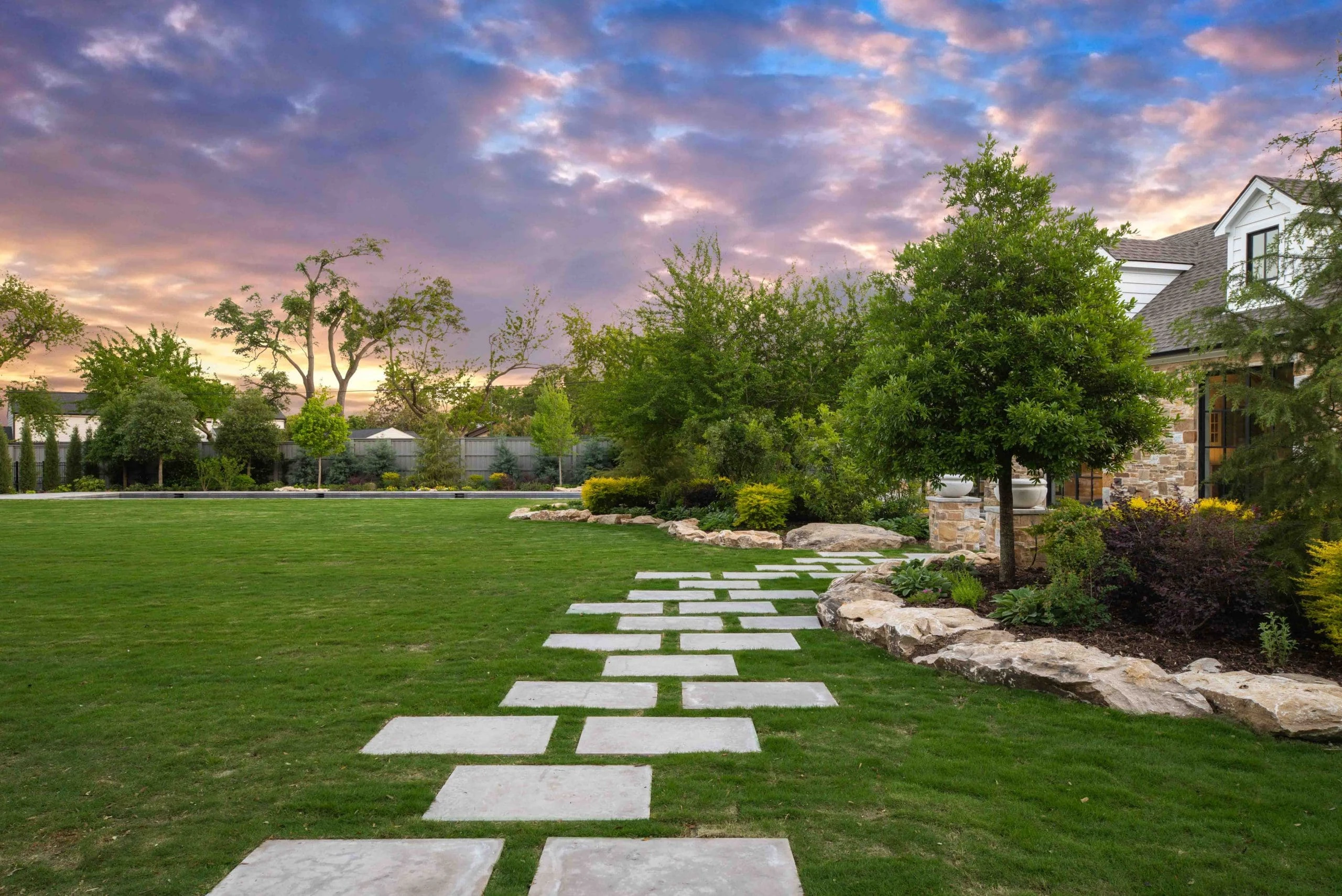
Plant selection for Canton GA means choosing for mature performance in Cherokee County clay — not for how the plant looks at the garden center in April.
When to Plant and How Timing Affects Success in Canton GA
Fall planting — October through early December — is the most favorable season for establishing woody plants in Canton GA. The cooling air temperatures reduce transpiration stress while the soil remains warm enough for active root growth. A shrub or tree planted in October has the entire winter and spring to develop its root system before facing its first Georgia summer. The same plant installed in May faces immediate heat stress with a root system that has had weeks, not months, to establish. Fall-planted trees and shrubs in Cherokee County consistently outperform spring-planted equivalents by the end of the first growing season.
Timberstone Landscape serves Canton and surrounding Cherokee County communities as part of our Northeast Atlanta service area, alongside Gwinnett, Forsyth, Hall, Fulton, and surrounding counties. As a Techo-Bloc Preferred Contractor based in Grayson, GA, our landscape design approach combines plant knowledge, site analysis, and the kind of long-view planning that produces landscapes worth keeping. Explore our full hardscaping services and our design-build process.
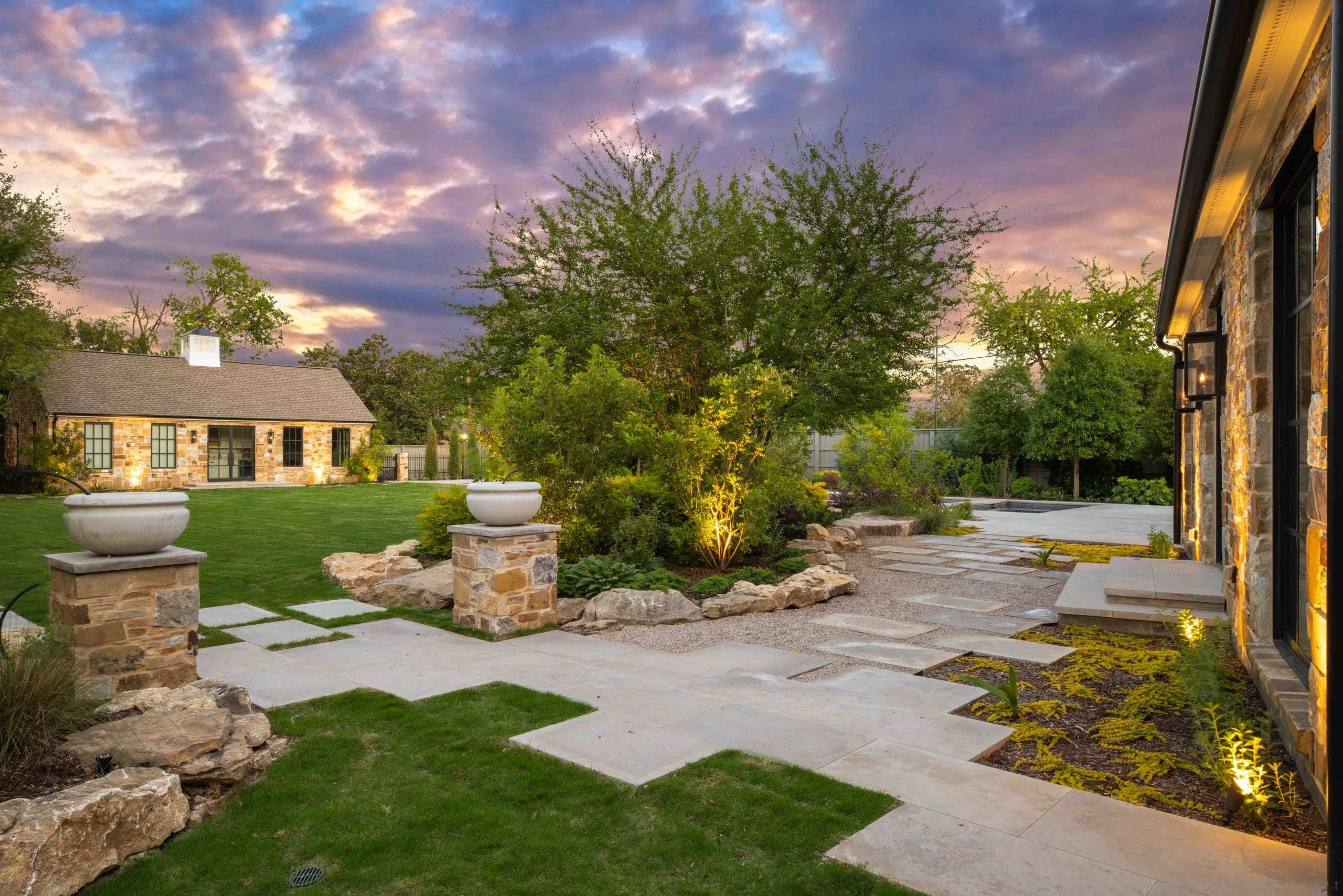
Plants chosen for mature performance in Canton's clay soil and summer heat outlast and outperform plants chosen for spring nursery appeal by year three.
Choose Plants That Last in Georgia
Free consultations. Serving Northeast Atlanta within 40 miles of Grayson.
Request a Free ConsultationTimberstone Landscape is based in Grayson, Georgia and serves the greater Northeast Atlanta region within 40 miles: