
How Winder GA Homeowners Are Creating Low-Maintenance Landscapes That Actually Last
The phrase "low-maintenance landscape" is one of the most frequently misunderstood terms in residential landscaping. Homeowners in Winder, GA — and across Barrow County — hear it and imagine a yard that requires nothing: no watering, no pruning, no weeding, no intervention. What it actually describes is a landscape designed so thoroughly upfront that the ongoing maintenance it requires is modest, predictable, and well within a homeowner's capacity or a reasonable maintenance budget. Low maintenance is a design outcome, not an absence of design.
The landscapes that require the most ongoing labor are not the ones that were neglected at design time — they are the ones where the wrong plants were installed in the wrong locations, where bed edges were not defined clearly, where mulch was applied too thinly, and where irrigation was either absent or poorly designed. These decisions, made or not made at installation, generate years of compounding maintenance requirements that no amount of weekend work will permanently resolve.
The Low-Maintenance FrameworkRight Plant Right Place — The Foundation of Low-Maintenance Design
Right-plant-right-place is not a platitude — it is the most consequential design decision in a low-maintenance landscape. A plant installed in conditions that match its native requirements will grow to appropriate size, resist disease, and require pruning only for occasional shaping. The same plant installed in conditions that don't match — a sun-loving crape myrtle in a shaded side yard, a moisture-sensitive ornamental in a low-lying area that stays wet — will struggle constantly, require supplemental care to survive, and never achieve the form it would have in appropriate conditions.
In Winder's Barrow County, the key right-place considerations are sun/shade mapping, soil moisture at different points on the property, and frost pocket identification. Barrow County's mixed topography creates microclimates where low-lying areas stay colder longer in spring, where clay depressions stay wet for days after rain, and where southern exposures on slopes dry out rapidly in summer. A site analysis that identifies these conditions before plant selection is the design work that makes right-plant-right-place achievable rather than aspirational.
"Low-maintenance landscaping is not about choosing plants that need nothing — it is about choosing plants that need exactly what the site already provides, so the landscape sustains itself rather than requiring constant intervention to survive."
Mulch Depth, Drip Irrigation, and Defined Bed Edges
Three physical elements determine how much ongoing maintenance a planting bed requires: mulch depth, irrigation method, and bed edge definition. Mulch at the correct depth — 3 inches of shredded hardwood or pine bark — suppresses weed germination, retains soil moisture through Georgia's dry summers, and moderates soil temperature. Mulch applied at 1 to 2 inches provides aesthetic coverage but minimal weed suppression, which means the beds require hand-weeding through the growing season. The difference between 2-inch and 3-inch mulch depth is the difference between a bed that needs weekly attention and one that needs monthly attention.
Drip irrigation — soaker hoses or emitter systems at the root zone — delivers water directly where plants need it without broadcasting it over the entire bed surface where it promotes weed germination. A bed with drip irrigation and correct mulch depth is a dramatically lower-maintenance environment than the same bed with overhead spray irrigation or no irrigation at all. Defined bed edges — either a clean soil cut or a physical edging material at the lawn boundary — are the final element: without them, turf grass invades the beds consistently, requiring monthly re-edging to maintain separation.
- Right plant right place: site analysis before plant selection — sun, moisture, frost, soil type
- Mulch depth: minimum 3 inches of shredded hardwood or pine bark for weed suppression
- Mulch clearance: keep 2–3 inches away from plant stems and tree trunks to prevent rot
- Drip irrigation: delivers water at root zone, reduces weed pressure vs. overhead spray
- Bed edging: clean cut or physical edging material prevents turf grass invasion
- Plant spacing: use mature-size spacing at installation, not installation-size spacing
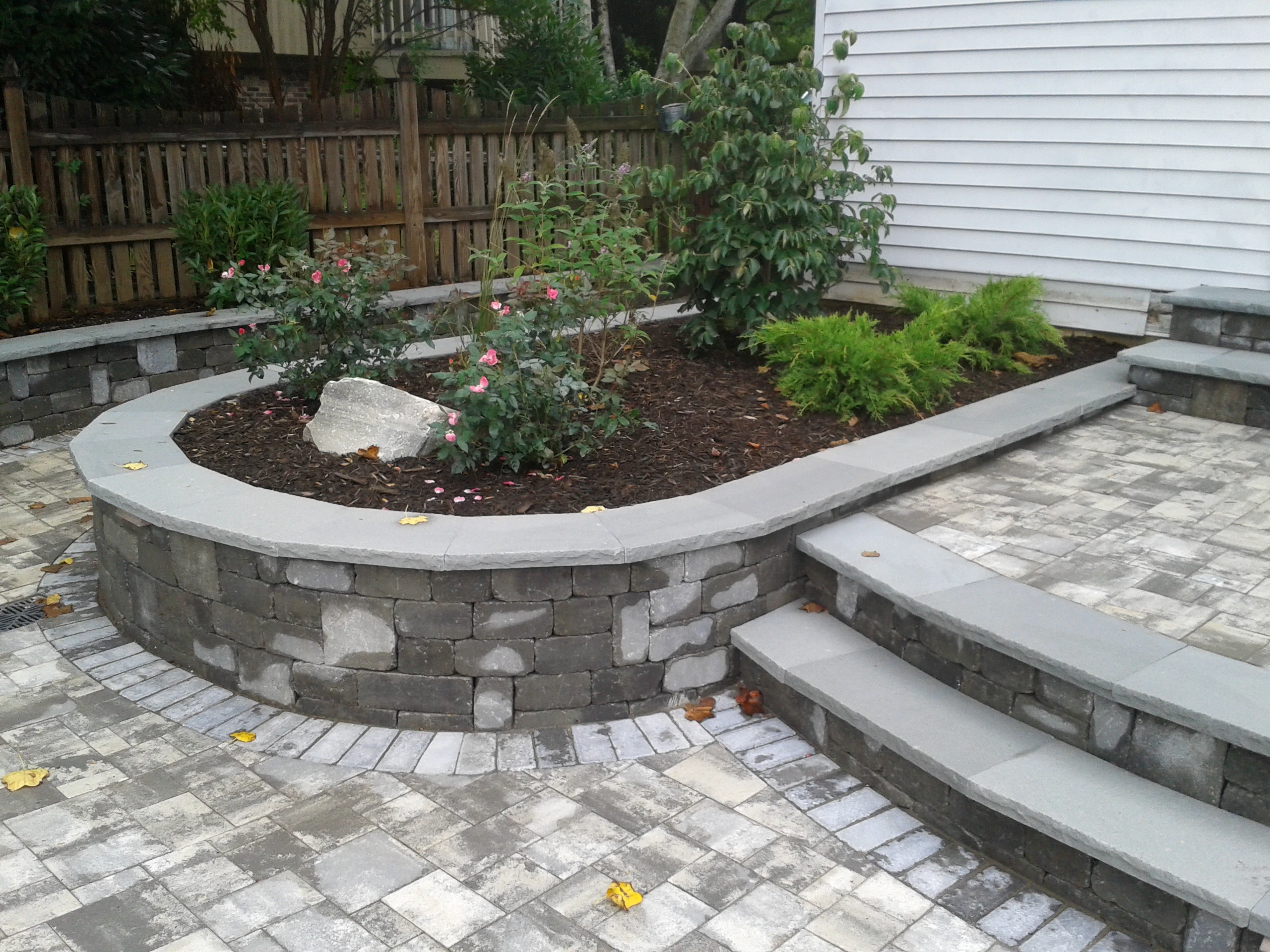
Low-maintenance landscapes in Winder GA are built on design decisions — right plant selection, mulch depth, irrigation method, and bed edges — not on choosing plants that require nothing.
What Low-Maintenance Actually Means Long-Term for Winder GA Properties
A properly designed and installed low-maintenance landscape in Winder should require roughly two to four visits per year from a landscape maintenance provider: a spring cleanup and edging refresh, a summer mulch renewal, a fall leaf management and winterization pass, and an optional late-winter pruning. Between those visits, the landscape should be essentially self-sustaining — the mulch suppressing weeds, the drip irrigation sustaining the plants through dry spells, and the right-plant-right-place selections growing without the intervention that mismatched plants would require.
Timberstone Landscape serves Winder, GA and surrounding Barrow County as part of our Northeast Atlanta service area, alongside clients across Gwinnett, Forsyth, Hall, Fulton, and surrounding counties. As a Techo-Bloc Preferred Contractor based in Grayson, GA, we design landscapes with long-term maintenance reality as a primary design criterion — not an afterthought. Explore our hardscaping services and our design-build process.
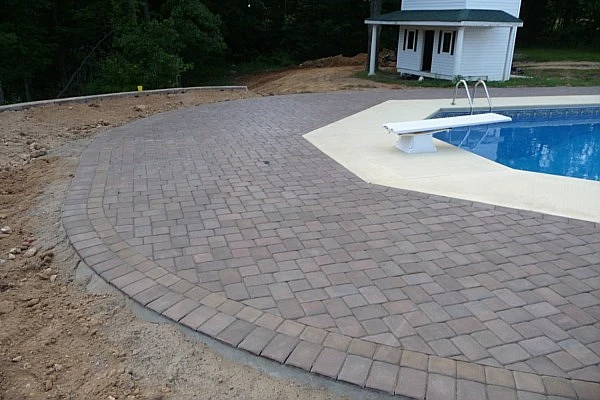
The investment in low-maintenance design pays back every year — in reduced maintenance hours, lower service costs, and a landscape that looks intentional rather than managed to survive.
Build a Landscape You Don't Have to Fight
Free consultations. Serving Northeast Atlanta within 40 miles of Grayson.
Request a Free ConsultationTimberstone Landscape is based in Grayson, Georgia and serves the greater Northeast Atlanta region within 40 miles: