
Why Natural Stone Steps in Georgia Last Longer Than Poured Concrete — The Real Reason
Walk the steps of any Georgia property that's been around for fifty years — a farmhouse in Barrow County, an older neighborhood home in Lawrenceville — and if the steps are still solid, they're almost certainly stone. Natural stone steps simply outlast poured concrete by a factor that has nothing to do with maintenance schedules. It has to do with material physics.
Poured concrete steps crack. Not might crack — will crack. The only question is when. Georgia's clay soil moves with moisture, and that movement transmits directly to any rigid poured structure sitting on or embedded in it. Georgia's occasional freezing temperatures create freeze-thaw expansion in moisture that has infiltrated concrete's porous surface. Georgia's heavy rainfall events saturate the base under concrete steps and cause settlement. Each of these forces works against concrete's fundamental weakness: it's a monolithic rigid structure that cannot accommodate movement.
Timberstone Landscape installs natural stone steps and paver step systems throughout Northeast Atlanta. As a Techo-Bloc Preferred Contractor (Techo-Pro), we select and install step materials based on the specific site conditions and aesthetic requirements — with longevity as the primary engineering consideration.
The Material Difference That Determines Longevity
Natural stone — granite, bluestone, limestone, fieldstone — is a dense, non-porous material with a crystalline or sedimentary structure that has been formed under geological pressure. It doesn't absorb moisture readily, it doesn't crack from freeze-thaw expansion, and it doesn't lose surface integrity from weathering. The same properties that make it heavy and expensive to quarry are the ones that make it nearly indestructible as a step material in Georgia's climate.
Engineered paver step units from Techo-Bloc offer a related advantage: they're produced at 8,000+ PSI compressive strength with very low water absorption rates. They don't match the geological permanence of quarried stone, but they far exceed poured concrete in both density and longevity. For properties where the cost of quarried stone steps is prohibitive, paver step units are the correct alternative — not poured concrete.
"Natural stone steps in Georgia don't age down. They don't crack, spall, or stain into illegibility. They get covered in beautiful moss at the edges and they hold their position in the ground exactly where they were placed fifty years ago."
What Concrete Steps Actually Cost Over Time
Concrete steps installed at a lower upfront cost than stone will typically require patching within ten years and complete replacement within twenty to twenty-five years in Georgia conditions. The patching is visible — color doesn't match, texture doesn't match — and it reads as maintenance rather than craftsmanship. The replacement cycle doubles the total cost of ownership compared to the initial installation.
Natural stone steps installed correctly — set on proper base preparation with appropriate depth for Georgia conditions — rarely need any intervention. The material cost premium over concrete is recovered within the first replacement cycle that stone avoids. Over the full life of the property, stone steps are simply less expensive than concrete steps with multiple replacement cycles.
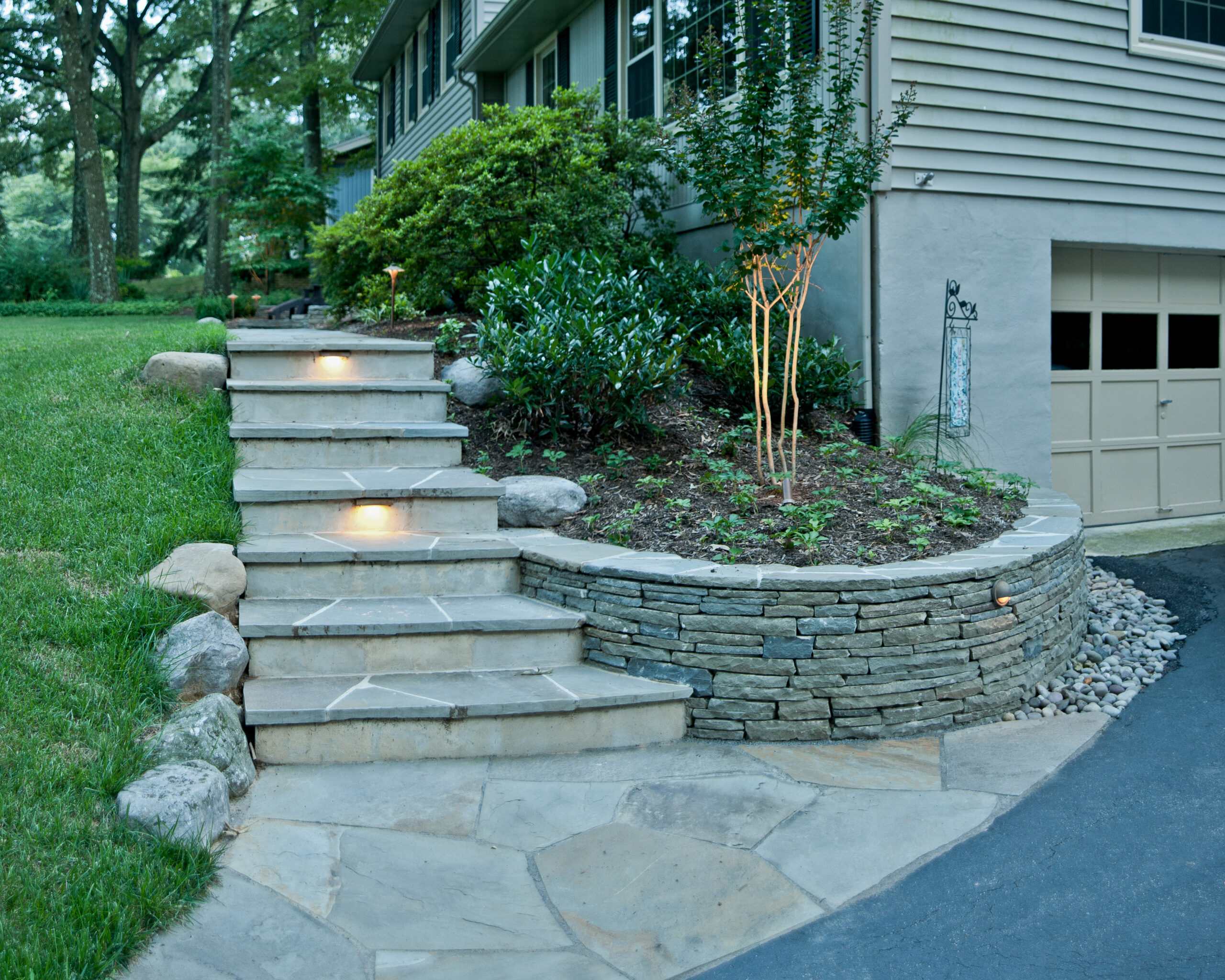
- Granite and bluestone absorb virtually no moisture — Georgia freeze-thaw cycles cause no damage
- Stone's independent unit structure accommodates ground movement without cracking
- No surface spalling or staining from Georgia's UV exposure, rainfall, or chemical deicing
- Poured concrete replacement cycle every 20–25 years vs. stone's effective permanence
- Techo-Bloc paver step units offer similar longevity at lower cost than quarried stone
Why Timberstone Recommends Stone for Georgia Step Projects
We've replaced enough concrete front entry steps in Northeast Atlanta to understand the pattern clearly. The homeowner who chose concrete fifteen years ago saves a few thousand dollars at installation. The homeowner who chose stone is still living with the original investment, looking better every year as the stone develops a natural patina. When we're designing front entry steps, we recommend stone or paver systems — not concrete — because our clients deserve a solution that works for the life of the property, not for the first decade.
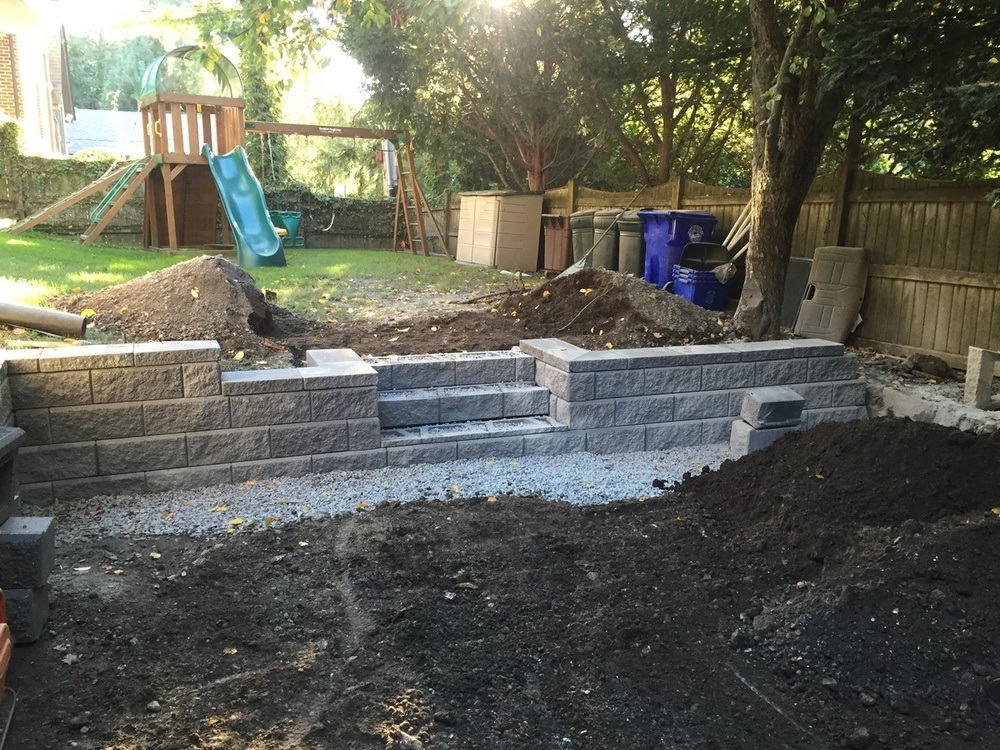
Steps That Last as Long as the House
Timberstone Landscape installs natural stone and paver step systems across Gwinnett, Forsyth, Hall, and surrounding counties. Free estimates available.
Call (678) 356-7952