
Why Most Paver Walkways in Georgia Fail Within Two Years — And What the Installation Gap Actually Is
Paver walkways are one of the most commonly installed hardscape elements in Georgia — and one of the most commonly failed. The failure isn't usually in the paver itself. It's in what was done before the paver was placed. That gap — between what a correctly installed walkway requires and what most installations actually include — is consistent, predictable, and entirely preventable.
The two-year failure timeline for Georgia paver walkways is not an exaggeration. The combination of Georgia's clay soil, concentrated foot traffic loads on narrow paved surfaces, and the absence of proper edge restraint creates a condition where paver migration begins quickly and accelerates with each rain event. Once the edge restraint fails or was never adequately installed, the pavers at the perimeter begin shifting outward — and the interior pavers follow. The walkway that looked clean at installation begins showing gaps, displacement, and surface unevenness within two full seasons.
The Installation GapEdge Restraint — The Most Commonly Skipped Component
Edge restraint is the structural perimeter that prevents pavers from migrating laterally. Without it, every paver in the installation is held in place only by the friction of its neighbors — a system that works until it doesn't, and Georgia's soil movement means it doesn't hold long. Proper edge restraint for a paver walkway means rigid plastic or aluminum restraint spiked into the compacted aggregate base at specified intervals, with the base aggregate extending beyond the last paver course to provide a stable anchor zone. This is not an optional upgrade. Without it, walkway failure is a matter of when, not if.
"The walkway that fails in year two was built without edge restraint, without adequate base depth, or both. The fix isn't a repair — it's a rebuild."
Base Depth and Preparation — Why Walkways Are Different From Patios
Walkways concentrate foot traffic load on a narrow surface area. The base engineering that serves a broad patio doesn't automatically translate to a narrow walkway — in fact, walkways often demand a more carefully calibrated base because the load per square foot is higher and the lateral stability provided by a wide installed surface area isn't available. Excavation depth for a residential paver walkway in Georgia should be a minimum of 6–8 inches — accounting for 4–6 inches of compacted aggregate base, 1 inch of bedding sand, and the paver depth. Contractors who excavate only to paver depth — removing just enough soil to set the pavers level with adjacent grade — are setting a surface, not installing a system.
Bedding sand consistency is another common failure point. Coarse sand of consistent gradation — not mason sand or fine sand — is the correct bedding material because it compacts properly and doesn't migrate under load. Fine sands wash out through the joint openings during rain events, leaving void space under the pavers that creates the rocking and displacement homeowners attribute to the paver itself. The paver is fine. The installation is not. Timberstone Landscape, based in Grayson, Georgia, is a Techo-Bloc Preferred Contractor and builds walkways to the standard that prevents this failure consistently. See our hardscaping services or our design-build process.
- Edge restraint: rigid perimeter anchored into compacted base — without it, migration begins immediately
- Base depth: minimum 6–8 inches total excavation — many installations are cut to 3–4 inches
- Bedding sand: coarse consistent gradation — fine sands wash out and create void under pavers
- Base compaction: power-plate compacted aggregate, not hand-tamped or uncompacted fill
- Joint sand: polymeric sand that locks joints and resists washout — not regular sand that washes out with rain
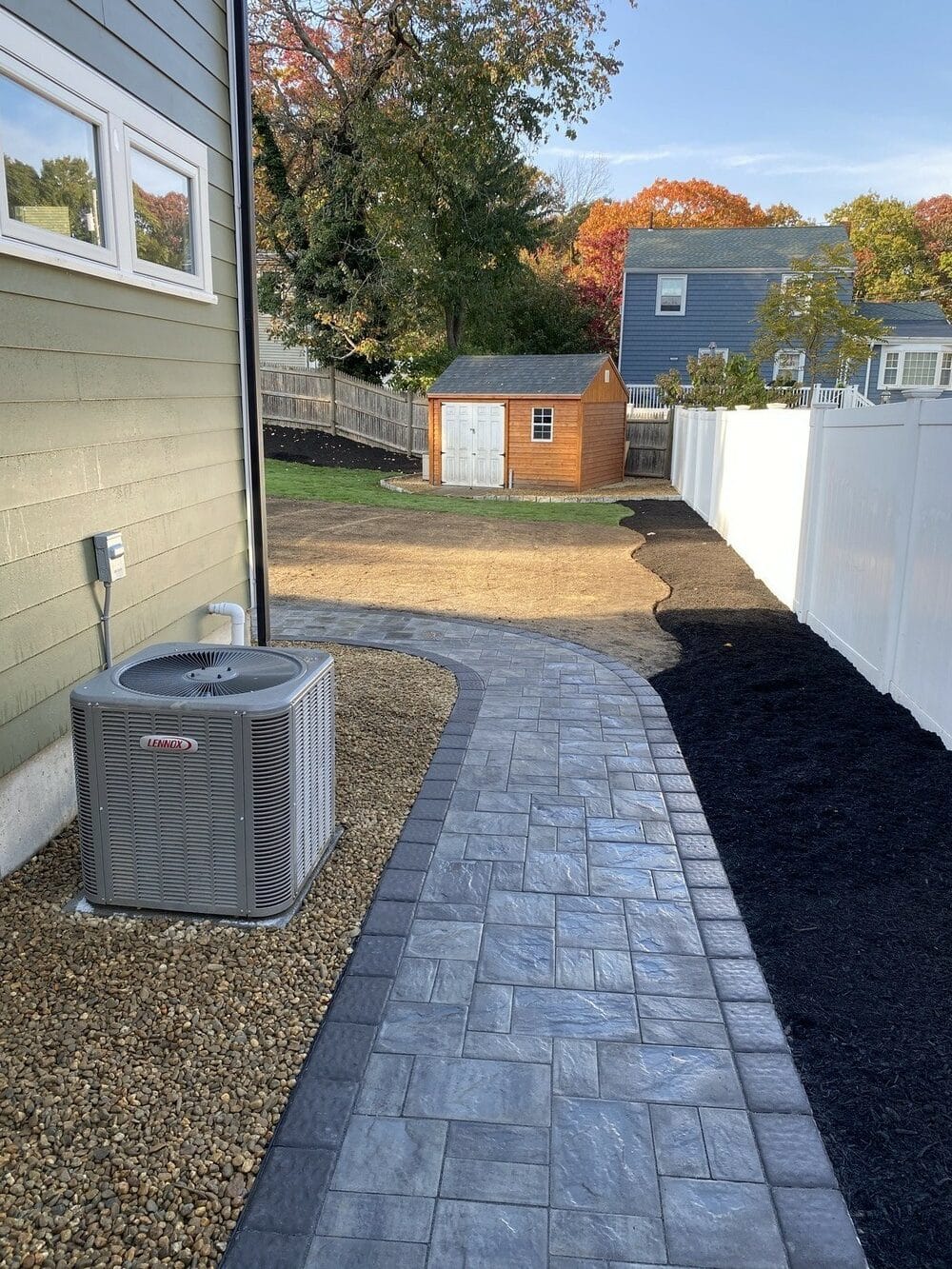
Walkway installation to standard — edge restraint, base depth, and bedding material specified to prevent the two-year failure pattern.
What a Correctly Installed Walkway Looks Like at Year Five
A paver walkway installed to the correct standard — proper excavation, compacted aggregate base at appropriate depth, correct bedding sand, rigid edge restraint with adequate anchor depth, and polymeric joint sand — looks essentially the same at year five as it did at installation. The pavers are still in alignment. The joints are still filled. The surface is still level. No rocking, no gaps, no perimeter displacement. That's not exceptional performance — it's the expected performance of a correctly installed system.
The disappointment most Georgia homeowners experience with paver walkways is entirely a function of installation shortcuts that were invisible at the time of installation. Timberstone Landscape explains every component of our walkway installation — what it is, why it's required, and what omitting it causes — because an informed homeowner is the best protection against the installation gap that causes most paver walkway failures in Georgia.
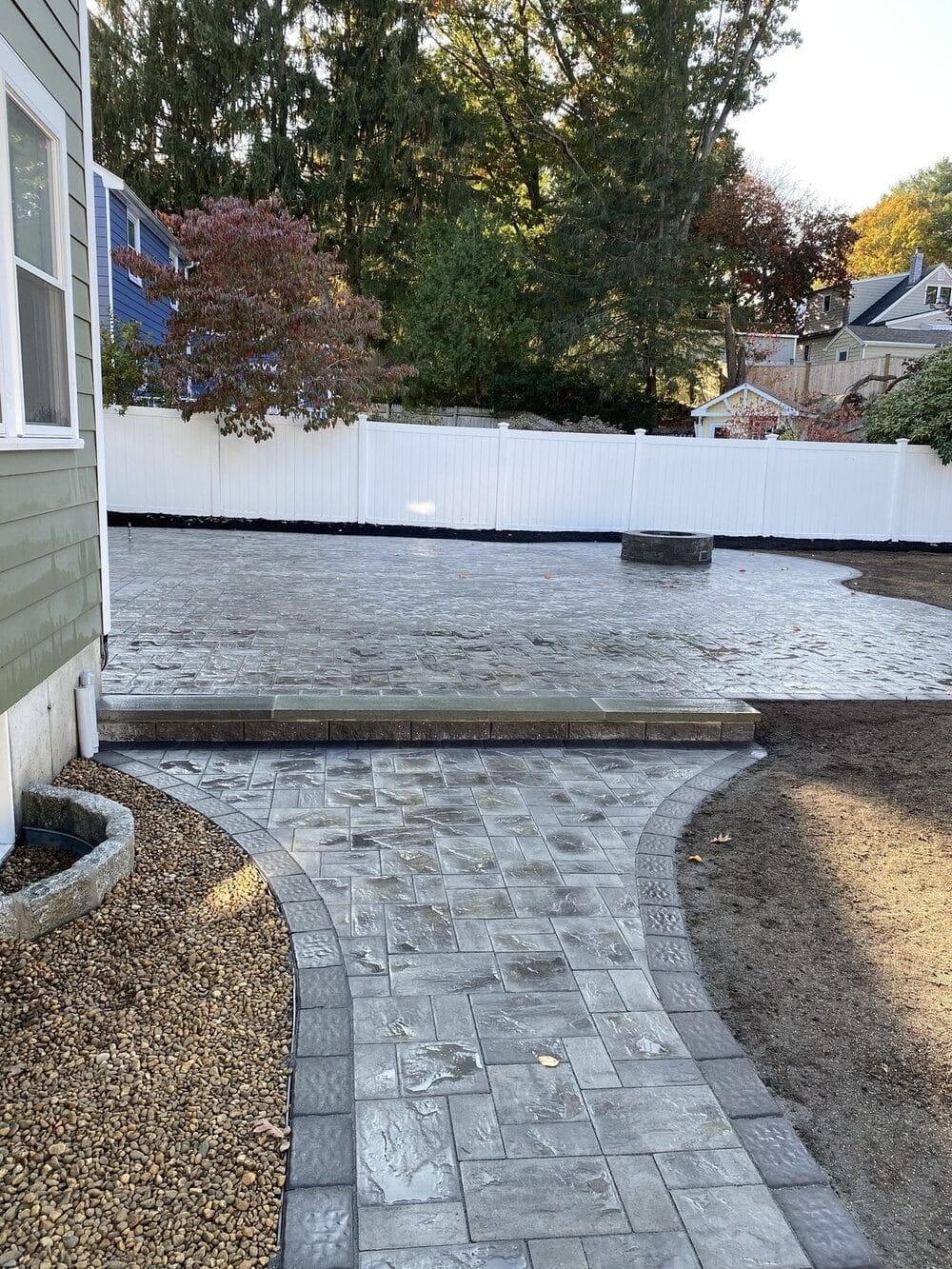
The installation gap closed — walkways built to the standard that holds at year five, not just at installation.
Paver Walkways Built to Not Fail — The Installation Gap Closed
Free consultations. We explain exactly what most walkway installs skip — and how we build to prevent it.
Request a Free ConsultationTimberstone Landscape is based in Grayson, Georgia and serves the greater Northeast Atlanta region within 40 miles: