
Why Low-Voltage Lighting Systems Outperform Solar Fixtures in Georgia Landscapes
Solar landscape lighting appeals to homeowners because the math appears simple: no wiring, no electrician, no operating costs. In Georgia's climate, that math breaks down in several places simultaneously. The combination of summer heat, tree canopy shading, battery chemistry, and the inconsistent daylight hours across seasons creates conditions where solar landscape fixtures reliably underperform the expectation set by their packaging.
This is not a theoretical concern — it is what happens to the vast majority of solar landscape lighting installations in the suburban Atlanta area within 18 to 24 months. The fixtures dim, fail to reach full brightness, turn off early in the evening, or stop illuminating entirely on overcast days. Homeowners replace them seasonally, spending more over time than a hardwired system would have cost initially, and still ending up with inconsistent results.
Solar Failure Modes in GeorgiaWhy Solar Lighting Fails Under Georgia Tree Canopy and Summer Heat
Georgia's mature residential landscapes are heavily wooded in most Gwinnett, Forsyth, Hall, and Cherokee County neighborhoods. A solar panel mounted on a pathway fixture that sits under a live oak, magnolia, or mature pine is not receiving the direct sunlight hours that its charging system requires. Most residential solar landscape fixtures require 6 to 8 hours of direct sun to achieve a full charge. In a landscape with 40% to 60% canopy coverage — which describes the majority of established Northeast Atlanta residential properties — full charging is rare and partial charging is the norm.
Georgia's summer heat introduces a second failure mode: battery degradation. Lithium and NiMH batteries in solar fixtures are rated for performance at moderate temperatures. When a dark-colored fixture housing sits in direct Georgia summer sun with ambient temperatures above 95°F, the internal battery temperature can easily exceed 120°F — well into the thermal range where battery capacity permanently degrades. A solar fixture that performs adequately in its first Georgia summer may deliver only 60% of rated output by its second summer and 40% by its third.
"The promise of solar landscape lighting is convenience and zero operating cost. In Georgia's climate, what it actually delivers is inconsistency, seasonal decline, and replacement cycles that cost more than a hardwired system would have."
How 12V Low-Voltage Systems Deliver Consistent Year-Round Performance
A 12-volt low-voltage hardwired landscape lighting system draws power from a dedicated transformer connected to a standard outdoor outlet. The transformer is programmable — timer settings, astronomical clock functionality, and zone control allow precise management of when each zone turns on and off. The lighting output is consistent regardless of season, cloud cover, or canopy shading because the energy source is the utility grid, not ambient sunlight.
The operating cost of a full 12V LED landscape lighting system is minimal. A typical residential installation with 20 to 30 LED fixtures running 6 hours per night consumes approximately 2 to 4 kWh per day — roughly $0.40 to $0.80 per day at Georgia Power residential rates. Annualized, this is $150 to $290 per year in operating cost for a system that performs identically on a cloudy November night as it does on a clear June evening. That reliability is what solar cannot replicate under Georgia conditions.
- Solar failure under canopy: most GA landscapes average less than 4 hours of direct sun per fixture per day
- Battery degradation: summer heat above 95°F accelerates capacity loss after year one
- Seasonal inconsistency: shorter winter days reduce solar charge time when security lighting is most needed
- 12V system advantages: consistent output, timer control, zone management, expandability
- 12V operating cost: $150–$290 per year for a typical 20–30 fixture residential system
- Transformer sizing: always size at 50–75% of rated capacity to allow for expansion
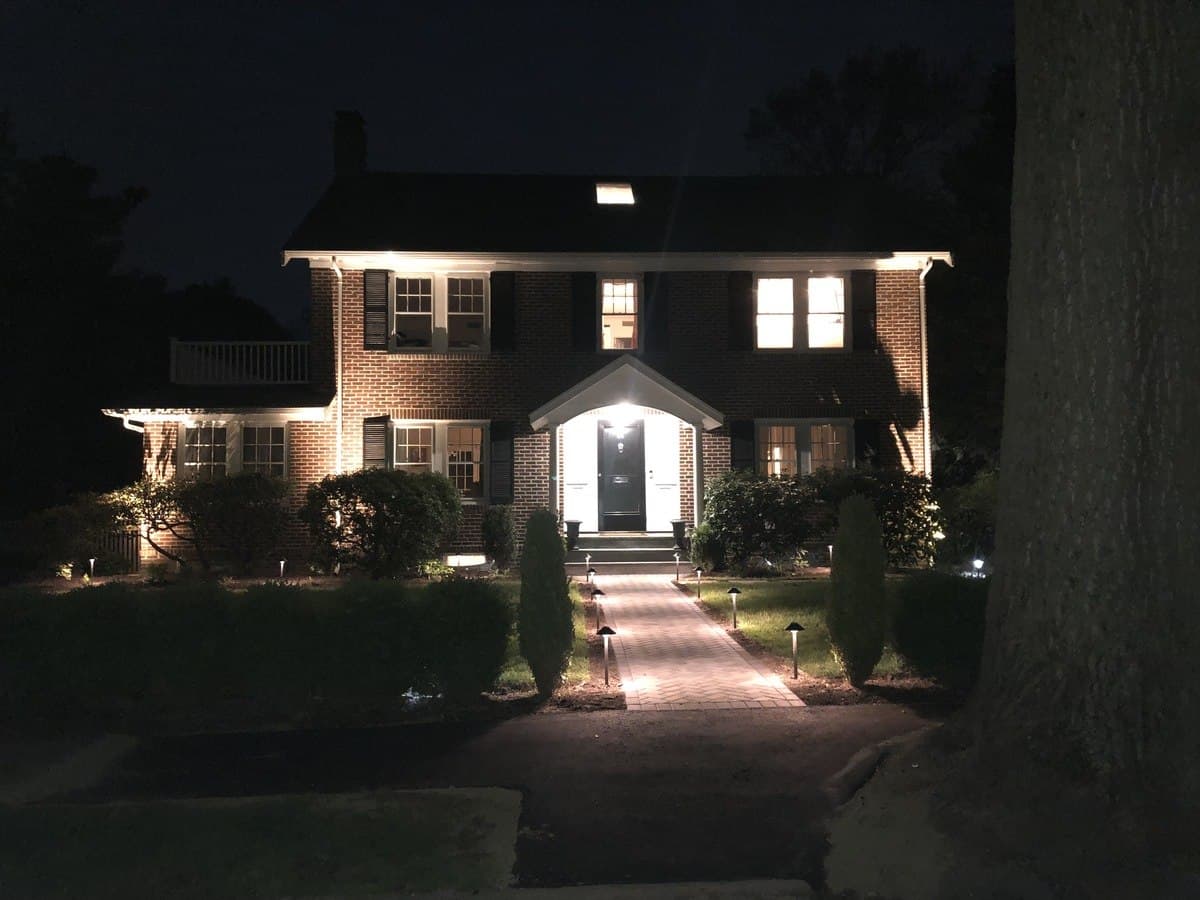
A properly designed 12V low-voltage system delivers the same output on a rainy November night as a clear July evening — no solar variability, no seasonal dimming.
Making the Right Investment Decision for Your Georgia Landscape
The initial cost of a professional 12V low-voltage system is higher than a solar kit — the transformer, cable, connectors, and professional installation add up to an investment that solar fixtures cannot match on upfront price. But the total-cost-of-ownership calculation over five years, accounting for solar fixture replacement cycles, inconsistent performance, and the homeowner time spent troubleshooting, consistently favors the hardwired system. Add the performance reliability dimension — the certainty that the system will work on the specific evenings you are entertaining or the property is unoccupied — and the case for solar in Georgia's climate is difficult to make.
Timberstone Landscape installs low-voltage LED landscape lighting systems for residential properties throughout Gwinnett, Forsyth, Hall, Fulton, and surrounding counties in Northeast Atlanta. As a Techo-Bloc Preferred Contractor based in Grayson, GA, we design lighting systems that integrate with your hardscape and landscape — not standalone products that look good in a catalog but fail in field conditions. Learn more about our hardscaping services or start with our design-build process.
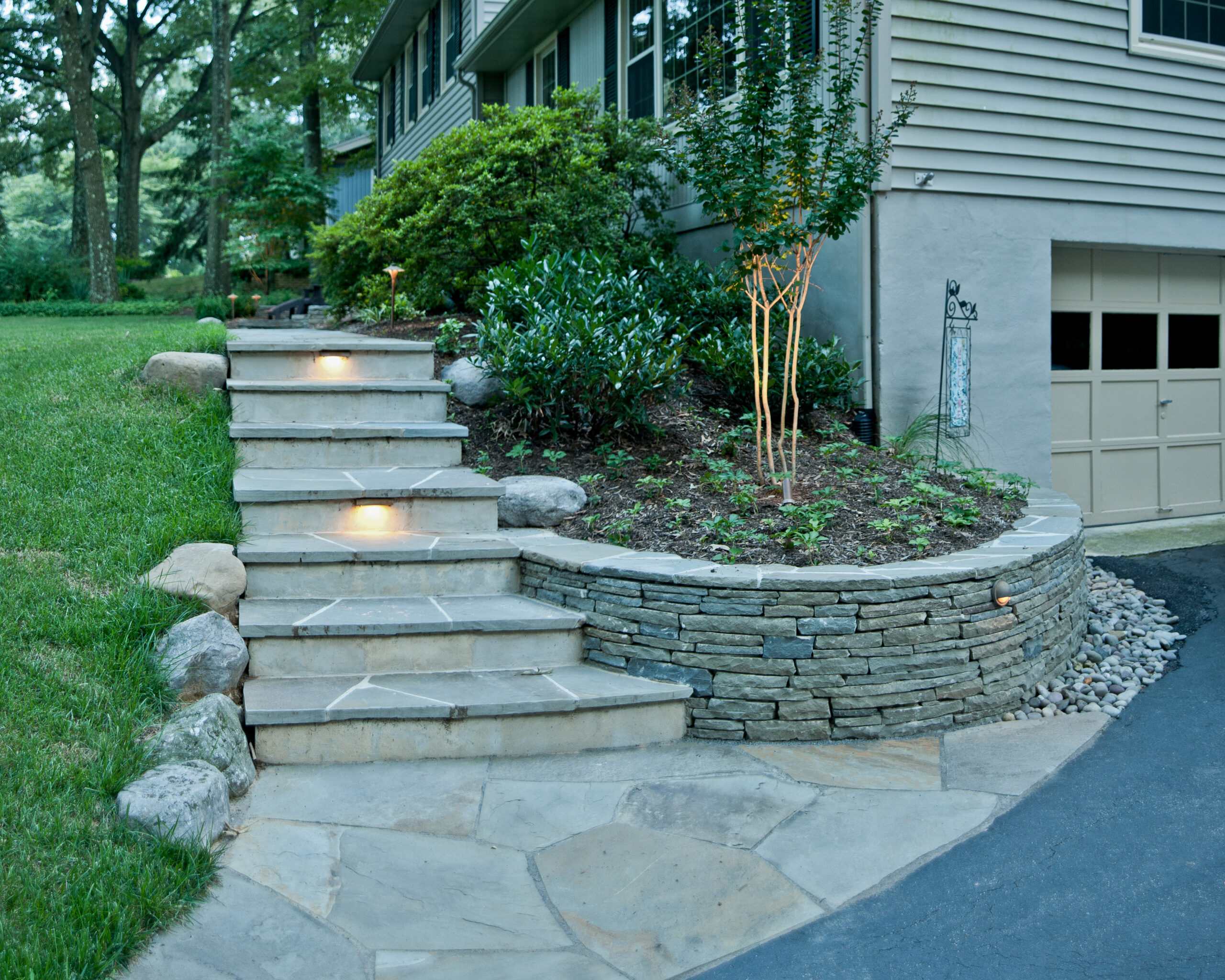
Low-voltage hardwired systems eliminate the variables that make solar lighting unreliable in Georgia — consistent output, year-round, regardless of conditions.
Install Lighting That Works Every Night
Free consultations. Serving Northeast Atlanta within 40 miles of Grayson.
Request a Free ConsultationTimberstone Landscape is based in Grayson, Georgia and serves the greater Northeast Atlanta region within 40 miles: