
Why Lilburn GA Properties With Slope Need Retaining Systems — Not Just Grading
Lilburn is one of Gwinnett County's most established communities, and many of its residential lots carry the terrain variations that define older Gwinnett neighborhoods — slopes from front to back, grade changes at property lines, and areas where water has been moving across the landscape in patterns established decades ago. When homeowners in Lilburn attempt to address slope through grading alone — without retaining structures — they often find themselves in a cycle of annual erosion repair that never solves the underlying problem.
This post explains why retaining systems — walls, terracing, and integrated drainage structures — are the correct answer to Lilburn slope problems, what grading alone cannot accomplish, and what a properly designed retaining system delivers for Lilburn properties that want both structural stability and a finished landscape they can use.
Why Grading Alone FailsWhat Grading Without Retaining Structures Cannot Accomplish in Lilburn
Regrading a slope in Lilburn — reshaping the topography through cut and fill operations — can change the angle of a slope and redirect water flow. What it cannot do is permanently stabilize a slope where the natural grade exceeds what grass or ground cover can hold against Georgia's rainfall events. In Gwinnett County's clay soil, slopes steeper than approximately 3:1 (a 3-foot horizontal run for every 1-foot of vertical rise) are at risk of erosion even when covered with sod or ground cover. The clay's low permeability means water moves across the surface rather than through it, generating sheet flow that lifts and moves soil particles with each significant rainfall event.
Grading that creates a slope slightly gentler than the original but still above the stable threshold for Georgia's rainfall intensity simply becomes an erosion zone that requires annual re-seeding and top-dressing. The homeowner pays annually for a result that deteriorates annually. A retaining wall system that steps the grade down into stable, level terraces eliminates the erosion cycle by converting slope into usable flat surfaces separated by structural walls that hold grade permanently without relying on vegetation to do what physics requires structures to do.
"Grading is a temporary answer on Lilburn slopes that exceed what vegetation can stabilize in Georgia rainfall. Retaining walls are the permanent answer — and they transform an unusable slope into usable outdoor space at the same time."
What a Retaining System Does for a Lilburn Property Beyond Stopping Erosion
The functional benefit of a properly designed retaining system in Lilburn extends beyond erosion control. A tiered retaining wall system with level terraces between each wall creates usable outdoor space on what was previously an unusable slope — planting beds, lawn areas, or patio surfaces that sit at grade rather than on a difficult-to-maintain angle. This transformation of slope into space is one of the most impactful landscape improvements available on Lilburn properties with significant grade changes, because it both solves a problem and creates usable value simultaneously.
The aesthetic dimension of a well-designed retaining system matters as much as the structural one for Lilburn properties preparing for sale or renovation. A slope covered with erosion-damaged ground cover signals neglect and deferred maintenance to buyers. A tiered retaining wall system with clean paver capping, defined planting beds, and integrated steps signals investment and intentional design — and positions the property's presentation significantly above comparables still dealing with their slope problems through annual top-dressing cycles.
- Slopes steeper than 3:1 exceed what vegetation can stabilize in Georgia's rainfall intensity — retaining structures required
- Grading without retaining walls creates erosion cycles that cost annually without solving the structural problem
- Tiered retaining systems convert slope into usable level terraces — solving the problem and creating value
- Walls over 4 feet in Gwinnett County require building permit and engineer-stamp — verify before design
- Drainage behind every wall is non-negotiable in Gwinnett County clay soil — hydrostatic pressure causes wall failure without it
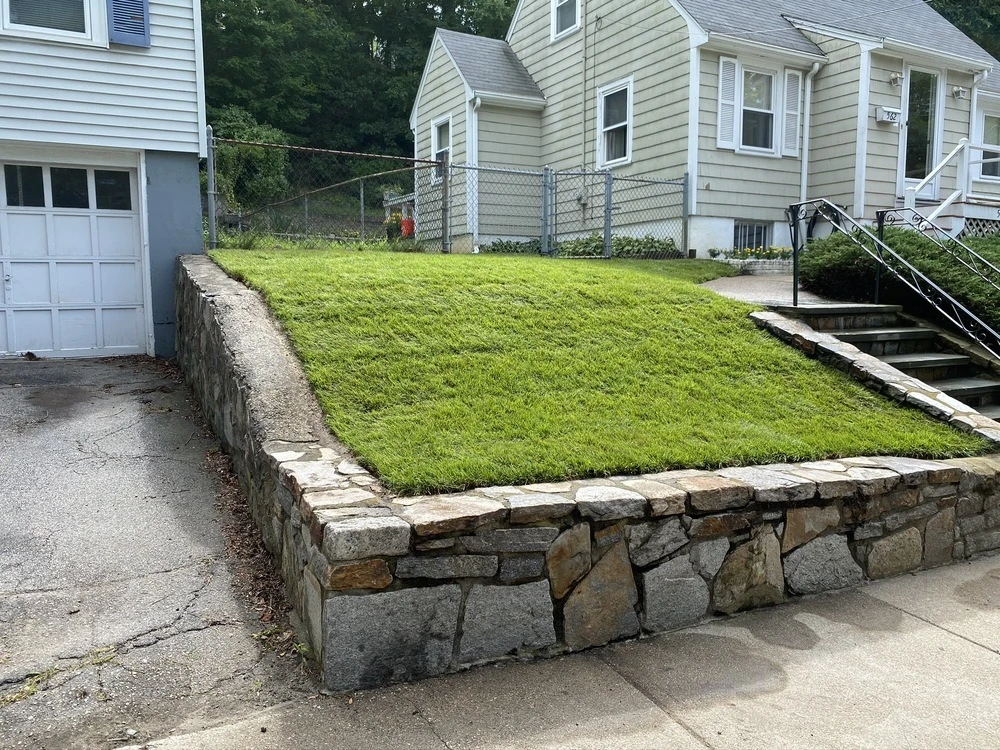
A properly engineered retaining system in Lilburn converts an erosion-prone slope into a stable, usable landscape — solving the structural problem while transforming the property's outdoor functionality.
How Timberstone Approaches Retaining Wall Projects in Lilburn and Gwinnett County
Timberstone Landscape designs and installs retaining wall systems throughout Lilburn and the broader Gwinnett County market. Our approach to Lilburn slope projects begins with a site assessment that evaluates the actual water movement pattern, the soil conditions in the slope zone, and what the homeowner wants the finished landscape to accomplish. The structural solution follows the site analysis — we do not template the same wall design onto every slope problem.
As a Techo-Bloc Preferred Contractor (Techo-Pro), our Lilburn retaining wall projects use Techo-Bloc's segmental retaining wall systems, which provide engineered load ratings, consistent appearance, and design flexibility appropriate for Gwinnett County's residential market. For projects requiring engineering permits, we coordinate with the permitting process and document everything correctly for Gwinnett County's building department. Our retaining wall services serve Lilburn and the surrounding county.
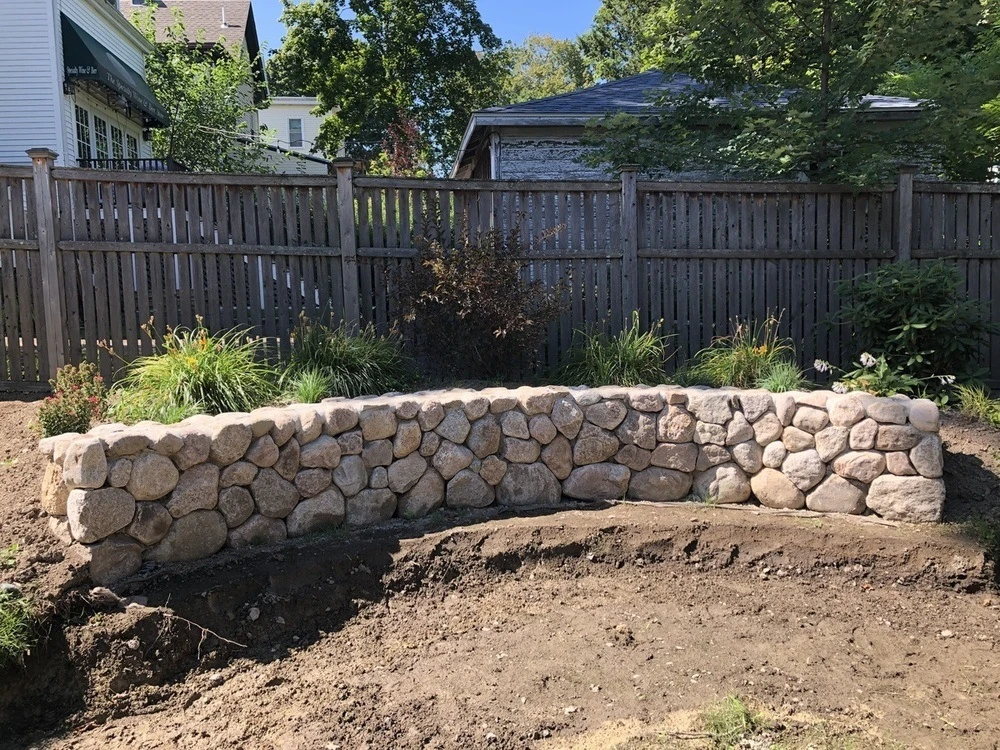
Tiered retaining wall systems in Lilburn create usable terraced outdoor spaces while permanently eliminating the erosion cycles that define untreated slope properties.
Dealing With a Slope Problem on Your Lilburn Property?
Free site assessments for retaining wall projects across Gwinnett County and Northeast Atlanta.
Request a Free ConsultationTimberstone Landscape is based in Grayson, Georgia and serves the greater Northeast Atlanta region within 40 miles: