
Why Duluth GA Retaining Walls Require Professional Engineering — Not Just Stacked Block
Duluth is one of Gwinnett County's most established residential markets, and retaining walls are one of the most common outdoor projects homeowners here request — and one of the most commonly underestimated. The view from the back door suggests a straightforward task: stack some block, hold back some dirt. What the view from the back door doesn't show is the weight of saturated clay bearing against the back of that wall, the hydrostatic pressure that builds when groundwater has nowhere to go, and the structural failure mode that results when those forces aren't accounted for in the design.
Duluth's Gwinnett County terrain creates specific retaining wall challenges. The clay-dominant soil type holds moisture and swells under wet conditions, generating lateral pressure against retaining structures that pure dead weight calculations don't account for. Properties near Old Peachtree Road, Pleasant Hill Road, and the developed corridors along the Chattahoochee have varied topography that creates grade changes requiring walls in the three-to-six-foot height range — heights that require engineering consideration and proper drainage provisions to perform safely over time.
Engineering StandardsWhat Separates Engineered Walls From Stacked Block
The most important distinction between a professionally engineered retaining wall and a stacked block installation is drainage. Stacked block walls — the kind installed by landscapers who don't specialize in structural hardscape — typically lack the gravel drainage layer, perforated pipe, and defined outlet system that prevent hydrostatic pressure from building behind the wall. When soil saturates during a heavy Georgia rain event and has nowhere to drain, the water pressure against the back of the wall increases dramatically. Walls without drainage provisions fail at these pressure points, usually within two to five years of installation, and the failure is typically sudden and catastrophic rather than gradual.
Properly engineered retaining walls address drainage at every layer. The excavated area behind the wall is backfilled with clean angular gravel rather than native soil — gravel drains freely, native clay does not. A perforated drainage pipe runs along the base of the wall within the gravel layer, collecting intercepted groundwater and routing it to a defined outlet. Weep holes or drainage channels through the wall face provide a secondary relief path for any water that reaches the wall's back face. Together, these provisions prevent the pressure buildup that causes failure. Without them, a wall is a matter of when, not if.
"A retaining wall without proper drainage is not a retaining wall — it's a temporary soil barrier that will eventually be pushed over by the water pressure that builds behind it."
Height, Setbacks, and When Engineering Is Required
Gwinnett County building code requires permitted engineering review for retaining walls over four feet in height, measured from the bottom of the footing to the top of the wall. This threshold is lower than many homeowners expect — a wall that appears to be three feet high above grade may have a footing an additional foot below grade, making the total engineered height four feet or more. Walls near property lines, near foundations, or in areas where wall failure would impact adjacent structures or drainage patterns may require engineering review at lower heights depending on site-specific conditions.
Techo-Bloc's segmental retaining wall system — which Timberstone installs as a Techo-Bloc Preferred Contractor — is engineered for structural performance across the height range common in Duluth's residential market. The system includes geogrid soil reinforcement for walls above four feet, specified batter angle (backward lean into the retained soil) that improves stability, and cap systems designed to integrate drainage outlets cleanly into the finished wall appearance. These are not decorative elements — they are structural components specified by engineers who have tested the system to perform correctly under the soil and drainage conditions Duluth's terrain creates.
- Gravel backfill: angular clean gravel behind wall allows drainage; clay backfill does not
- Perforated drain pipe: collects intercepted groundwater at wall base and routes to defined outlet
- Weep holes or drainage channels: secondary relief path prevents pressure buildup at wall face
- Gwinnett County permit threshold: walls over 4 feet total height require engineering review
- Geogrid reinforcement: required for walls over 4 feet to resist lateral soil pressure correctly
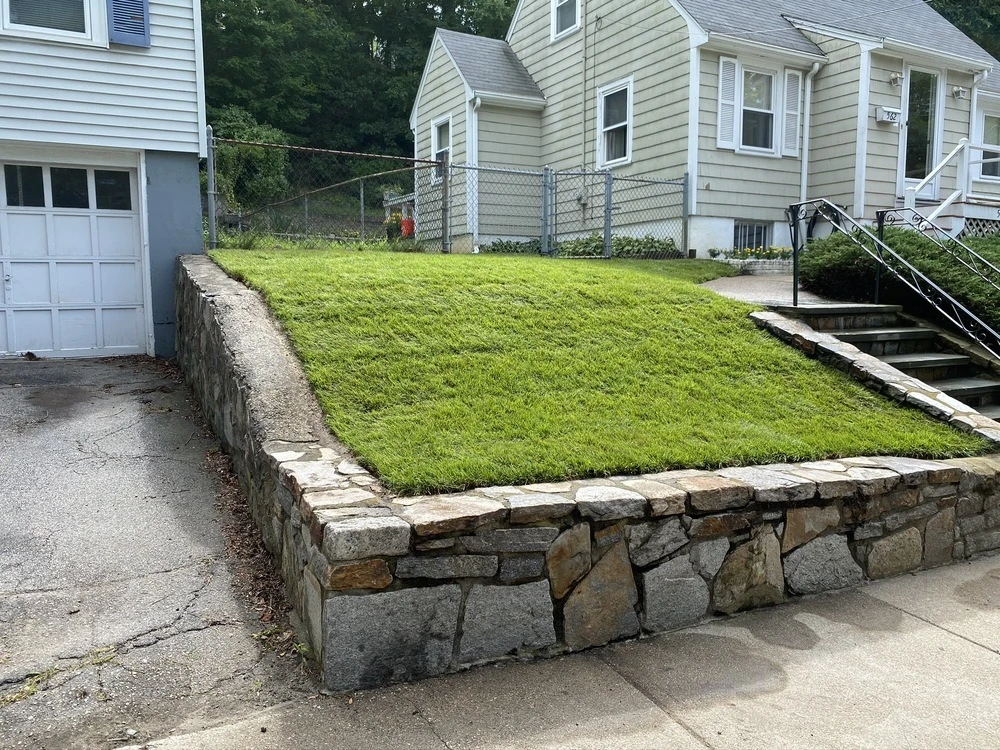
Properly engineered retaining walls in Duluth include gravel backfill, perforated drainage pipe, and geogrid reinforcement — the provisions that determine whether a wall lasts two years or twenty.
Why Timberstone Builds Retaining Walls to Engineering Standards
Timberstone Landscape builds every retaining wall to the engineering standards the project requires — regardless of whether a permit has been pulled. Our view is that a wall without proper drainage and structural provisions is a liability, not an asset, and we won't build one. Every Timberstone retaining wall project includes drainage design as a fundamental component, not an optional upgrade. If a project requires a permit and engineering review, we coordinate that process before construction begins.
As a Techo-Bloc Preferred Contractor, we install Techo-Bloc's engineered segmental wall system with the drainage provisions, geogrid reinforcement, and specified batter requirements that make these systems perform correctly. Our retaining wall services include site assessment, drainage design, permitting coordination, and installation. Our hardscaping services build the patio system that the wall creates the platform for.
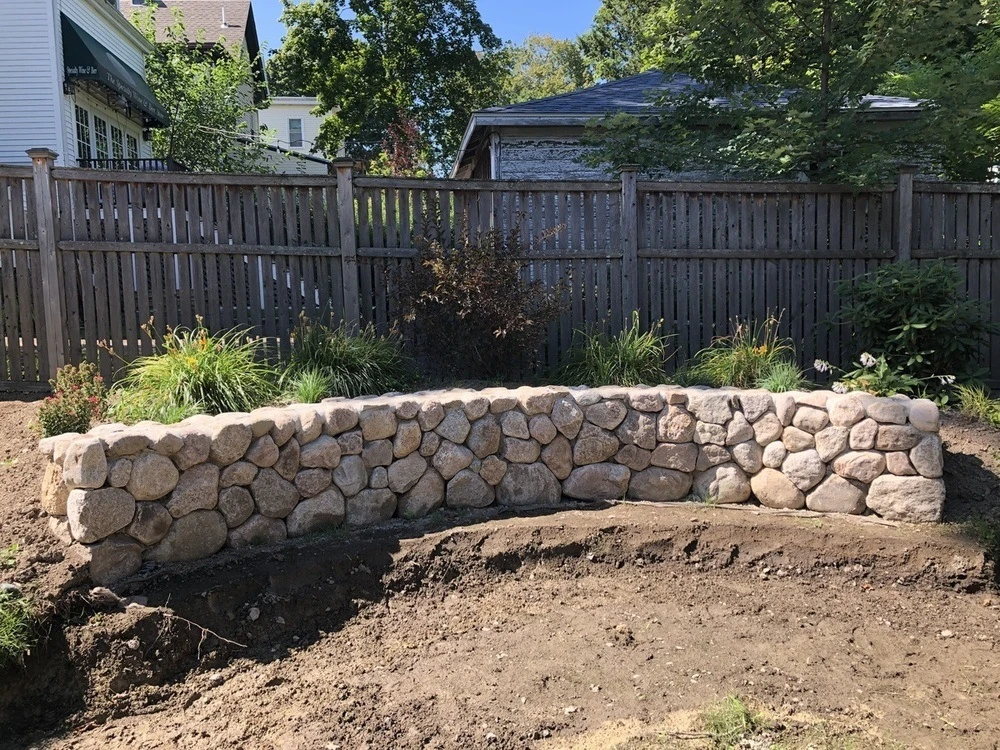
The patio above the retaining wall performs correctly because the wall below it was built to engineering standards that account for Duluth's clay soil and drainage conditions.
Get Your Duluth Retaining Wall Built to Last
Free site consultations for retaining wall and hardscape projects across Gwinnett County.
Request a Free ConsultationTimberstone Landscape is based in Grayson, Georgia and serves the greater Northeast Atlanta region within 40 miles: