
Why Canton GA Retaining Walls Fail Without Proper Engineering and Drainage
Canton's Cherokee County soil is among the most demanding environments in the greater Atlanta region for retaining wall construction. The heavy red clay that characterizes much of the county has an exceptionally high water retention capacity — it absorbs rainfall slowly, holds it for extended periods, and transmits the resulting hydrostatic pressure with force proportional to the wall height and the volume of retained soil. Combined with Canton's topography, which includes meaningful grade changes on most residential lots, the conditions here create a retaining wall environment that requires engineering, drainage, and proper structural specification to handle — not just competent block-laying.
The failure rate of improperly built retaining walls in Cherokee County is one of the more visible hardscaping problems in the region. Drive through Canton's established neighborhoods and the signs are identifiable: walls that bow outward at mid-height, walls with visible gaps between the top cap and the courses below, walls with efflorescence running down the face — all indicators of hydrostatic pressure being transmitted through a wall that was not built to manage it. Each of these is a wall that was installed without a functioning drainage system and without the structural details that proper retaining wall construction requires.
Cherokee County's Clay ProblemWhat Red Clay Does to Retaining Walls Without Drainage
Cherokee County's red clay has a plasticity index — a measure of how much moisture the soil can absorb before it transitions from semi-solid to plastic — that is significantly higher than sandy or loamy soils. In practical terms, this means that during Georgia's wet season, the soil retained behind a retaining wall can absorb multiple times its own weight in water. When drainage is absent, this water has nowhere to go except through the wall face. The pressure it exerts against the back of the wall is proportional to the cube of the wall height — double the wall height and the hydrostatic force increases by eight times.
Drainage aggregate in a properly built retaining wall backfill zone is typically clean crushed stone or washed gravel, placed immediately behind the wall face for a minimum 12-inch horizontal depth and extending from the base course to within 12 inches of the finished grade above. This aggregate zone acts as a drainage reservoir — water enters it quickly, travels laterally to the perforated drain pipe at the base, and exits the wall system before it can build hydrostatic pressure against the wall face. Without this aggregate zone, the clay backfill retains water indefinitely, and the wall eventually loses the structural contest.
"In Cherokee County's red clay, a retaining wall without drainage is not a retaining structure — it is a concrete form that's holding back a water-saturated mass it was never designed to manage."
Drainage Pipe, Batter, and Why Both Are Non-Negotiable Over Four Feet
A perforated drain pipe at the base of the retaining wall collects water from the drainage aggregate zone and routes it away from the wall system — typically daylighted at each end of the wall run or connected to a catch basin in the landscape. This pipe is the mechanism that makes the drainage aggregate zone functional. Without it, water accumulates at the base of the aggregate zone until it reaches the lowest point it can find — which is often through the wall face at the base course, or along the foundation of any structure above the wall. Installing drainage aggregate without a drain pipe is the most common partial-measure error in retaining wall construction.
Wall batter — the backward lean built into each course of a segmental retaining wall — is the structural element that gives the wall its resistance to overturning. Standard minimum batter is one inch of setback per foot of wall height. A four-foot wall should have at least four inches of total setback from base course to cap course. Walls built without batter — particularly those built by DIYers or inexperienced contractors who stack blocks vertically — have dramatically less resistance to the lateral earth pressure that the retained soil exerts, and they will fail at a fraction of the load that a properly batted wall can withstand.
- Drainage aggregate: minimum 12" clean crushed stone zone behind wall face, full height
- Drain pipe: perforated pipe at wall base, daylighted at both ends of each wall run
- Geotextile fabric: separates aggregate from clay backfill to prevent clay migration into drainage zone
- Batter: minimum 1" setback per foot of height — four-foot wall needs 4" total setback
- Deadman anchors: required per wall system specs, typically every 3 courses for walls over 2 feet
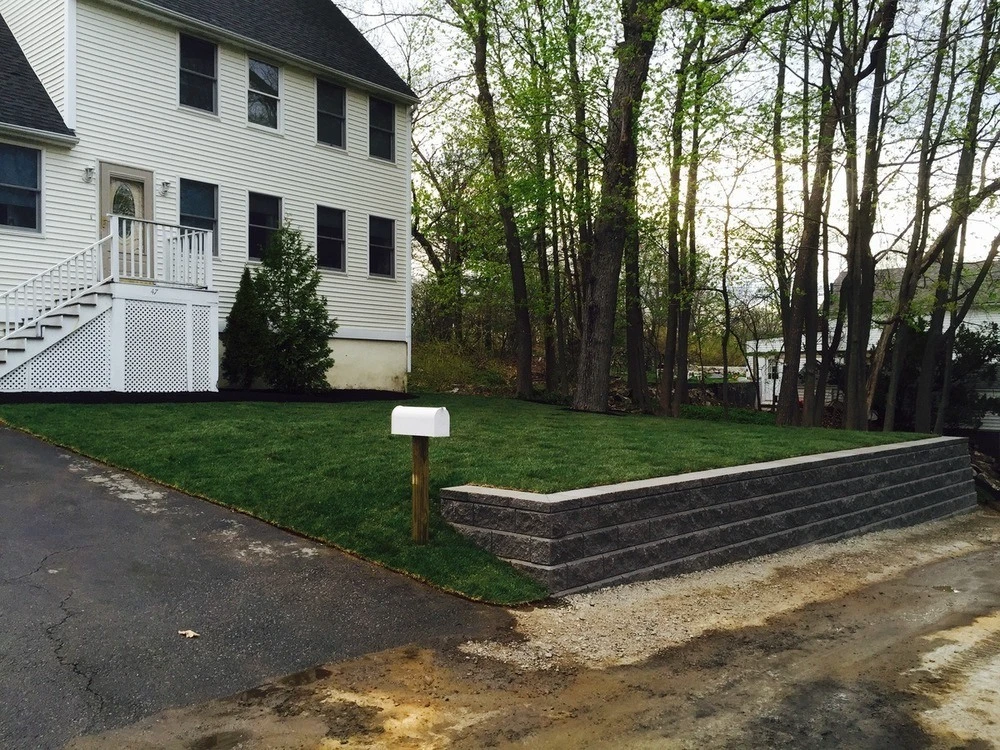
Retaining walls in Canton's Cherokee County clay require drainage aggregate, drain pipe, batter, and deadman anchors — not just stacked block courses.
Building Canton Retaining Walls That Last in Cherokee County Conditions
Retaining wall projects in Canton and Cherokee County require a contractor who understands the specific demands of the local soil and commits to the full structural specification before any block is placed. The drainage system must be designed as part of the wall design — not added at the end. The batter specification must be maintained course by course throughout construction. The deadman anchor schedule must follow the wall system manufacturer's engineering documentation. None of these elements can be improvised or estimated on the fly during installation.
Timberstone Landscape serves Canton and Cherokee County from our base in Grayson, GA, and retaining walls are among our most technically demanding project categories in this market. As a Techo-Bloc Preferred Contractor, we build to manufacturer engineering specifications with drainage systems that are designed for Cherokee County's high-clay, high-retention soil conditions. Our hardscaping services include full retaining wall design, drainage planning, and engineered installation. Our design-build process means the structural specifications are documented and agreed upon before any excavation begins.
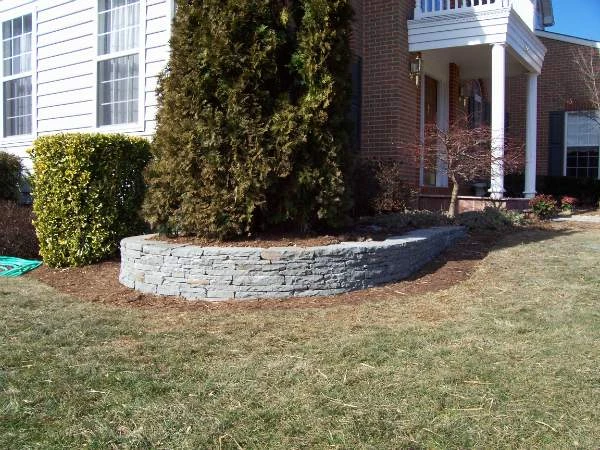
Canton retaining walls built with proper drainage and structural specification hold through Cherokee County's demanding wet-season conditions year after year.
Build Your Canton Retaining Wall to Last in Cherokee County Clay
Free consultations for hardscaping projects across Northeast Atlanta.
Request a Free ConsultationTimberstone Landscape is based in Grayson, Georgia and serves the greater Northeast Atlanta region within 40 miles: