
What HOA Rules Mean for Georgia Hardscaping Projects — And How to Navigate Them
More than half of the new homes in Gwinnett, Forsyth, and Cherokee counties are in HOA-governed communities. For homeowners in those communities, a hardscaping project involves two approval processes — county permitting (where required) and HOA architectural review — and skipping either one creates problems that range from forced removal to title complications at sale.
HOA rules for hardscaping vary enormously between communities, and even between phases within the same development. Some HOAs in Northeast Atlanta allow any paver patio within setback lines with no prior approval. Others require architectural committee review for any project visible from the street, any project exceeding a minimum square footage, or any project that changes the grading of the lot. The only way to know which applies to your address is to read your CC&Rs and contact your HOA management company directly.
This guide explains what HOA rules most commonly restrict, how the approval process typically works, and what contractors need from homeowners to keep projects compliant.
What HOAs Most Commonly Regulate in Georgia
The Most Frequent Restriction Categories- Material type and color — many Georgia HOAs have approved material lists or color palettes for hardscaping visible from the street. Techo-Bloc products are approved on most Northeast Atlanta HOA lists; non-standard or budget materials often aren't.
- Structure height and setbacks — pergolas, retaining walls, and covered structures are the most commonly restricted elements. HOA setbacks are often more restrictive than county setbacks, requiring additional buffer from property lines.
- Impervious surface percentage — some HOAs set their own impervious surface limits independent of county regulations, particularly in flood-prone areas of Gwinnett and Forsyth counties.
- Lighting — landscape and hardscape lighting visible from the street is regulated in some communities, particularly in higher-end Alpharetta and Milton HOA neighborhoods.
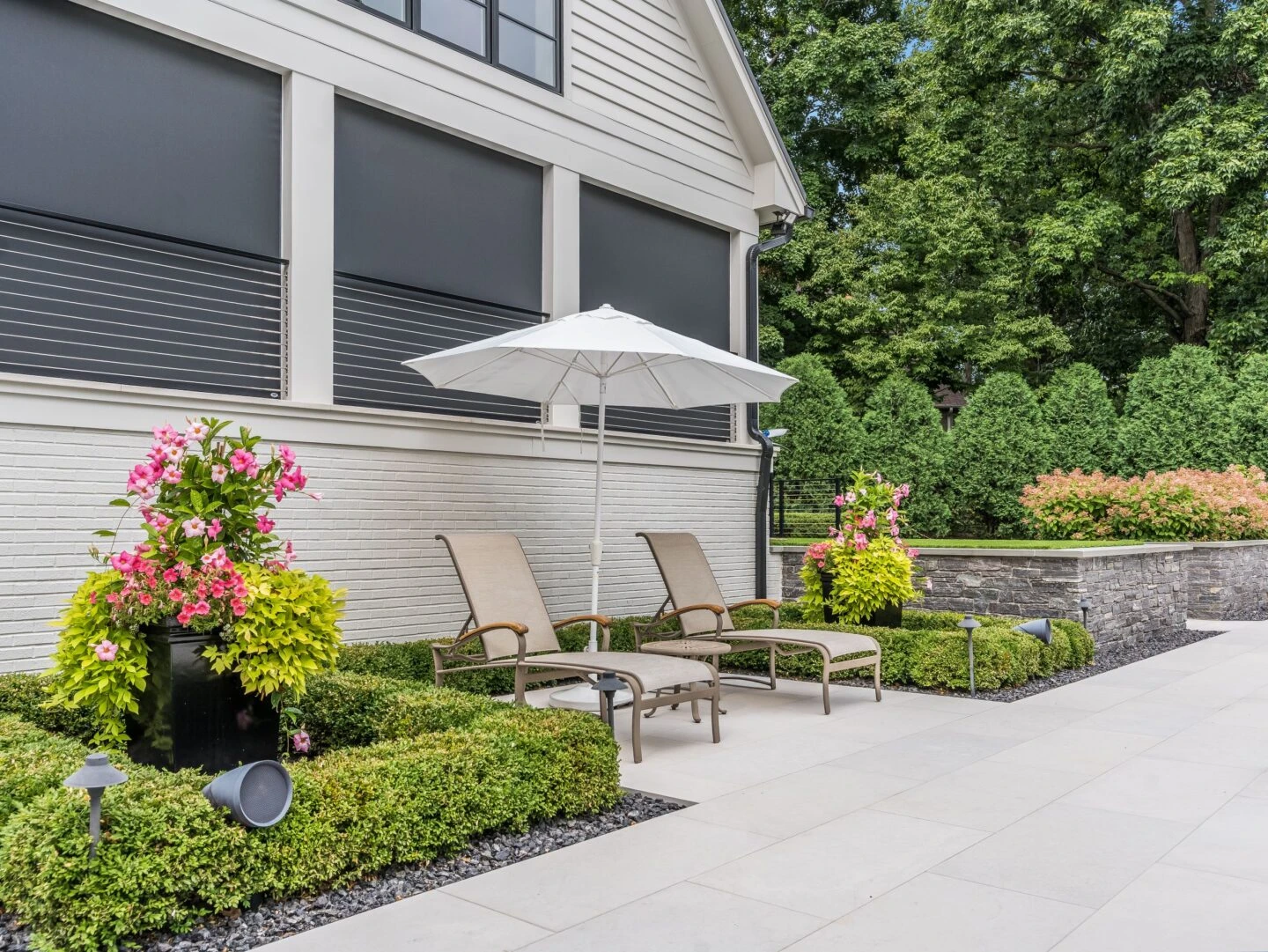
HOA approval in Georgia can run 2 to 6 weeks depending on the community — another reason why fall or winter planning protects spring installation timelines.
The HOA Approval Process in Practice
What You'll Need and How Long It TakesMost Georgia HOA architectural review processes require a written application that includes a site plan showing the proposed project location, dimensions, and setbacks; material specifications including product name, color, and manufacturer; and in some cases, contractor credentials. Review timelines vary from two weeks to six weeks depending on whether your HOA uses professional management or a volunteer committee.
We ask every homeowner in an HOA community for written approval before we order materials. No exceptions. Ordering before approval creates a project that either waits indefinitely or goes in without approval — and neither outcome is good for the homeowner or the contractor.
How Timberstone Supports HOA Approval
Documentation That Makes Approval SmoothAs a Techo-Bloc Preferred Contractor, Timberstone Landscape provides complete HOA application packages: site plans, material data sheets, product specifications, and contractor license and insurance documentation. Most Northeast Atlanta HOA architectural committees are familiar with Techo-Bloc products and our documentation format — which typically accelerates review. Victor's team serves Grayson, Lawrenceville, Suwanee, Buford, Duluth, Dacula, Alpharetta, Johns Creek, and all of Northeast Atlanta. Call (678) 356-7952.
Ready to Navigate HOA Approval With Confidence?
Timberstone Landscape serves Grayson, Gwinnett, Forsyth, Hall, and surrounding Northeast Atlanta counties.
Get a Free Estimate