
What Dacula GA Homeowners Need to Know Before Building an Outdoor Kitchen
Dacula is one of eastern Gwinnett County's most established residential communities — a market where homeowners have built equity and are now investing in the outdoor improvements that make a long-term property more livable, more functional, and more valuable. Outdoor kitchen builds in Dacula have increased significantly over the past several years, and the homeowners getting the best results are the ones who make four key decisions correctly before a shovel enters the ground. The homeowners who regret their outdoor kitchen typically made at least one of these four decisions wrong.
These are not obscure technical decisions. They are the foundational choices — location, structure, appliances, and counter material — that determine whether an outdoor kitchen becomes the most-used space on the property or a $25,000 feature that gets used four times a year. Getting them right requires thinking through how you actually use the outdoor space, not just how you want the finished kitchen to look in the contractor's rendering.
The 4 DecisionsDecision 1 — Location Relative to the House
The location of an outdoor kitchen relative to the house determines its convenience, its utility connection costs, and its long-term usability. A kitchen sited within 20 feet of the house exterior wall can typically connect to an existing gas line, electrical panel, and plumbing with modest additional cost. A kitchen sited 40 or 50 feet away — at the back of a large yard, near a pool, or at a lower terrace level — requires significantly longer utility runs and potentially a dedicated electrical sub-panel, adding $3,000 to $8,000 to the project cost before a single cabinet is installed.
The kitchen should also be positioned so that the cooking and prep workflow connects naturally to the indoor kitchen — for bringing supplies out and returning dishes in. Dacula homeowners who site their outdoor kitchen directly off the back door use it dramatically more often than those who build it at the far end of a patio that requires crossing 30 feet of outdoor space carrying food and supplies. Convenience drives frequency of use, and frequency of use determines the return on the investment.
"The best-looking outdoor kitchen that is inconvenient to use will get used less than a simpler kitchen positioned where it makes sense for how the family actually moves through the outdoor space."
Decisions 2 Through 4 — Structure, Appliances, and Counter Material
Covered structure vs. open-air. Georgia's climate makes this the second-most important decision after location. An outdoor kitchen without a covered structure — pergola, pavilion, attached patio cover, or solid roof — is exposed to the full force of Georgia's summer afternoon thunderstorms, its relentless UV intensity, and the occasional freezing rain that damages unsealed surfaces and appliances. A covered structure extends the effective season significantly and protects the appliance investment from Georgia's specific weather demands. Budget for it from the beginning, not as an afterthought.
Appliance selection is a decision where Dacula homeowners frequently underinvest and then regret it. A residential-grade grill installed in an outdoor kitchen enclosure will fail faster, perform less reliably, and require more frequent replacement than a commercial-grade outdoor grill. The same principle applies to refrigeration: a residential refrigerator placed in an outdoor-rated housing is not an outdoor refrigerator. Outdoor-rated refrigeration units are designed for the temperature swings, UV exposure, and moisture conditions of Georgia's outdoor environment. Investing in proper-grade appliances upfront is far less expensive than replacing failed ones within three years.
- Location — within 20 feet of house exterior wall for practical utility connections and daily convenience
- Covered structure — non-negotiable for a kitchen used more than a few weekends per year
- Appliance grade — commercial or outdoor-rated grill and refrigeration only
- Counter material — granite or porcelain for Georgia's climate; no indoor-grade materials
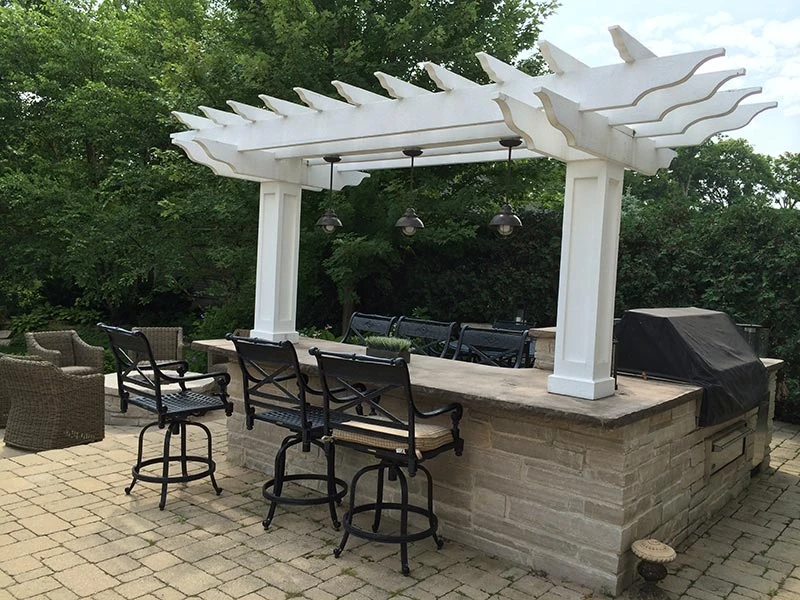
An outdoor kitchen in Dacula, GA — four decisions made correctly before installation began, resulting in a space that gets used every week.
What Happens When One Decision Is Made Wrong
The most common outcome of a poorly planned outdoor kitchen in Dacula is a space that doesn't get used. An outdoor kitchen positioned inconveniently, without a covered structure, with appliances that fail quickly, or with counter material that degrades in Georgia's climate quickly becomes something the homeowner avoids rather than enjoys. The investment is the same whether the kitchen works or doesn't — but the experience is completely different depending on whether those four decisions were made correctly at the planning stage.
Timberstone Landscape serves Dacula homeowners across eastern Gwinnett County as a full design-build contractor for outdoor kitchens and outdoor living spaces. Our outdoor features services include kitchen design, appliance selection guidance, and installation, and our design-build process works through every one of these foundational decisions before the project scope is finalized.
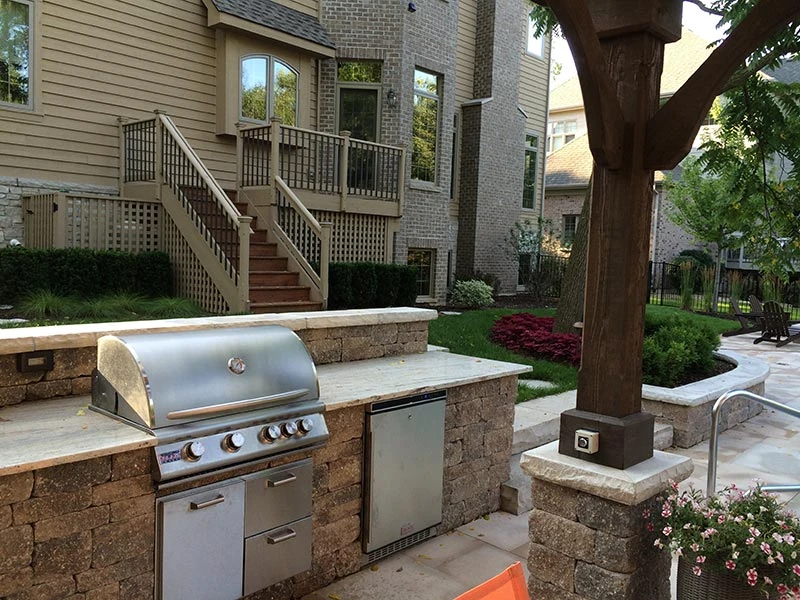
When the four pre-build decisions are made correctly, the outdoor kitchen becomes the space Dacula homeowners use more than any room inside.
Make Every Decision Right Before Your Dacula Outdoor Kitchen Build
Free consultations. Serving Northeast Atlanta within 40 miles of Grayson.
Request a Free ConsultationTimberstone Landscape is based in Grayson, Georgia and serves the greater Northeast Atlanta region within 40 miles: