
What an Outdoor Kitchen Contractor in Grayson GA Should Always Deliver
Hiring a contractor to build an outdoor kitchen is not the same as hiring someone to install a grill pad. The distinction matters because the gap between a handyman approach and a professional outdoor kitchen contractor produces radically different outcomes — in durability, in functionality, and in the long-term value the project adds to your property. Knowing what to expect from a qualified contractor protects your investment before the first shovel hits the ground.
The outdoor kitchen market in Northeast Atlanta has grown significantly over the past decade, and with that growth has come a wave of contractors who build outdoor kitchens as a side offering rather than a core competency. The difference between a contractor who builds outdoor kitchens every week and one who adds it to their service list to capture demand is not always visible in a sales presentation — it shows up in structural framing decisions, material selection, appliance coordination, and utility rough-in planning.
The Design PhaseWhy Design Comes Before Any Material Discussion
A professional outdoor kitchen contractor starts with a design phase — not a material quote. The design phase establishes the layout of all appliances, the counter runs, the utility connection points, the overhead structure (if any), and the integration with existing hardscape or patio surfaces. Without a documented design, every material decision is premature. The layout determines how much linear counter is needed, which in turn determines how many square feet of countertop material are required, which drives the stone or concrete selection.
The design phase also surfaces utility requirements that must be addressed before framing begins. A gas line that terminates at the wrong side of the structure requires a trench run after the frame is built — an avoidable cost that professional planning eliminates. Electrical circuits for refrigerators, lighting, and outlets need to be roughed in during framing, not retrofitted through finished stone walls. A contractor who skips the design phase is simply building toward problems that will surface later at your expense.
"The design phase is where a professional earns their fee — it prevents every expensive problem that shows up during and after construction."
Steel Stud Framing vs. Wood — Why the Substrate Matters
Outdoor kitchen structures require a frame that can withstand Georgia's humidity, rain, and temperature cycling. Steel stud framing is the professional standard — and for good reason. Wood framing in an outdoor kitchen is subject to moisture infiltration from rain, condensation, and steam from cooking. Over time, wood swells, warps, and rots beneath the stone veneer. Once that process begins, the veneer cracks and the structure requires costly demolition and rebuilding.
Steel stud frames do not rot, do not warp, and do not provide a substrate for mold or insect infiltration. The labor cost difference between wood and steel framing is modest — but the 10- and 20-year performance difference is significant. A professional outdoor kitchen contractor in Grayson, GA who specifies steel framing is making a long-term decision on your behalf. A contractor who defaults to wood is making a short-term cost decision that you will absorb later.
- Design phase completed before any material or appliance selection
- Steel stud framing — never wood — as the structural substrate
- Outdoor-rated cement board sheathing over the frame before veneer application
- Appliance coordination: all units spec'd before framing to ensure correct rough openings
- Gas line and electrical planned in design phase, roughed in during framing
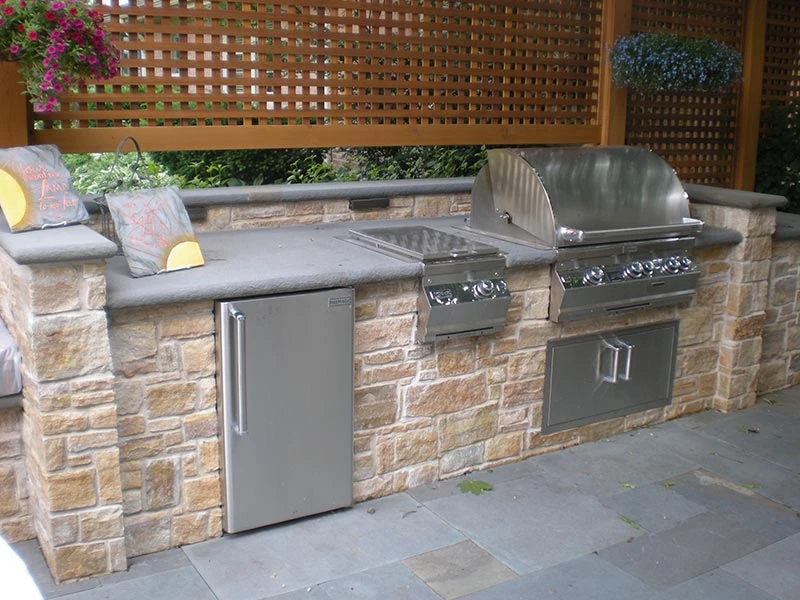
Timberstone Landscape's outdoor kitchen builds begin with a complete design phase before any material selection or framing work begins.
Outdoor-Rated Materials Throughout — Not an Indoor Build Moved Outside
Every material in an outdoor kitchen must be selected for outdoor exposure — not adapted from indoor use. This distinction is violated more often than homeowners realize. Adhesives, grout, caulk, and sealers all have outdoor-rated and indoor-rated versions. Using indoor-rated materials in an outdoor kitchen produces failures within one to three seasons as moisture infiltration, UV exposure, and thermal cycling break down products that were never designed for exterior conditions.
Timberstone Landscape, based in Grayson, GA and serving Gwinnett, Forsyth, Hall, and Fulton counties, builds outdoor kitchens using outdoor-rated materials throughout — from the framing substrate through the countertop finish. As a Techo-Bloc Preferred Contractor, Timberstone brings the same material standards applied to premium paving projects to every outdoor kitchen build. The result is a structure that performs year after year without the cracking, efflorescence, and adhesion failures that mark an improperly specified outdoor build. For homeowners ready to invest in an outdoor kitchen that functions as designed for a decade or more, the outdoor features and design-build process pages outline exactly how Timberstone approaches each project.
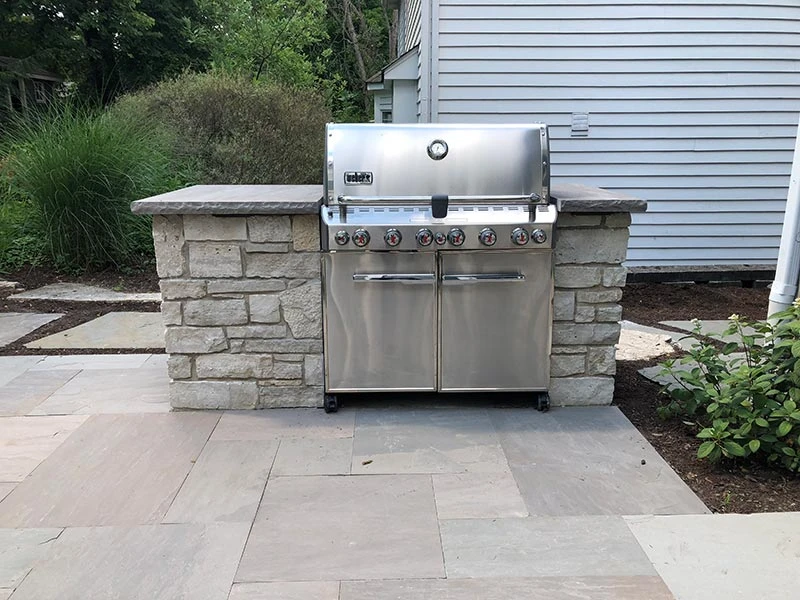
Every Timberstone outdoor kitchen is built with outdoor-rated materials and professional structural framing designed for Georgia's climate.
Work With Grayson's Outdoor Kitchen Specialists
Free consultations. Serving Northeast Atlanta within 40 miles of Grayson.
Request a Free ConsultationTimberstone Landscape is based in Grayson, Georgia and serves the greater Northeast Atlanta region within 40 miles: