
The Best Pool Deck Materials for Georgia Homeowners — What Handles Heat, Grip, and Ten-Year Wear
Pool deck material selection is a safety decision before it's an aesthetic one. In Georgia, where pool decks face direct sun for six months, chlorinated water splash daily through the season, and bare feet in summer heat, the material has to deliver on grip, thermal comfort, and surface durability simultaneously. Most pool deck materials succeed at one of those and compromise on the others.
Georgia's climate creates a specific set of demands that pool deck materials have to meet: surface temperatures in direct sun that can exceed 120 degrees on dark-colored surfaces, UV exposure that degrades surface treatments and fades color, and the chemical interaction between pool water chemistry and porous surface materials. A pool deck that looks right and feels safe in May can be blistering hot and slippery with algae growth by August if the material selection didn't account for those conditions.
Material Performance GuideTravertine — The Georgia Pool Deck Standard
Travertine is the most popular premium pool deck material in Georgia for good reasons. Its natural thermal properties keep it cooler underfoot than most other materials in direct sun — travertine's open crystalline structure and light coloring reflect rather than absorb solar radiation. It's naturally slip-resistant when wet due to its textured surface. Properly sealed travertine resists pool chemical penetration and maintains its surface integrity through years of chlorinated water exposure. The maintenance requirement — annual or biennial sealing depending on finish and exposure — is real but manageable.
"The pool deck that works at noon in July is the one that was selected for heat and grip, not just for what it looks like when the pool is empty."
Techo-Bloc Pavers — The Engineered Alternative
Techo-Bloc's pool deck paver collections are engineered specifically for wet, high-UV, and high-traffic applications. The dense-faced concrete composition provides excellent slip resistance — the surface texture is built into the material rather than applied as a surface treatment that wears. UV stability means color consistency through years of direct sun exposure without the fading that affects lower-density pavers. The interlocking unit system accommodates soil movement without cracking, which is particularly important in Georgia's clay soil environment where pool deck perimeters experience seasonal movement.
Techo-Bloc's Trazo, Victorien, and Umbriano collections are appropriate for pool deck applications, with specific attention to surface finish specification. As a Techo-Bloc Preferred Contractor, Timberstone Landscape specifies pool deck products from the collections rated for wet-area applications — not from the standard patio range. That distinction matters because surface friction coefficient requirements for pool decks exceed standard patio requirements. We're based in Grayson, Georgia, and we've installed pool deck systems across Northeast Atlanta that meet both safety and aesthetic requirements. See our pool deck and water features services or our hardscaping services.
- Travertine: coolest underfoot in direct sun, naturally slip-resistant, requires sealing — strong long-term choice
- Techo-Bloc pavers: engineered surface friction, UV stable, interlocking — top engineered option
- Brushed concrete: functional and cost-effective, fades over time, surface roughness decreases with age
- Porcelain tile: non-porous, very low maintenance, requires slip-resistant finish rating for pool applications
- Exposed aggregate concrete: good grip, Georgia UV can cause surface pop-out over time
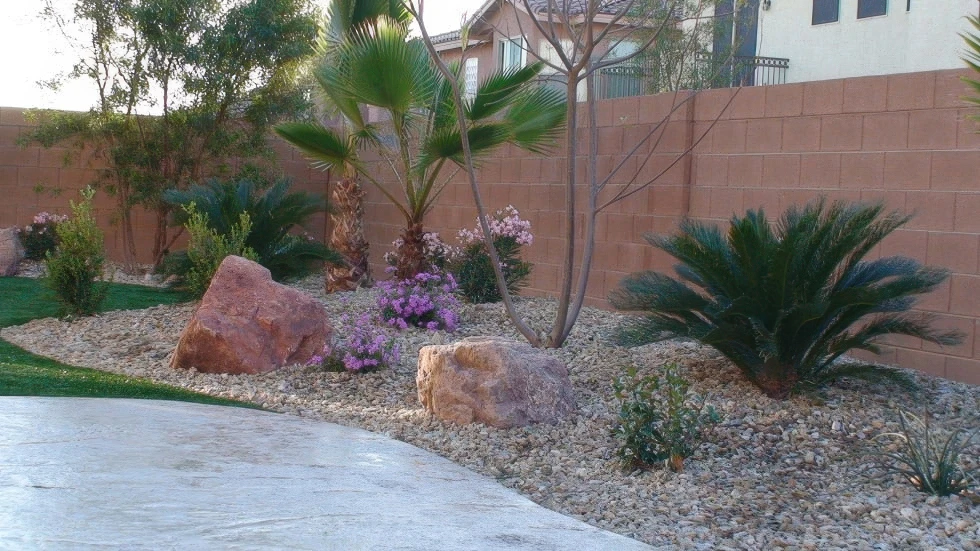
Pool deck material selected for Georgia's conditions — heat, grip, and ten-year wear performance, not just installation-day appearance.
What Falls Short at Ten Years
Painted or coated concrete pool decks — including pool deck paint and rubber coatings — look clean at installation and deteriorate quickly. The coating is a surface treatment applied to the concrete substrate. In Georgia, pool deck coatings face UV degradation, the thermal expansion and contraction of the concrete beneath, and the chemical exposure of pool water splash. The coating begins peeling and blistering typically within three to five years. Recoating is required, and the quality of the second coat is always inferior to the first application because the surface is already compromised.
Standard residential-grade porcelain tile is also a common failure material in pool deck applications. Not all porcelain tile carries an adequate slip resistance coefficient for wet-area applications — the aesthetic tile that's appropriate for an interior floor or a covered patio may become dangerously slippery when wet on a pool deck. The DCOF (Dynamic Coefficient of Friction) rating matters for pool applications, and it should be verified for any tile specified in that environment. The right porcelain, properly specified, performs exceptionally. The wrong porcelain in the wrong location is a liability.
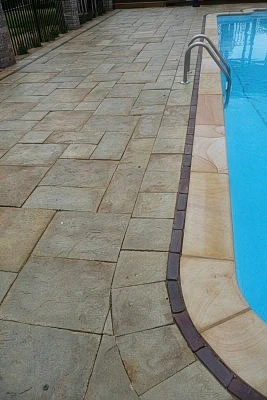
Pool deck materials chosen for ten years of Georgia conditions — heat, grip, and chemical exposure all considered.
Pool Deck Materials That Handle Georgia — Not Just Look Good
Free material consultations for pool deck projects. Heat, grip, and ten years of Georgia weather — we cover all three.
Request a Free ConsultationTimberstone Landscape is based in Grayson, Georgia and serves the greater Northeast Atlanta region within 40 miles: