
Retaining Wall vs Sloped Landscaping — Which Is Better for a Georgia Property?
Georgia properties with significant grade changes have two fundamental options for managing them: build a retaining wall and create terraced level areas, or slope-landscape the grade and plant ground cover or slope-appropriate vegetation to manage erosion. Both are legitimate approaches — and both are the wrong answer in certain situations. The right choice depends on the angle of the slope, the soil conditions, the intended use for the space, and the long-term maintenance commitment the homeowner can realistically sustain.
Timberstone Landscape handles both retaining wall construction and slope landscaping across Gwinnett, Forsyth, Hall, and Northeast Atlanta as a Techo-Pro certified contractor. Here's an honest breakdown of when each approach makes sense — and when it doesn't.
When Sloped Landscaping Works
Gentle slopes — generally below a 3:1 ratio (one foot of rise per three feet of horizontal run) — can be managed effectively with slope-appropriate landscaping: ground covers, native shrubs, ornamental grasses, and deep-rooted perennials that anchor the soil and resist erosion. Georgia native plants like liriope, native azaleas, muhly grass, and oakleaf hydrangea are well-suited to sloped conditions and establish quickly in Georgia's red clay.
Sloped landscaping works when the slope is manageable, when the homeowner doesn't need usable level space at the bottom or top of the grade change, and when the aesthetic of a planted hillside is preferred over a structured wall. It's typically lower in initial cost than a retaining wall for the same footprint — but it carries an ongoing maintenance commitment that retaining walls don't: weeding, replanting failures, and re-mulching to maintain erosion control.
"A slope that's landscaped well looks natural and low-effort. A slope that's been landscaped without enough thought becomes the yard's most maintenance-intensive feature within two seasons."
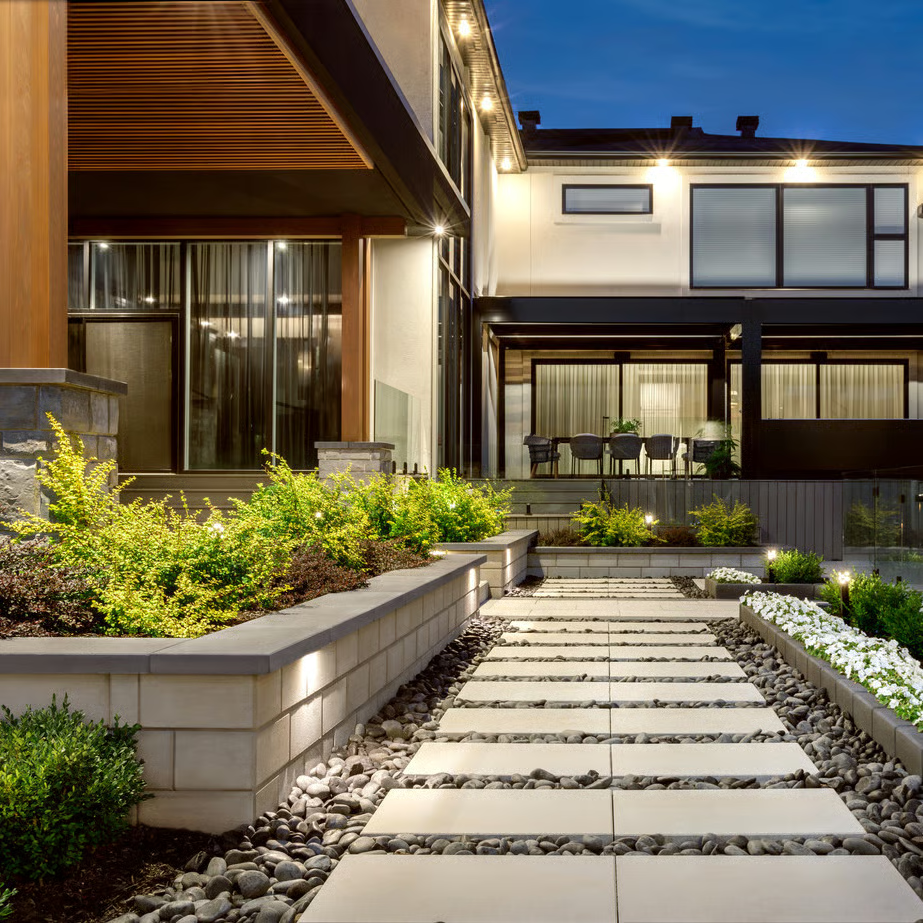
The decision between a retaining wall and sloped landscaping depends on slope angle, intended use, maintenance preferences, and budget — Timberstone evaluates all four during site assessment.
When a Retaining Wall Is the Right Answer
Slopes above a 3:1 ratio — common in the rolling terrain of Gwinnett, Hall, Forsyth, and Barrow counties — cannot be reliably managed with plantings alone. At steeper grades, Georgia's heavy clay soil saturates during rain events and can move even with established vegetation. The erosion risk on steep slopes in Georgia is not theoretical — it's a pattern we see regularly on properties where slope landscaping was chosen over a retaining wall to save money.
Retaining walls also become the obvious answer when level usable space is needed. A sloped backyard with a ten-foot grade change isn't usable for entertaining, children's play, or a patio. A properly designed retaining wall system creates level terraces — usable space from what was previously an obstacle. That transformation often changes how a family uses their property fundamentally, making the retaining wall investment one of the highest-ROI landscape projects available.
Decision Framework- Slope under 3:1 (less than 33% grade): sloped landscaping with appropriate plant selection is viable and often the right choice
- Slope above 3:1 (steeper than 33% grade): retaining wall is almost always required for erosion control and structural stability
- Goal is usable level space: retaining wall regardless of slope angle — landscaping alone can't create level areas
- Goal is natural appearance on moderate slope: native ground covers and shrubs with annual mulch maintenance
- Combination approach: retaining walls at steep sections, slope landscaping on gentler transitions between tiers
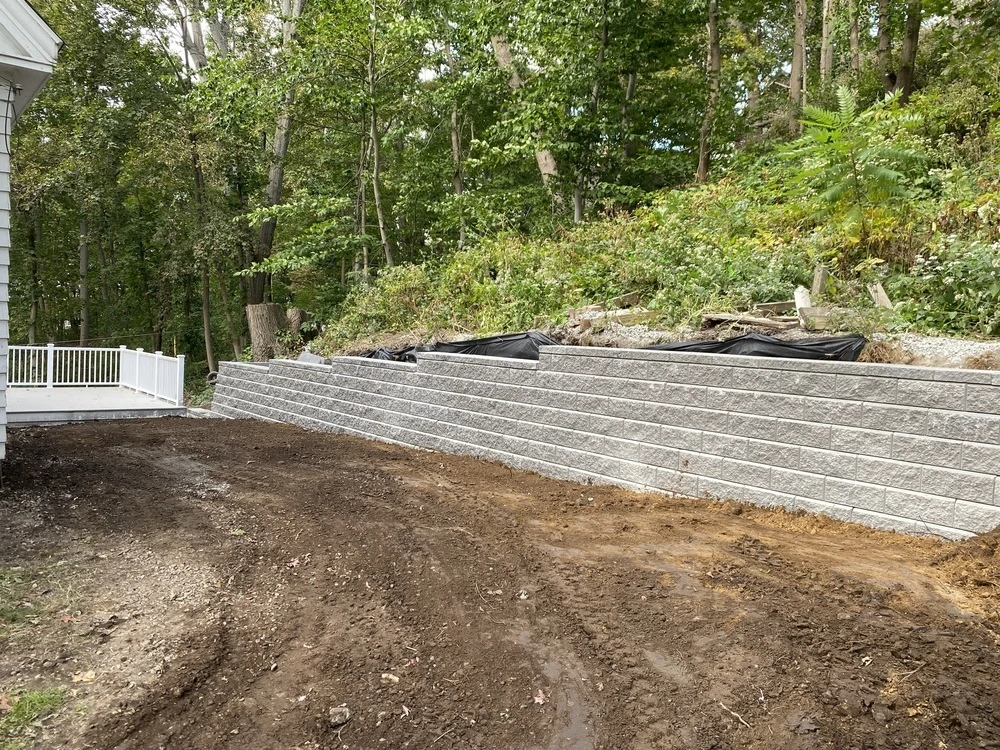
Timberstone Landscape often recommends a combination approach — retaining walls where structure is needed, slope plantings where gentler grades can be managed naturally.
The Combination Approach — What Timberstone Recommends Most Often
The majority of Georgia properties with significant grade changes benefit from a combination of retaining walls and slope landscaping — not an either/or choice. A tiered retaining wall system creates level terraces on steep sections, while slope-appropriate plantings manage the gentler transitions between tiers and soften the visual impact of the wall faces. This integrated approach produces the best of both: structural stability where it's needed and natural character where it's appropriate.
As a Techo-Pro certified contractor serving properties across Loganville, Snellville, Dacula, Flowery Branch, and the broader Northeast Atlanta area, Timberstone evaluates slope conditions holistically — assessing which sections need structural solutions and which can be handled with plant establishment and proper drainage. That site-specific assessment is the difference between a slope management project that performs for twenty years and one that requires revisiting within five.
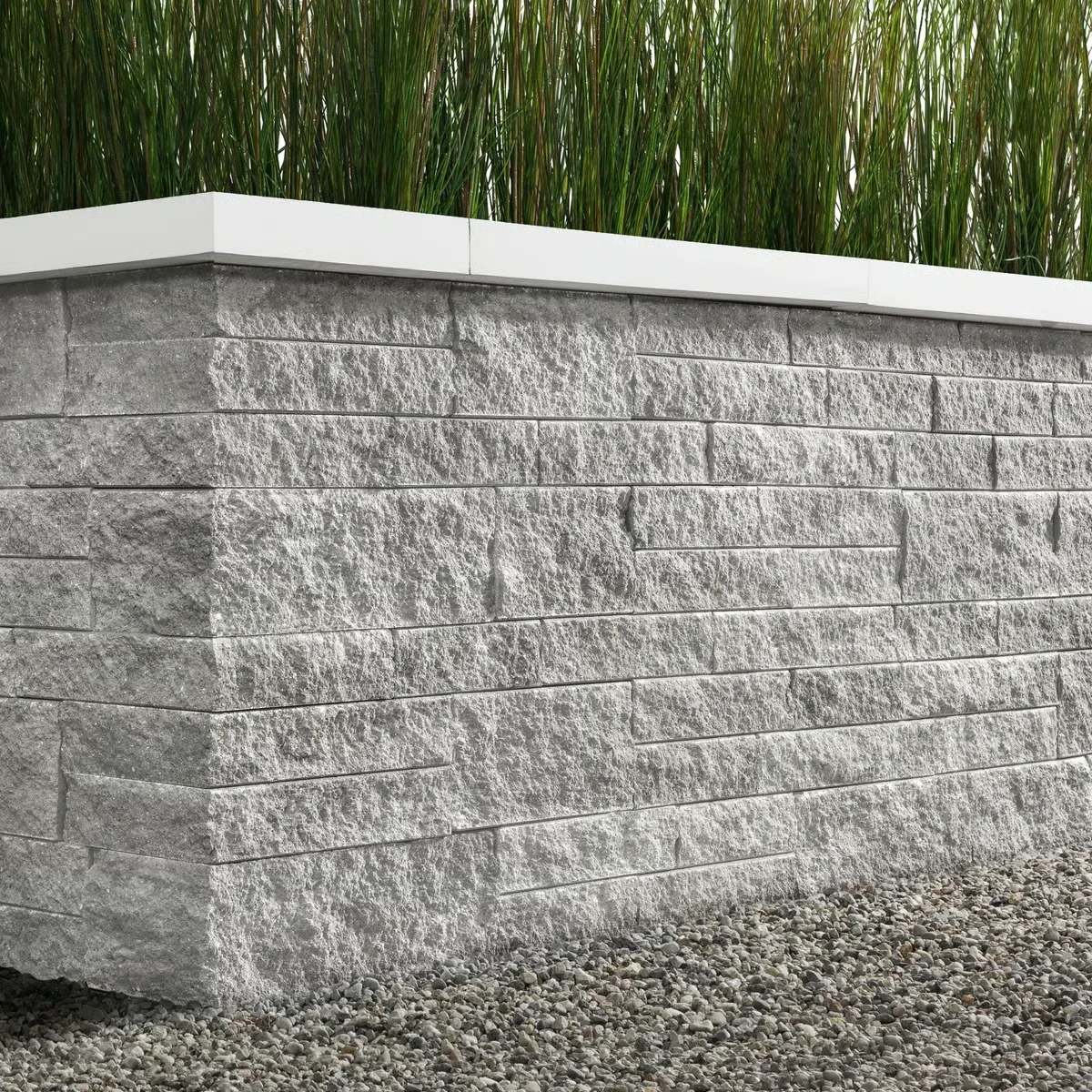
Timberstone Landscape solves slope challenges across Gwinnett, Forsyth, Hall, Barrow, and surrounding Northeast Atlanta counties — with retaining walls, landscaping, or both.
Get a Site Assessment for Your Georgia Slope
Timberstone Landscape evaluates your grade conditions and recommends the right combination of retaining walls and landscaping for long-term performance.
Get a Free EstimateServing Grayson, GA and surrounding Northeast Atlanta communities within 40 miles: