
How Timber Frame Structures Outperform Vinyl in Georgia — The Durability Argument
Vinyl pergolas are easy to sell. They photograph well in showrooms, carry a lower upfront price, and come with a promise of zero maintenance. What they don't mention in the sales pitch is how vinyl handles Georgia's summer heat — the expansion, the fade, the brittleness that sets in after four or five years of direct sun exposure. Timber frame structures cost more upfront. They also last two to three times as long, carry structural weight that vinyl cannot match, and improve with age rather than degrading visually. For homeowners making a long-term investment in their outdoor living space, the math is not as close as the price tags suggest.
Timberstone Landscape builds timber frame pergolas, pavilions, and outdoor structures across Gwinnett, Forsyth, Hall, and the surrounding Northeast Atlanta region. As a Techo-Pro certified contractor, we design outdoor spaces that are built to endure Georgia's climate — not just look good for the first few seasons.
What Georgia's Climate Does to Vinyl Structures
The problem with vinyl in Georgia is not a single catastrophic failure. It is a slow, cumulative degradation that begins within the first two summers and accelerates from there. Vinyl is a petroleum-based product with a high coefficient of thermal expansion. In Georgia's heat, a vinyl pergola rafter can expand by a quarter inch or more over its length during a summer afternoon and contract overnight. Over hundreds of heating and cooling cycles, this movement works the fasteners loose, creates micro-cracks at stress points, and causes the chalky surface oxidation that turns white vinyl a dull gray-yellow.
UV radiation compounds the problem. Georgia averages over 200 sunny days per year, and direct sun on a south- or west-facing pergola is unrelenting from April through October. Vinyl's UV stabilizers degrade over time — typically within five to seven years in a high-UV environment — after which color fading and surface brittleness accelerate sharply. A vinyl pergola that looked crisp in year one often looks noticeably aged by year six.
There is also a structural ceiling to what vinyl can support. Vinyl extrusions achieve their strength from wall thickness and internal reinforcing channels, but they are not load-bearing in the way timber is. Installing ceiling fans, lighting fixtures, or hanging planters from vinyl rafters requires careful attention to rated load limits. Heavier features — outdoor curtain hardware, climbing plants with mature wood weight, retractable shade sails — can stress vinyl connections in ways that timber handles without concern.
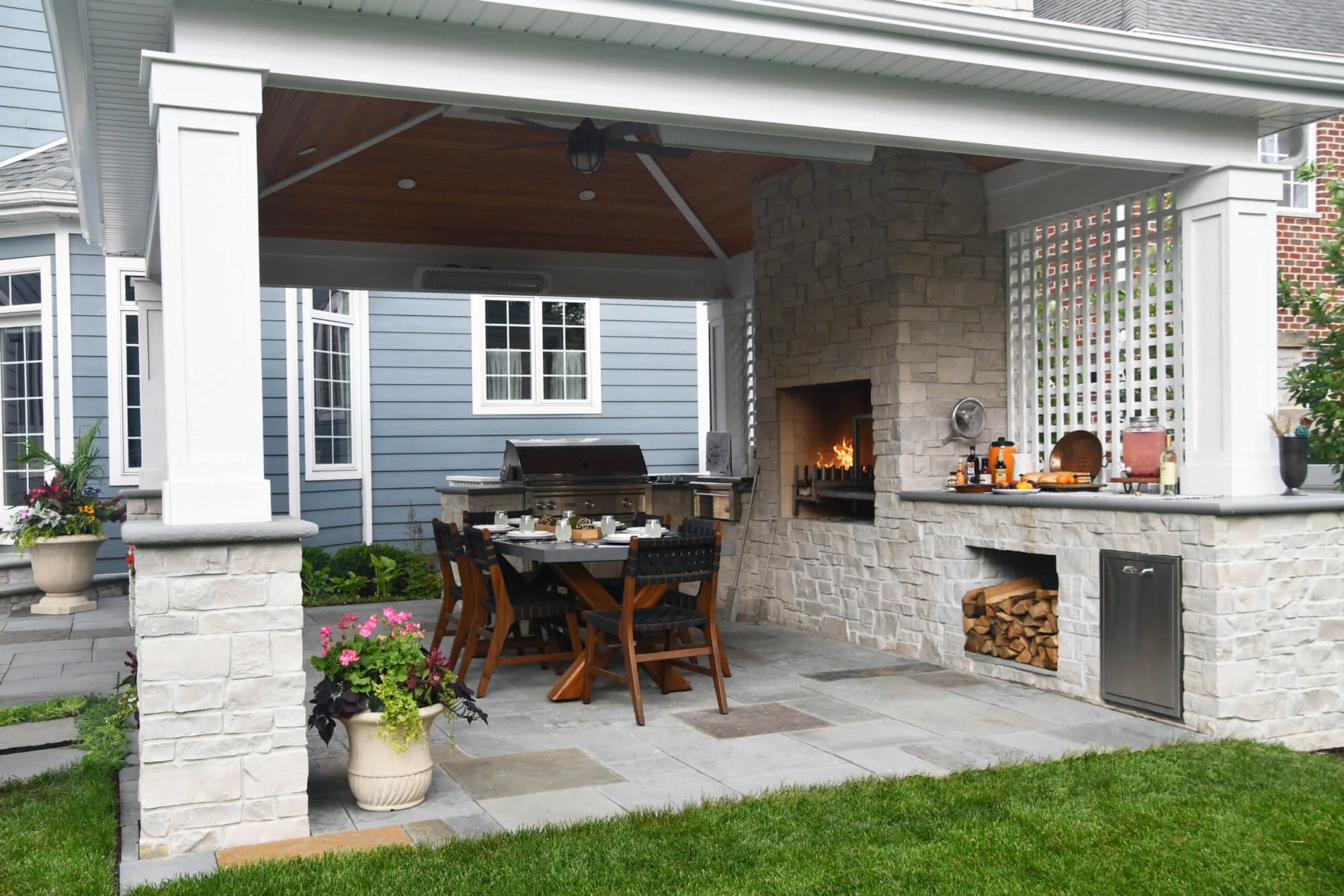
Timber frame structures develop natural character over time — a quality no vinyl product can replicate.
The Case for Timber Frame — Material Performance Over Time
Douglas fir, western red cedar, and southern yellow pine — the species most commonly used in timber frame outdoor structures — all share a fundamental advantage over vinyl: they are structural materials. A timber frame pergola is not a decorative assembly fastened together; it is an engineered structure where the wood itself carries load, resists racking, and transfers force through joinery designed to last generations. Traditional timber joinery — mortise and tenon, half-lap, and through-bolt connections — distributes stress across large surface areas rather than concentrating it at small fastener points.
Cedar in particular is exceptionally well-suited to Georgia's climate. Its natural oils resist moisture absorption and inhibit rot, making it one of the few softwoods that performs reliably in the high-humidity Southeast without requiring chemical treatment. Left untreated, cedar weathers to a uniform silver-gray patina that many homeowners find more attractive than the original tone. Treated with a semi-transparent stain or oil finish every three to five years, cedar retains its warm amber color and remains dimensionally stable for decades.
"Vinyl structures photograph well in showrooms. Timber frame structures photograph better fifteen years later — when the character has developed and the structure has proven itself in Georgia's climate."
Douglas fir is the choice for larger-span structures where deflection and load capacity matter. With a modulus of elasticity roughly 50% higher than cedar, fir rafters can span longer distances without intermediate support posts — important for homeowners who want an open, unobstructed outdoor space rather than a forest of columns. Fir is also the preferred material for structures that will carry significant roof loads, such as pavilions with solid roofing or pergolas designed for retractable shade systems with substantial hardware weight.
Timberstone sources timber from suppliers who kiln-dry their stock to minimize post-installation shrinkage and checking. Green or improperly dried timber will crack as it dries in service — a common quality issue with budget timber frame suppliers. Proper kiln drying is not visible in the finished product, but it is the difference between a structure that stays tight and one that develops gaps and squeaks within the first two years.
Cost Comparison — Upfront vs. Lifetime Value
A vinyl pergola in the 12x16 to 14x20 foot range typically costs between $6,000 and $14,000 installed in Northeast Atlanta, depending on complexity, roof style, and accessories. The pricing feels competitive. The relevant question is what that price buys across a fifteen-year ownership horizon.
Vinyl pergolas in Georgia typically need cosmetic intervention — deep cleaning, hardware replacement, paint or coating to address fading — within five to seven years. Structural replacement of cracked or distorted rafters is common by year eight to ten in high-sun exposures. A full vinyl pergola replacement is effectively a fifteen-year cost, not a one-time investment. When those maintenance and eventual replacement costs are factored in, the fifteen-year total cost of vinyl ownership frequently exceeds the upfront cost of a timber frame structure.
Timber frame pergolas in the same size range run $14,000 to $28,000 installed, depending on species, joinery complexity, and features. Maintenance consists of a periodic stain or oil application — a weekend task that homeowners can perform themselves for a few hundred dollars. A properly built timber frame pergola requires no structural intervention for twenty to thirty years. The fifteen-year total cost of ownership, including maintenance, is typically lower than vinyl when the vinyl replacement cycle is accounted for.
- Douglas fir and cedar outperform vinyl in UV resistance after the first five years of exposure
- Timber frame joinery distributes load across large surface areas; vinyl relies on fasteners at stress concentration points
- Timber structures support ceiling fans, lighting, retractable shade systems, and climbing plants without load concerns
- Cedar's natural oils resist rot and moisture without chemical treatment — important in Georgia's humid summers
- Timber frame structures increase property value; vinyl is typically treated as depreciating personal property by appraisers
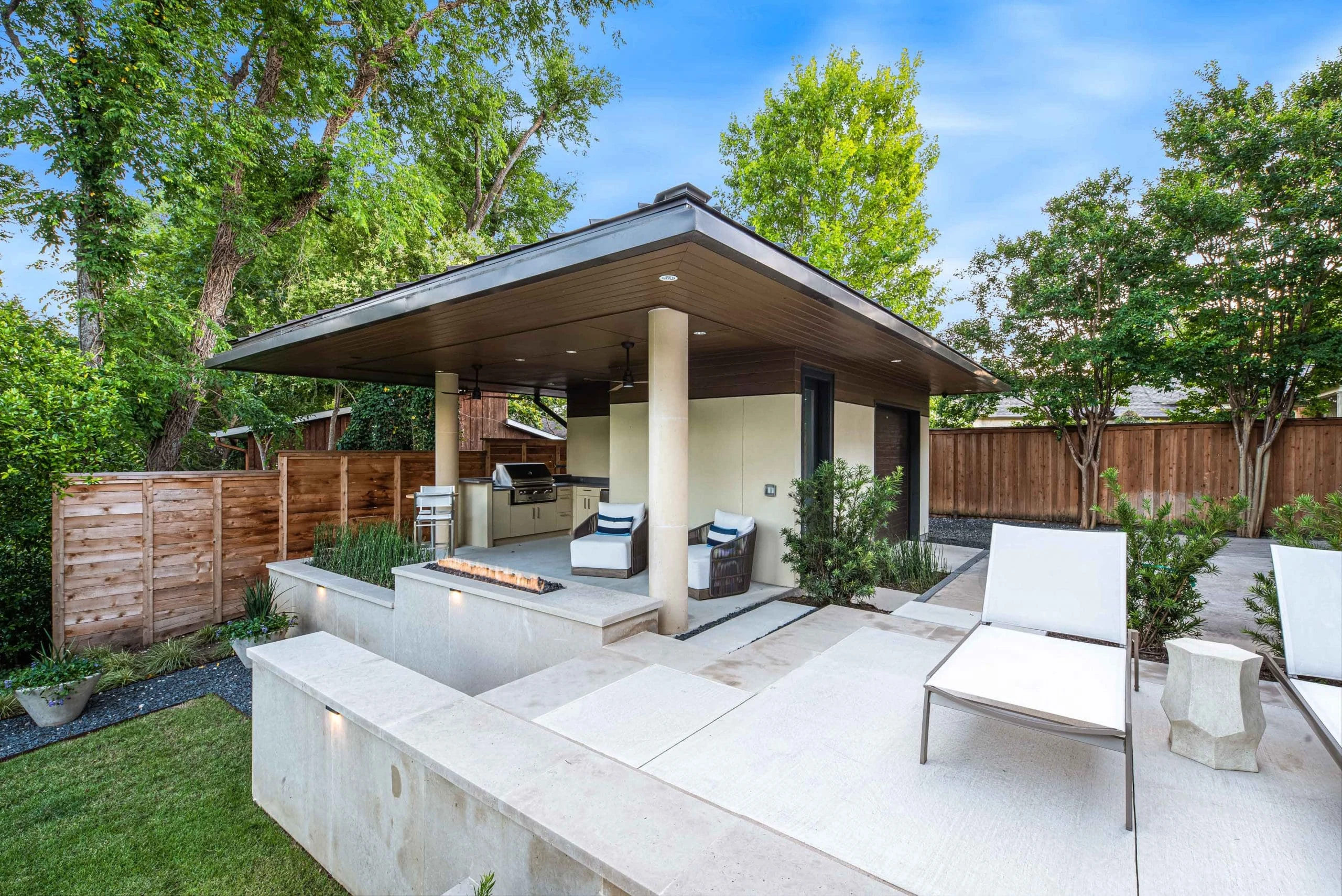
Timber frame structures integrate naturally with hardscape and outdoor kitchen features — creating cohesive outdoor living environments.
Why Timberstone Builds with Timber and Doesn't Offer Vinyl
This is a straightforward position: Timberstone Landscape does not install vinyl pergolas or vinyl outdoor structures. It is not a product category we offer, and the reason is simple — we are not willing to build something we would not stand behind ten years later. Vinyl in Georgia's climate does not meet that standard.
As a Techo-Pro certified contractor, we are held to a higher standard of material quality and installation practice. Techo-Bloc's certification program — which covers hardscape installation, drainage engineering, and site preparation — reflects a philosophy of doing the work correctly rather than affordably. That same philosophy extends to every material category we work with. When we specify timber for a pergola or pavilion, we are specifying a material that will still look correct and perform structurally when the homeowner's children are grown.
We work with clients across Grayson, Lawrenceville, Suwanee, Buford, Cumming, Gainesville, and the broader Northeast Atlanta corridor. Our outdoor structure projects typically integrate with hardscape work — paver patios, retaining walls, outdoor kitchens — and the timber frame element needs to hold its visual and structural integrity for the same lifespan as the stonework and concrete. A thirty-year patio next to a ten-year vinyl pergola is not a cohesive outdoor space. It is a maintenance problem waiting to happen.
If you are comparing bids and a vinyl option appears significantly cheaper, we encourage you to ask the contractor for references on structures they installed eight to ten years ago. The performance conversation looks very different when you have real examples rather than showroom samples.
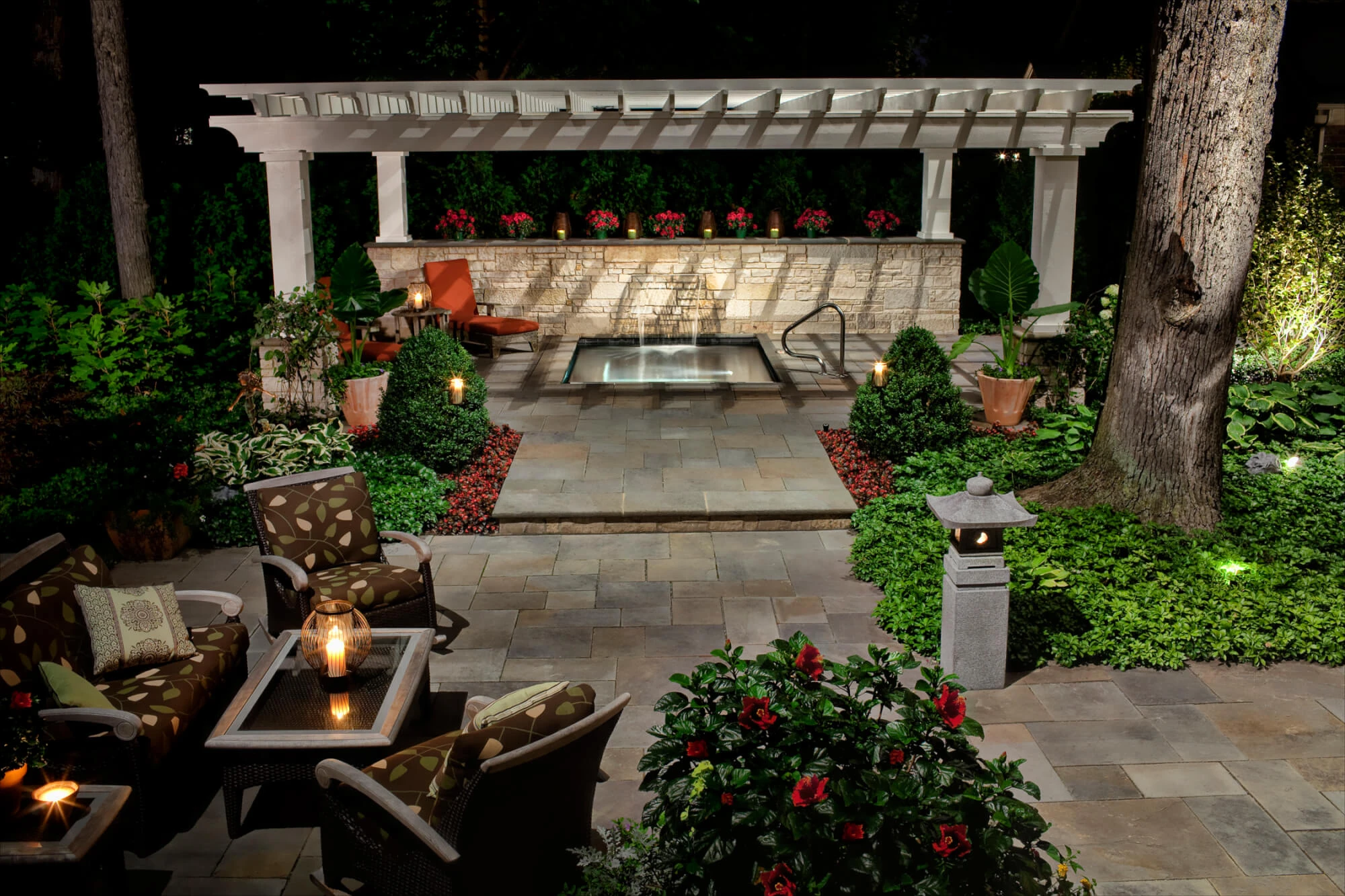
A timber frame pergola over a Techo-Bloc paver patio — built to perform together for decades in Georgia's climate.
Ready to Build Something That Lasts?
Get a free estimate for your timber frame pergola or pavilion from Timberstone Landscape — Techo-Pro certified, serving Northeast Atlanta.
Get a Free EstimateServing Grayson, GA and surrounding Northeast Atlanta communities within 40 miles: