
How Retaining Walls and Patio Systems Work Together on Georgia Hillside Properties
Northeast Atlanta's terrain is rarely flat. Gwinnett, Hall, Jackson, and Cherokee counties are characterized by rolling topography — properties that drop sharply behind the house, step-grade front yards, and side slopes that make standard patio or walkway installations impossible without first solving the grade problem. On these properties, a retaining wall is not a design preference; it is the prerequisite that makes every other outdoor improvement possible. The wall creates the flat terrace. The patio fills the terrace. The stairs connect the levels. Drainage ties the system together.
The fundamental design error on sloped Georgia properties is treating the retaining wall and the patio as separate projects with separate contractors and separate design intentions. Walls built by one contractor at one grade, then patio systems installed by another contractor at a different time, produce outdoor spaces that don't relate to each other — a wall that is too high or too low for the patio it was supposedly creating, drainage that exits in the wrong location, stairs that don't align with the patio axis. Integrated design is not a preference on hillside properties; it is a requirement.
The Integrated SystemHow Retaining Walls Create the Platform That Patio Systems Require
A retaining wall's primary function on a residential property is to create a level terrace out of a sloped site. The wall height determines the size of the flat area behind it. The wall's batter — the slight backward lean built into segmental retaining wall blocks — determines its structural capacity for the retained soil height. Walls that will be retained at four feet or more require engineering analysis, proper batter, and in Georgia, a permit from the county building department. Walls under four feet typically don't require a permit but still require proper construction to perform.
The terrace created by the wall becomes the patio foundation. But the flat area behind the wall must be properly compacted and graded before patio base preparation can begin. Freshly cut-and-fill soil behind a new wall needs time to consolidate — rushing patio installation on recently disturbed fill behind a wall produces settling that no amount of base compaction can fully prevent. The proper sequence is: wall installation, fill placement and compaction, a minimum settling period, then patio base preparation and paver installation.
"On a sloped Georgia property, the retaining wall is not a landscape feature — it is the foundation on which every outdoor living improvement is built. It must be designed for what comes after it."
Stairs, Drainage, and the Connections Between Levels
A multi-level property with retaining walls and patio systems at different grades requires stairs that connect the levels in a way that feels natural and functions safely. Stair design on hillside properties involves calculating rise and run for the total grade change, determining whether a straight run or a switchback configuration is appropriate for the slope angle, and matching stair material to the wall and patio materials for a unified finished appearance.
Drainage is the tie that holds the system together. Water that falls on the upper patio level must exit through a defined path — typically a channel drain at the base of the wall or a gravel strip along the wall face — rather than sheeting over the wall face and saturating the soil directly behind it. Water behind the wall must be managed through drainage aggregate backfill and outlet pipes through the wall face. Walls that retain water-saturated soil fail faster than any other type of retaining wall failure. Drainage design is not an afterthought in retaining wall systems; it is a structural requirement.
- Retaining wall height determined by grade change — design wall before designing patio dimensions
- Engineered design and permit required for walls over 4 feet in Georgia
- Fill placement and compaction behind wall before patio base preparation begins
- Drainage aggregate and outlet pipes through the wall face — critical for wall longevity
- Patio drainage designed to exit through the terrace edge, not over the wall face
- Stair material matched to wall and patio for a unified, designed appearance
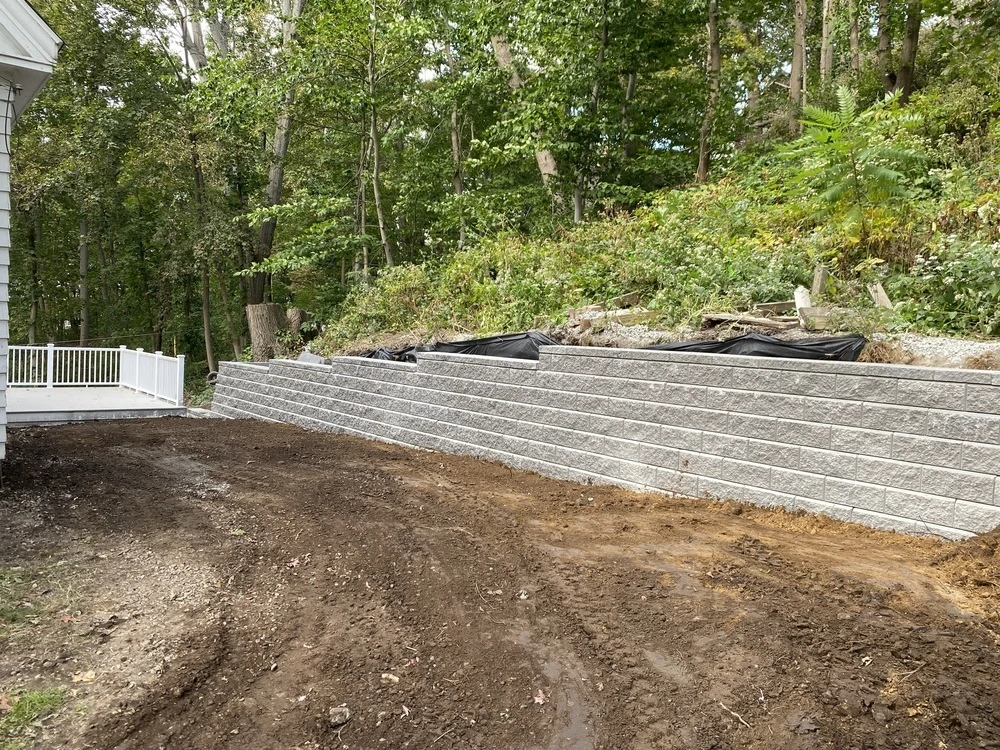
Retaining walls and patio systems designed as one integrated project — the wall creates the terrace, the patio fills it, drainage connects both levels to a defined outlet.
Why Wall and Patio Must Be Designed Together From the Start
The most expensive outdoor project a Georgia homeowner can undertake on a sloped property is the one that requires demolition and redesign because the retaining wall and the patio were not designed together. A wall built to the wrong height for the intended patio size, a wall face that conflicts with the patio layout, stairs that don't connect where they need to connect — these are all problems that require significant cost to correct after the fact. The design phase is where these conflicts are resolved, and it costs far less to resolve them on paper than in stone.
Timberstone Landscape approaches hillside properties across Northeast Atlanta — Gwinnett, Hall, Jackson, Cherokee, Forsyth, and surrounding counties — as integrated design problems. Our hardscaping services include retaining walls, patio systems, stairs, and drainage designed as one coordinated scope. Our design-build process ensures that wall height, patio grade, stair layout, and drainage outlet are resolved together before a single block is placed.
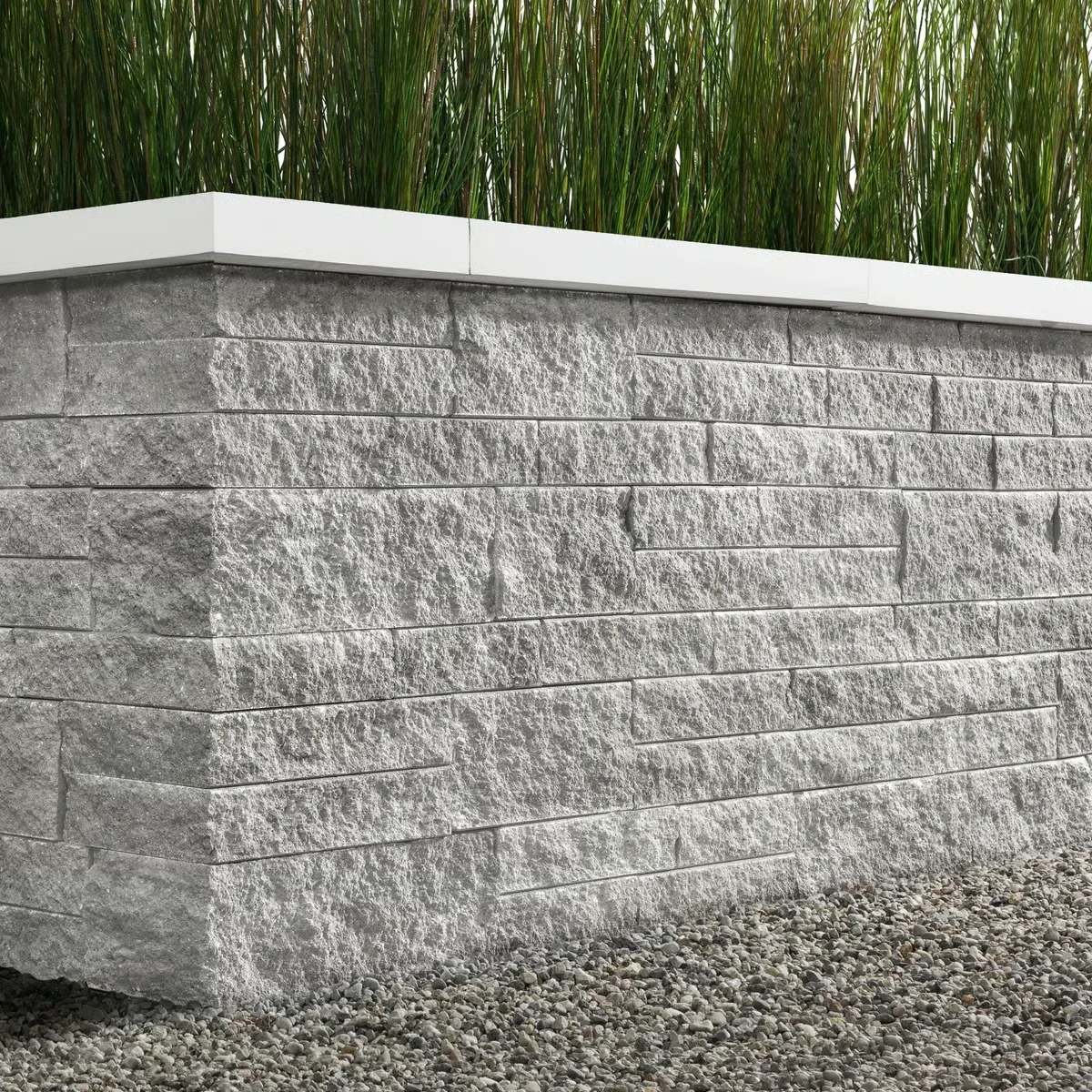
A completed hillside hardscaping system in Northeast Atlanta — retaining walls, paver patio, integrated stairs, and drainage designed from the first site visit as one coordinated project.
Transform Your Georgia Hillside Into Usable Outdoor Space
Free consultations. Serving Northeast Atlanta within 40 miles of Grayson.
Request a Free ConsultationTimberstone Landscape is based in Grayson, Georgia and serves the greater Northeast Atlanta region within 40 miles: