
How Much Counter Space an Outdoor Kitchen in Georgia Actually Needs to Function
Counter space is the most underestimated variable in outdoor kitchen design — and the most common reason homeowners regret their build. An outdoor kitchen with too little prep surface is not a kitchen at all; it is a grill station with a roof over it. Understanding the minimum functional thresholds before you finalize a design is the difference between a space you use every weekend and one you abandon after the novelty wears off.
The indoor kitchen gave us our intuitions about counter space — and almost all of those intuitions need recalibration for the outdoors. Indoor kitchens benefit from multiple discrete zones: prep, cooking, staging, and cleanup happen in connected but separate areas. Outdoor kitchens compress all of those functions into a smaller footprint, often a single L-shaped or linear run of stone and cabinetry. That compression demands intentional planning.
The Functional MinimumThe 12-Inch Rule and Why It Matters at the Grill
Every professional kitchen designer applies the same rule to grill placement: a minimum of 12 inches of clear counter space on each side of the grill opening. That 12-inch landing zone serves a specific function — it is where a platter goes when you pull meat off the grates, where tongs rest between flips, and where a sauce brush sits without getting knocked into the burner. Without it, you are setting hot items on the surrounding seating wall, the side table, or the ground.
The 12-inch minimum is exactly that — a minimum. In practice, 18 inches on the primary side (the dominant hand side) produces dramatically better usability. A full slab of brisket needs room to rest. A whole chicken needs space to carve. Once you have cooked on a surface with 18 inches versus 12, the difference is immediately apparent. Many homeowners who commission outdoor kitchens after having used an undersized one specifically request the upgraded landing zone the second time around.
"A grill with 12 inches on each side is the minimum. Anything less and you are cooking at a grill station, not an outdoor kitchen."
Total Prep Space: The 36-Inch Threshold
Beyond the landing zones flanking the grill, a functional outdoor kitchen requires a dedicated prep zone — counter space that is not in the immediate heat envelope of the grill and is not used as a staging area during service. The minimum useful prep zone is 36 continuous inches of clear counter. That length accommodates a cutting board with room on either side, a bowl for marinade, and basic mise en place without constant rearrangement.
Thirty-six inches sounds like a reasonable number until you actually build one. A standard 36-inch prep run often gets interrupted by a sink, a side burner, or a trash cutout — all necessary features, but each one reduces the clear prep surface. When those interruptions are planned without accounting for them, a nominal 36-inch zone becomes three 12-inch fragments that function poorly as a prep surface. The solution is to treat continuous clear counter as the priority during layout, and position accessory cutouts (sink, burner) at the ends of runs rather than the middle.
- 12 inches minimum clear on each side of the grill — 18 inches preferred on the dominant hand side
- 36 inches minimum dedicated prep zone, not shared with landing or staging
- Sink positioned at the end of a counter run to preserve prep continuity
- Side burner should not occupy primary prep real estate — position at the outer end
- Refrigerator and trash cutouts count against total clear surface — account for them in layout
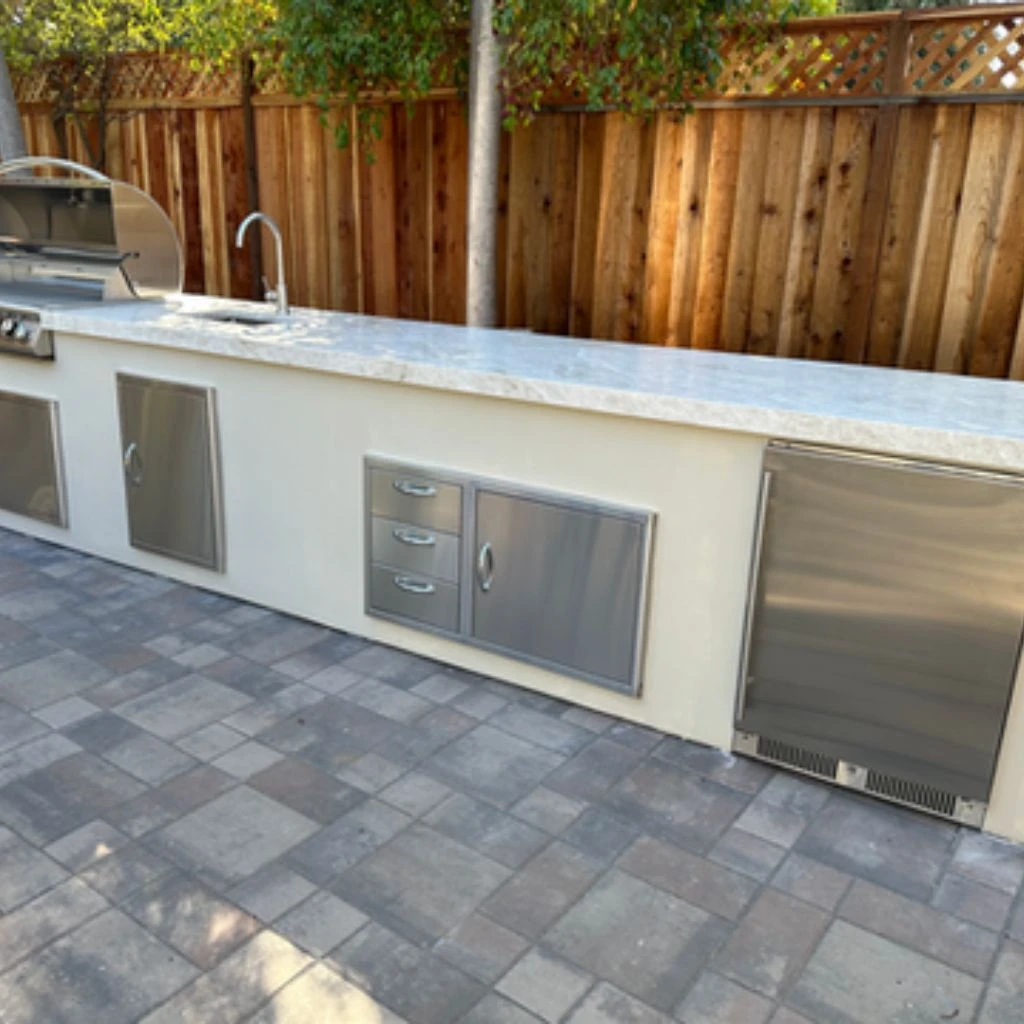
A well-planned outdoor kitchen provides separate landing, prep, and staging zones — each with adequate continuous clear surface.
Outdoor Counter Depth and Height: Where Indoor Rules Break Down
Indoor countertops are almost universally 25 inches deep and 36 inches high — a standard that evolved over decades of kitchen ergonomics research. Outdoor counters are not governed by the same conventions, and the differences matter. Counter depth outdoors runs 24 to 28 inches depending on the appliances being integrated. A built-in grill hood often requires a deeper run to accommodate the unit depth and the door swing clearance. A refrigerator drawer unit may demand 28-inch depth to sit flush. Under-counter storage requires a minimum of 18 inches of interior depth to be useful.
Counter height deserves equal attention. Standard 36-inch height works well for prep and dining, but many outdoor kitchen designers recommend a two-tier approach: the cooking zone at 36 inches (standard, ergonomic for grilling) and a bar counter at 42 to 44 inches on the opposite side. The bar height counter extends the functionality of the space — it becomes the surface where guests interact with the cook, where drinks are staged, and where bar stools can tuck in. A well-designed outdoor kitchen in Georgia serves as both a functional cooking space and a social anchor, and two-tier counter design is what enables both simultaneously. As a Techo-Bloc Preferred Contractor, Timberstone Landscape builds outdoor kitchen structures with the same precision applied to hardscape paving — material selection, structural framing, and counter dimensions are all part of a deliberate design process, not afterthoughts.
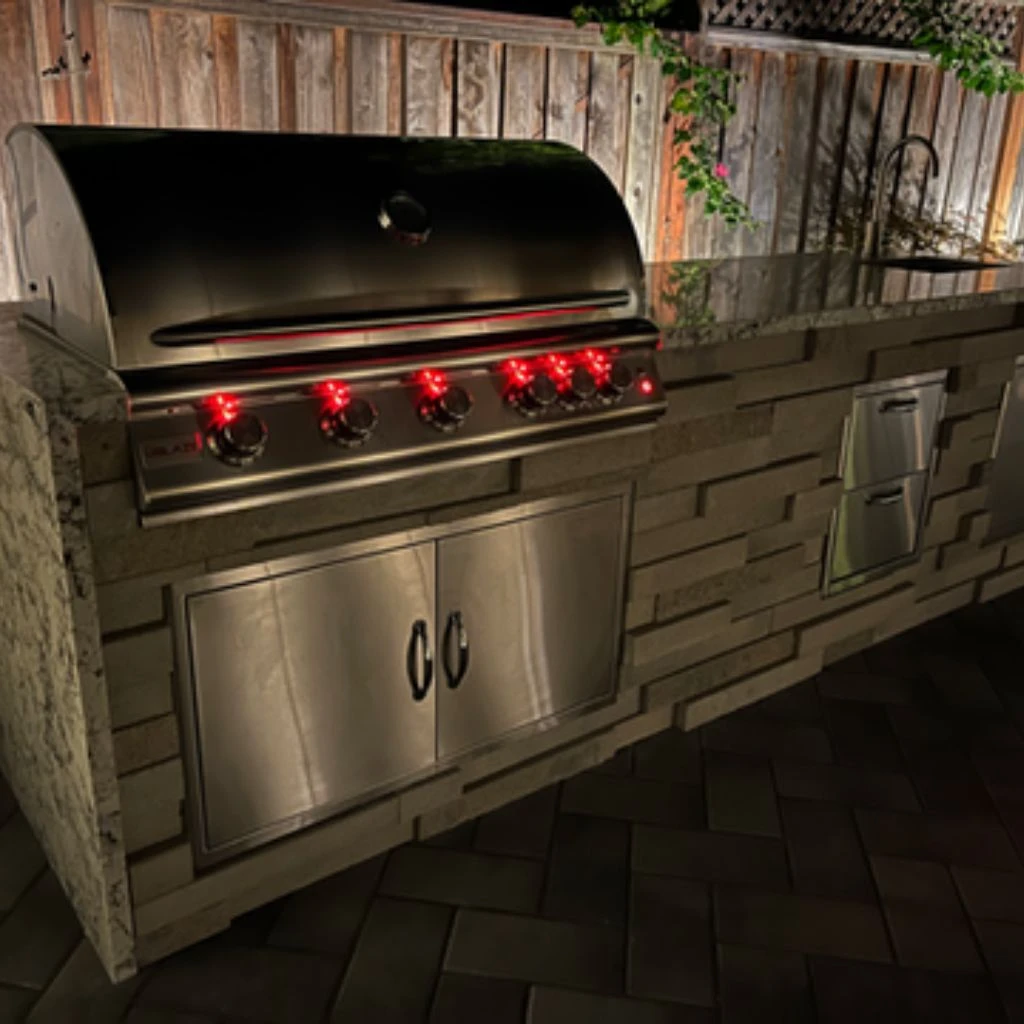
Timberstone Landscape outdoor kitchen builds in Gwinnett, Forsyth, and Fulton counties are designed with counter dimensions that support real cooking use.
Design an Outdoor Kitchen That Actually Works
Free consultations. Serving Northeast Atlanta within 40 miles of Grayson.
Request a Free ConsultationTimberstone Landscape is based in Grayson, Georgia and serves the greater Northeast Atlanta region within 40 miles: