
Gas vs. Wood-Burning Outdoor Fireplaces in Georgia — What the Choice Actually Means Year-Round
Georgia's outdoor season runs nearly ten months. If you're building an outdoor fireplace, the fuel choice you make at the design stage will define how you use that feature across every one of those months — not just on evenings when it feels like the right aesthetic choice to light a wood fire. The gas vs. wood decision is more practical than it appears on paper.
Most homeowners approach this question with a preference already formed. Wood feels authentic. Gas feels convenient. Both are accurate impressions — and neither one alone makes for a good decision. The right answer depends on how often you use the feature, who uses it, what local burn restrictions apply, and what the structure surrounding the fireplace will tolerate.
The Fuel QuestionWhat Gas Actually Gives You in a Georgia Backyard
Gas outdoor fireplaces are the more popular choice for a straightforward reason: they get used more often. Turn a dial, wait thirty seconds, you have a fire. No hauling wood, no starter logs, no waiting for kindling to catch. On a Tuesday night after dinner when you want to sit outside for forty-five minutes before heading in, a gas fireplace gets lit. A wood fireplace typically doesn't.
For covered outdoor structures — pavilions, pergolas with polycarbonate roofing, screened porches — gas is almost always the only appropriate choice. Wood combustion produces sparks and ember scatter that create real fire risk under enclosed or partially enclosed overhead structures. Gas eliminates that hazard. If your outdoor fireplace is integrated into a covered living structure, the conversation effectively ends there.
Gas also simplifies chimney requirements. Without creosote buildup, the maintenance demands are substantially lower — no annual chimney sweeps, no inspection requirements tied to combustion residue. For most Georgia homeowners managing busy schedules, that difference accumulates meaningfully over ten years of ownership.
"Wood fires are better in theory. Gas fires get lit on a Wednesday. That difference adds up to a lot of unused outdoor time over a decade."
What Wood-Burning Delivers That Gas Cannot
The experience of a wood fire is genuinely different — and for some homeowners, that difference is the entire point. The smell, the crackle, the visible combustion dynamic, the ritual of building and tending a fire — none of that is replicable with gas. If you entertain in a way that involves gathering around the fire as a deliberate activity, and you have the property configuration to support it, wood burning deserves serious consideration.
Wood-burning outdoor fireplaces require proper chimney height and draw engineering to function correctly in Georgia's humidity. They also require dry, seasoned hardwood — not the bagged firewood from the gas station. On larger rural or semi-rural properties in communities like Grayson, Braselton, or Loganville where firewood is accessible and burn restrictions are less common, wood burning is often the more practical choice than it would be for a tighter suburban lot in Duluth or Lawrenceville.
- Gas: immediate use, no smoke management, safer under covered structures, lower maintenance
- Wood: authentic experience, lower fuel cost if you have access, works without utility hookup
- Covered outdoor structures almost always require gas — ember scatter is a real structural fire risk
- Georgia burn restrictions vary by county — check local ordinances before specifying wood burning
- Both options available as Techo-Bloc Preferred Contractor builds with full material warranties
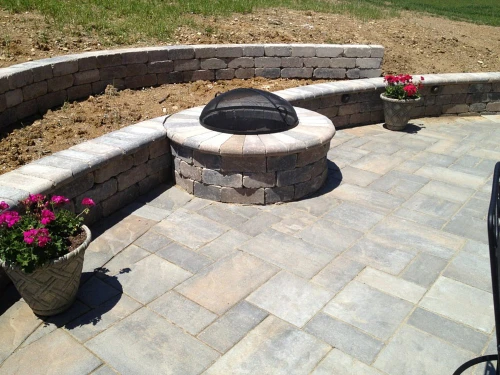
Timberstone designs outdoor fireplaces as integrated elements of the full outdoor living space — fuel type, placement, and structure considered together.
The Installation Details That Actually Matter
Regardless of fuel type, an outdoor fireplace is a significant structural build. The firebox, surround, chimney, and hearth extension all need to be engineered for the load and the thermal demands involved. Shortcuts in masonry quality or base preparation show up as cracking, settling, and mortar failure — often within three to five years on Georgia's clay-heavy soil if the base work isn't done correctly from the start.
Timberstone Landscape is based in Grayson, Georgia, and we've built outdoor fireplaces across the Northeast Atlanta region — Gwinnett, Forsyth, Hall, Fulton, and Jackson Counties. As a Techo-Bloc Preferred Contractor, we have access to the full Techo-Bloc product line for fireplace surrounds, mantels, and hearth treatments. We also work with natural stone and full masonry builds depending on the project aesthetic and budget. See our outdoor kitchen and fire features page or hardscaping services to understand the full scope of what we build.
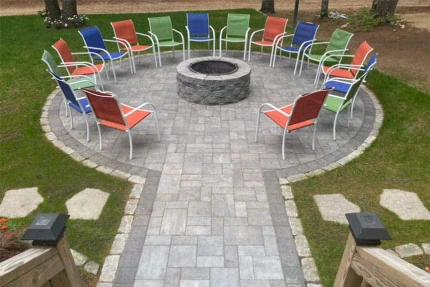
Timberstone outdoor fireplaces are built for how Georgia homeowners actually use their outdoor spaces — across the full year, not just the photogenic evenings.
Gas or Wood — The Right Call for Georgia Backyards
Free consultations. We explain what each fuel type actually means across a full year of use — before you commit to either.
Request a Free ConsultationTimberstone Landscape is based in Grayson, Georgia and serves the greater Northeast Atlanta region within 40 miles: