
Why Wall Caps Matter More Than Georgia Homeowners Expect in Retaining Walls
The cap course of a retaining wall is the last element installed and the first element noticed — yet it is consistently under-specified by homeowners and under-explained by contractors. Wall caps are not decorative trim. They are the primary defense against water intrusion into the wall core, the element that defines whether the wall reads as a designed structure or a stacked afterthought, and a material selection decision that affects the wall's structural integrity over decades of Georgia weather exposure.
A retaining wall without proper capping is structurally exposed at its most vulnerable point. The top course of any segmental retaining wall — whether it is manufactured block, natural stone, or poured concrete — presents an open horizontal surface directly to rainfall. Without a purpose-manufactured cap that overhangs the wall face, water enters the wall body, saturates the aggregate fill behind, and accelerates the moisture cycling that degrades mortar, loosens block adhesive, and eventually destabilizes courses below grade.
Structural FunctionWhat Wall Caps Actually Do Beyond Aesthetics
Water shedding is the primary structural function of a wall cap. A properly dimensioned cap extends beyond the wall face by at least one inch on each side, creating a drip edge that directs rainfall away from the wall face and prevents saturation at the top course joint. In Georgia, where annual rainfall averages 48 to 52 inches and summer thunderstorms can deliver two or more inches in an hour, this drip edge is not a design nicety — it is a performance requirement. Walls without proper cap overhangs show accelerated joint deterioration, efflorescence staining, and biological growth along the top third of the wall face.
Thermal mass and freeze-thaw protection is the second function. The top course is the most exposed to temperature extremes — it receives direct solar radiation in summer and loses heat rapidly in winter. In Grayson and across Northeast Atlanta, winter freezes are infrequent but occur. Water trapped in an uncapped wall's top course joints will expand on freeze, progressively opening joints and dislodging the top two or three courses over several seasons. A cap that overhangs, sheds water, and ideally uses a full-bed mortar or construction adhesive bond to the top course prevents this failure pattern from initiating.
"The cap is what the eye goes to first. It is also what the weather goes to first. It cannot do its job visually if it was never given the right proportion — and it cannot do its job structurally if it was spec'd as an afterthought."
Cap Materials, Proportions, and the Design Decision
Cap material selection is driven by three variables: the wall block system being capped, the visual character of the overall installation, and the exposure conditions at the specific site. The most common cap materials for segmental retaining walls in Georgia are manufactured concrete caps matched to the wall system, natural bluestone or granite caps for a more organic appearance, and poured-in-place concrete caps for large commercial or estate-scale walls where custom proportions are required.
Proportion matters significantly. A wall cap that is too thin looks provisional — it calls attention to itself as a finishing detail rather than integrating with the wall's mass. Standard practice for residential walls is a cap thickness of at least two inches, with three to four inches preferred for walls over three feet in height. The overhang on each side should be uniform and intentional. A cap that overhangs one inch on the front and nothing on the back is not performing its water management function — it is only performing aesthetically, and only partially.
- Cap should overhang wall face by minimum 1 inch on all exposed sides to create a drip edge
- Minimum cap thickness: 2 inches for walls under 3 feet, 3–4 inches for taller walls
- Bond cap to top course with full-coverage construction adhesive or mortar bed
- Match cap color and texture to wall system — mismatched caps visually fragment the design
- For walls near grade that receive foot traffic on top, cap must be rated for pedestrian load
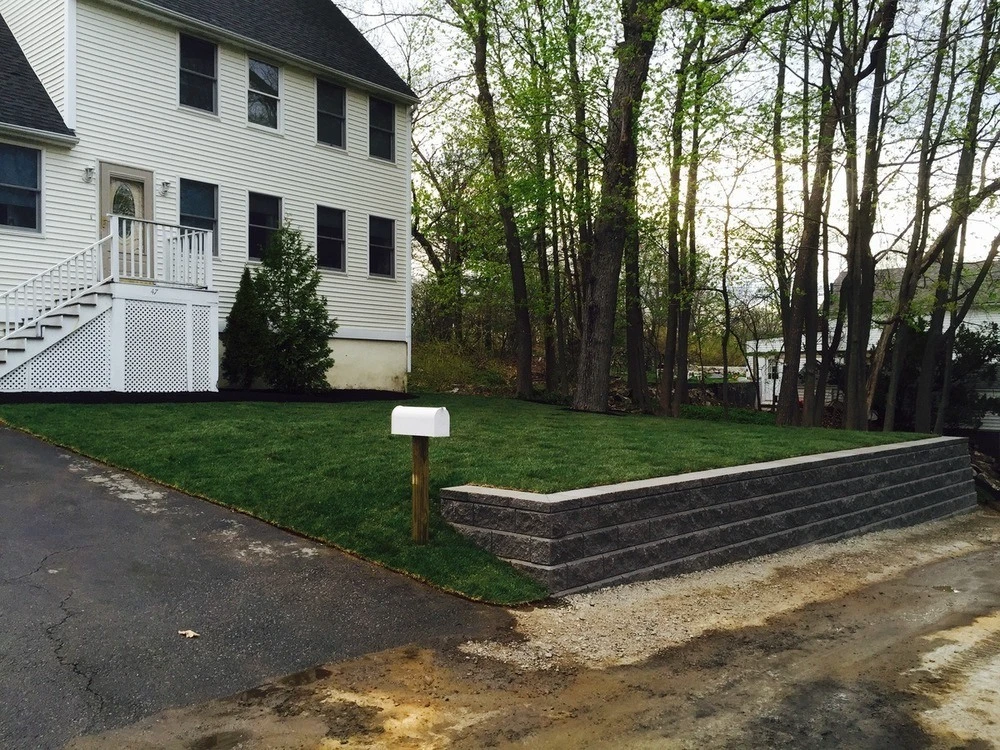
Properly proportioned wall caps protect the wall core from water intrusion while completing the visual design of the installation.
Why Cap Selection Is a Design Decision, Not a Finishing Step
In a well-executed retaining wall design, the cap is specified at the same stage as the block system — not chosen after the wall is built. The reason is proportion. The visual weight of the cap relative to the wall face height, the color relationship between cap and block, and the profile detail at the cap edge all contribute to whether the finished installation looks resolved or assembled. A wall built from a dark charcoal block capped with a mismatched buff concrete cap reads as two separate decisions stacked together. A wall designed with the cap in mind from the start can use cap color and overhang as a deliberate design element — a light cap on a dark wall creates a clean horizontal datum line that reads beautifully in landscape photography and in person.
Timberstone Landscape builds retaining walls throughout Grayson, GA and across Gwinnett, Forsyth, Hall, Fulton, and DeKalb counties in Northeast Atlanta. As a Techo-Bloc Preferred Contractor, we specify cap systems that are engineered to coordinate with the wall block — not selected from a supply yard remnant pile. Our hardscaping services include full design consultation that addresses cap specification as a primary design variable, and our design-build process ensures the wall you see in the design proposal is the wall that gets built.
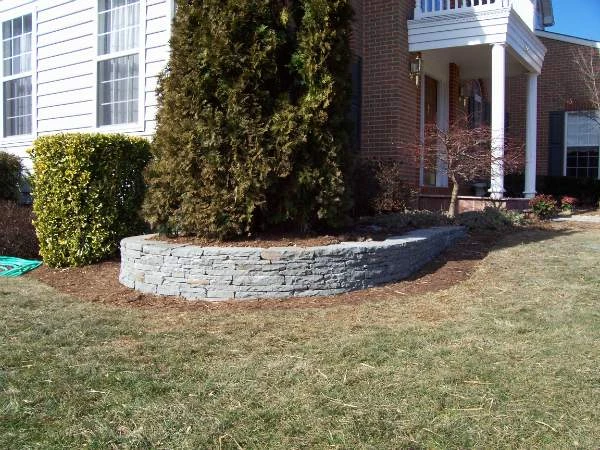
The cap course finishes the wall structurally and visually — proportion and material selection matter as much here as anywhere in the design.
Build a Retaining Wall That Lasts the Way It Was Designed To
Free consultations for hardscaping projects across Northeast Atlanta.
Request a Free ConsultationTimberstone Landscape is based in Grayson, Georgia and serves the greater Northeast Atlanta region within 40 miles: