
Why Tiered Retaining Walls Solve Georgia Slope Problems That Single Walls Cannot
Georgia's rolling terrain produces some of the most dramatic residential slope challenges in the Southeast. A backyard that drops eight, ten, or fifteen feet isn't unusual in Grayson, Loganville, Buford, or the hill communities of Hall and Forsyth counties. When the grade change exceeds what a single retaining wall can handle structurally, tiered wall systems become not just the better option — they become the only engineered option.
Timberstone Landscape designs and builds tiered retaining wall systems across Northeast Atlanta as a Techo-Pro certified contractor. Understanding why tiered systems outperform single tall walls — and when the situation calls for them — helps homeowners make informed decisions before they commit to a scope of work.
The Structural Limit of Single Tall Walls
Every retaining wall system has a height limit beyond which its structural capacity becomes inadequate without engineering intervention. For standard segmental block walls without geogrid reinforcement, that limit is typically three to four feet in residential applications. Above that height, the lateral soil pressure increases exponentially — not linearly. A four-foot wall handles roughly twice the soil pressure of a two-foot wall, but a six-foot wall handles four times the pressure. The relationship isn't proportional.
Taller single walls are possible with geogrid reinforcement — layers of tensile mesh embedded in the slope behind the wall that tie the wall face to the retained soil mass. But in Georgia's clay soil conditions, where the soil itself is expansive and heavy with moisture, very tall single walls create concentrated failure risk at the base. A tiered approach distributes that risk across multiple independent structures, each within its safe engineering range.
"A tiered wall system creates usable outdoor living space from a slope that would otherwise just be erosion waiting to happen."
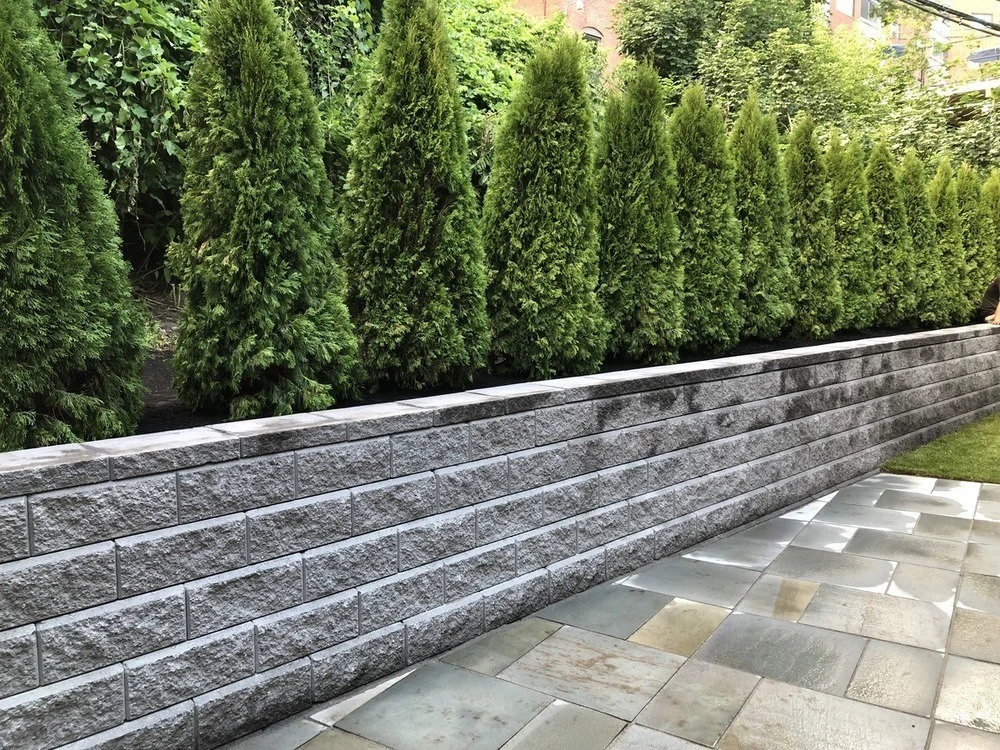
Tiered retaining walls transform steep Georgia slopes into terraced living areas — creating usable planting beds, walkways, and outdoor entertainment spaces at multiple grade levels.
The Landscape Value of Tiered Systems
The engineering argument for tiered walls is compelling. The landscape design argument is equally strong. A series of tiered walls doesn't just stabilize a slope — it creates a terraced landscape that turns a problem grade change into an asset. Each terrace between walls becomes usable space: a planting bed, a fire pit terrace, a lower patio level, a children's play area. The slope becomes a design element rather than a limitation.
The spacing between tiers is calculated based on wall height and the natural angle of repose for the retained soil. As a Techo-Pro certified installer, Timberstone builds tiered systems to Techo-Bloc's spacing specifications — which ensures each tier is far enough from the one above it that the upper wall's load doesn't transfer pressure onto the lower wall's retained soil mass. That spacing calculation is where inexperienced contractors get it wrong, producing tiered systems that look right but fail because the geometry isn't structurally independent.
When Tiered Walls Are the Right Answer- Grade changes greater than four feet where a single wall would require geogrid reinforcement throughout
- Clay soil conditions where expansion pressure makes tall single walls a concentrated failure risk
- Properties where usable terrace space is the goal — not just slope stabilization
- Sites with existing drainage problems where multiple independent drainage systems per tier are preferable
- Slopes where aesthetics matter — tiered systems integrate planting, steps, and lighting far more naturally than a single tall wall
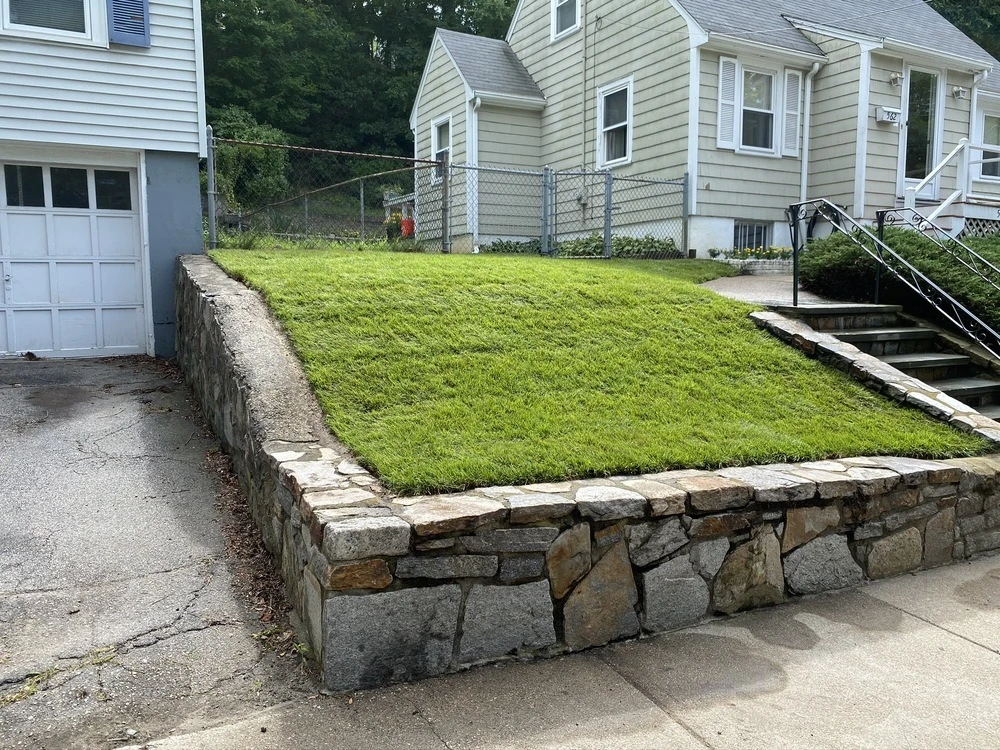
Timberstone Landscape's tiered wall projects incorporate steps, lighting, and planting beds that turn grade challenges into landscape features.
Why Timberstone Designs for the Slope, Not Just the Wall
Every tiered wall project Timberstone builds starts with a site assessment — not a product selection conversation. We evaluate the grade change, the soil conditions, drainage patterns, and the intended use for the space being created. That assessment determines how many tiers, what height each tier should be, how far apart the tiers need to be, and what drainage system is required at each level.
For homeowners across Snellville, Dacula, Loganville, Flowery Branch, and Braselton — communities where rolling terrain is the norm rather than the exception — tiered retaining wall systems often represent the most transformative investment in a property's outdoor livability. A slope that has sat unused for years becomes a usable landscape. Timberstone's Techo-Pro certified approach ensures that transformation is built to last.
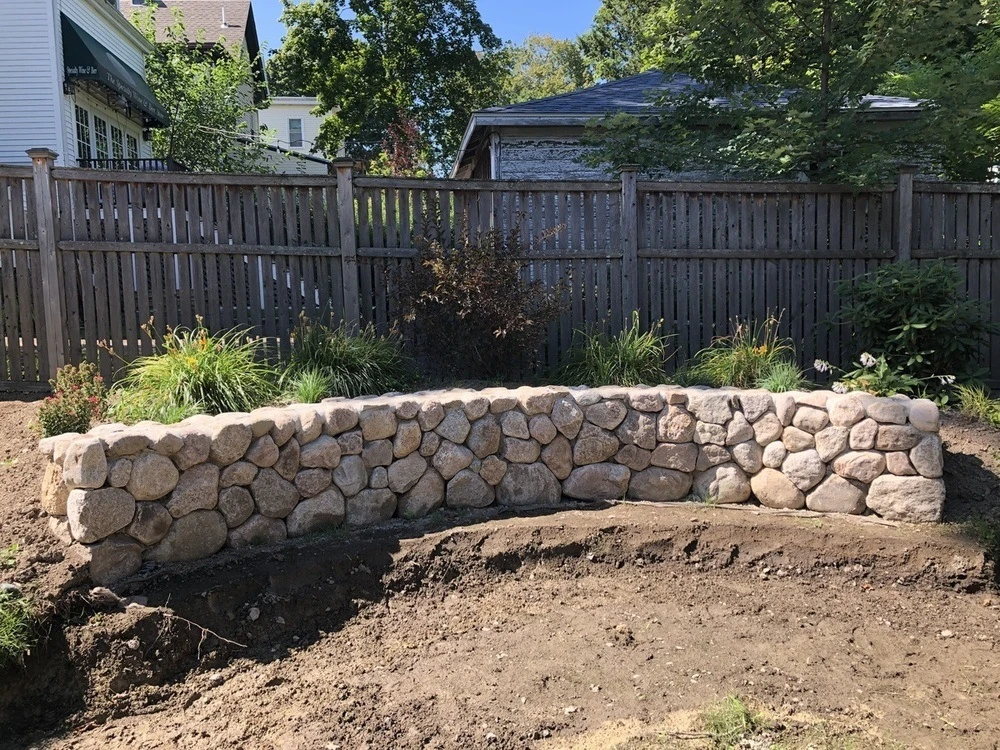
Timberstone Landscape builds tiered retaining wall systems across Gwinnett, Forsyth, Hall, Barrow, and surrounding counties throughout Northeast Atlanta.
Transform Your Slope With a Tiered Wall System
Timberstone Landscape designs and builds tiered retaining wall systems that solve Georgia slope problems and create usable outdoor space.
Get a Free EstimateServing Grayson, GA and surrounding Northeast Atlanta communities within 40 miles: