
Why Seasonal Color Planning Matters for Georgia Residential Landscape Design
A Georgia landscape that only blooms in spring is a seasonal failure — four months of visual interest followed by eight months of green at best and brown at worst. Yet this is the pattern that results from the most common landscape design approach: choose what looks good at the nursery in March and April, plant it, and consider the project complete. The result is a landscape that peaks in April and becomes increasingly forgettable from May through February.
Seasonal color planning is the design discipline that produces a landscape with intentional visual interest in every season — not necessarily at the same intensity year-round, but with enough succession planting, structural interest, and seasonal performers to ensure that the landscape has something worth looking at in January as well as in May. Georgia's climate — with its genuine four-season rhythm — makes this achievable, but it requires planning before planting, not planting and hoping.
The Four-Season FrameworkSpring, Summer, Fall, and Winter — Designing Each Season's Contribution
Spring in Georgia begins in late February when early bulbs, flowering quince, and early-blooming native azaleas start the season. The traditional emphasis on spring flowering is well-founded — Georgia spring is spectacular, and daffodils, tulips, early azaleas, and cherry blossoms create the peak color moment that most residential landscapes are designed around. The mistake is treating spring as the only season worth designing for rather than as the highest-intensity moment in a year-round sequence.
Summer color in Georgia is challenging because the heat that arrives in June and stays through September is hard on most traditional spring bloomers. The plants that carry summer color through the heat are different from the plants that define spring: crape myrtles, coneflowers (Echinacea), black-eyed Susans, butterfly bush, and hardy hibiscus are the workhorses of the Georgia summer border. Most require full sun and are drought-tolerant once established — characteristics that align well with Georgia's July-August dry periods.
"The test of a well-designed Georgia landscape is not how it looks at the April peak — it is whether it still has something worth seeing in December. That requires planning for winter structure before the first summer shrub is installed."
Fall Color and Winter Structure — The Undervalued Seasons
Fall color in Northeast Atlanta is genuinely excellent when the plant palette is chosen to include it. Native trees and shrubs provide the most reliable fall performance: red maples, sweetgums, blueberry shrubs (native Vaccinium), native viburnums, and fothergilla (witch alder) all produce fall color in the orange-to-red range that complements Georgia's deciduous canopy. The fall interest from these species — combined with the berry and seed production that attracts birds through October and November — makes fall a genuinely compelling season rather than a post-summer fadeout.
Winter structure is the concept most homeowners encounter last and wish they had understood first. Structure in the winter landscape comes from evergreen plantings, distinctive bark, persistent seed heads, and the branching silhouettes of deciduous shrubs and trees against the winter sky. A landscape without evergreen structure becomes a collection of bare sticks from December through February. Thoughtfully placed hollies, camellias, nandinas, and evergreen ground covers maintain the landscape's legibility and visual interest through the months when deciduous material offers nothing but form.
- Spring: bulbs (Feb–March), native azaleas and flowering quince (March–April), dogwoods and cherries (April)
- Summer: crape myrtles, coneflowers, black-eyed Susans, butterfly bush, hardy hibiscus
- Fall: native viburnums, red maples, blueberry shrubs, fothergilla, beautyberry berries
- Winter structure: hollies, camellias, evergreen ground covers, bark interest from crape myrtles and sycamores
- Year-round: evergreen shrubs as backbone, providing structure that supports seasonal performers
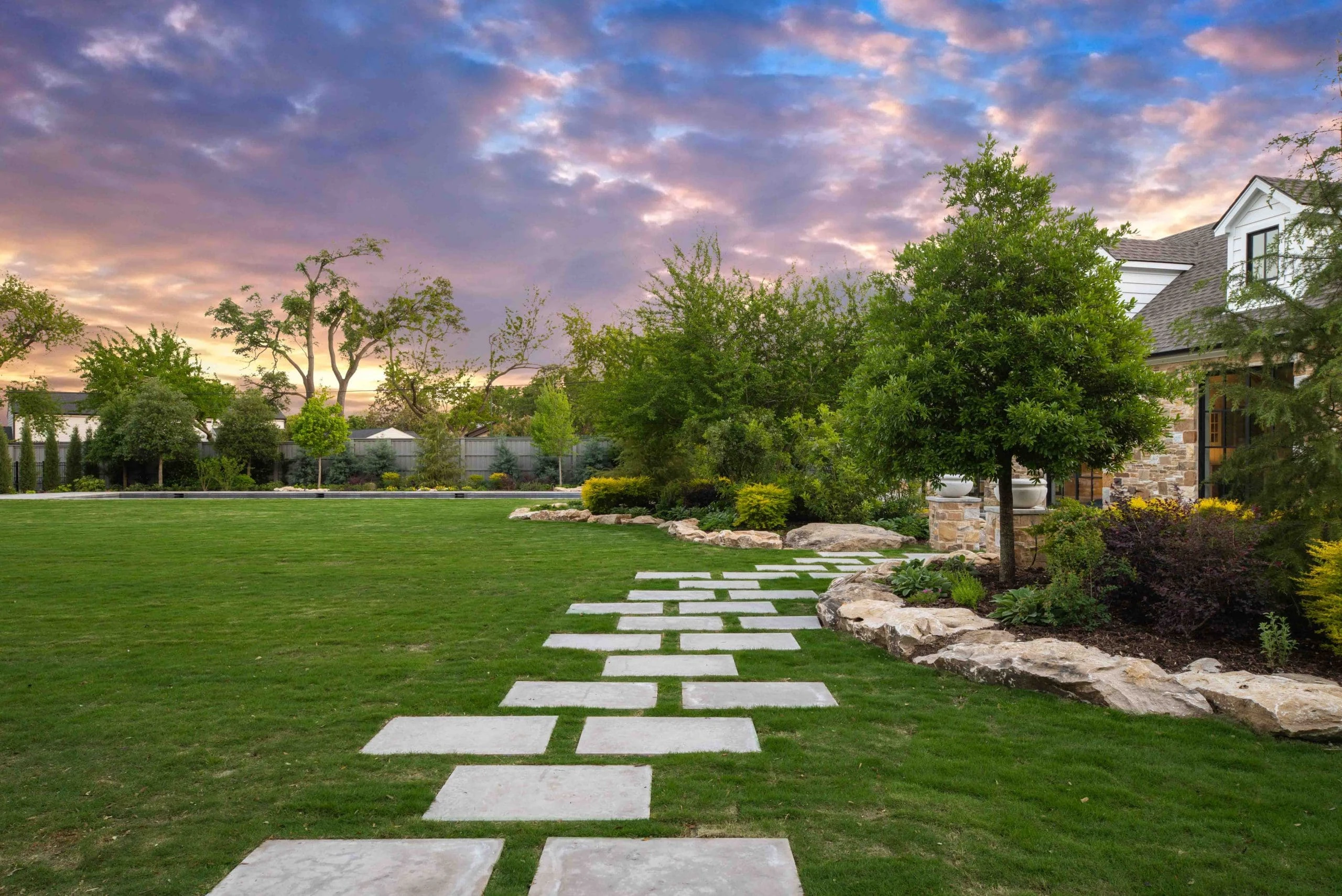
A landscape designed for all four seasons remains visually relevant from February through December — the design work that produces that result happens before any plants are purchased.
Evergreen Structure — The Backbone of a Year-Round Georgia Landscape
Evergreen structure plants — the shrubs and small trees that maintain their foliage through Georgia winters — are the skeleton that makes seasonal performers readable as a composed landscape rather than a scattered collection of plants. Without evergreen structure, the late-fall disappearance of deciduous material leaves the landscape feeling incomplete. With a well-placed evergreen backbone — hollies anchoring the corners, camellias at key focal points, an evergreen ground cover knitting the planting beds together — the winter landscape retains its identity even when all the seasonal performers are dormant.
Timberstone Landscape designs year-round landscape compositions for residential properties throughout Gwinnett, Forsyth, Hall, Fulton, and surrounding counties in Northeast Atlanta. As a Techo-Bloc Preferred Contractor based in Grayson, GA, we approach seasonal color planning as a design discipline, not an afterthought. Every plant selected for a Timberstone landscape has a role in at least two seasons — and the backbone evergreens hold the composition together in all four. View our hardscaping services and our design-build process.
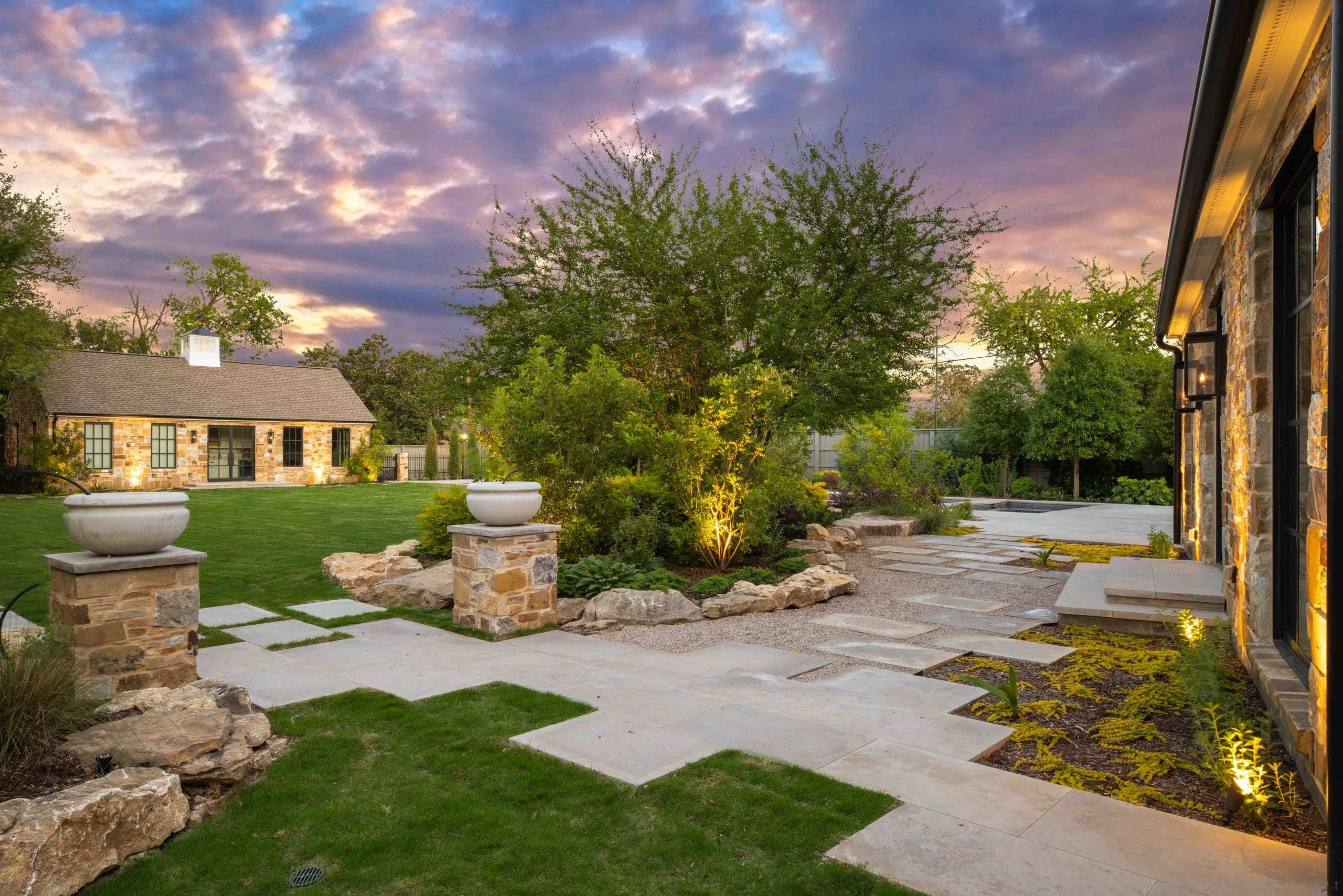
Four-season landscape design means every month has something worth seeing — the work to achieve that starts with a design that maps each season's contribution before the first plant goes in the ground.
Design a Landscape Worth Seeing Year-Round
Free consultations. Serving Northeast Atlanta within 40 miles of Grayson.
Request a Free ConsultationTimberstone Landscape is based in Grayson, Georgia and serves the greater Northeast Atlanta region within 40 miles: