
Why Post-Anchoring Systems for Georgia Pergolas Are Not All the Same Quality
The post anchoring system is not a footnote in pergola installation — it is the structural foundation on which every other decision rests. In Georgia, where wind events, heavy rain, and clay soil conditions create unpredictable lateral and uplift forces, the choice between surface-mount hardware and properly embedded concrete footings is the single most consequential decision a homeowner makes before the first board is cut.
Most pergola conversations begin with aesthetics: wood species, roof style, stain color, dimensions. These are legitimate considerations. But every visual decision rests on whether the structure will still be standing after a Georgia thunderstorm in July, or after five years of freeze-thaw cycles working against a shallow footing. The anchoring system determines that answer — and the difference between approaches is not marginal.
Surface-Mount vs. Embedded FootingsWhy Surface-Mount Plate Anchors Fall Short in Georgia Conditions
Surface-mount post bases — the kind that bolt directly to an existing concrete slab — are a common and visually clean solution. They are also the weakest anchoring option available. The holding power of a surface-mount plate is entirely dependent on the tensile strength of the concrete anchors below it and the lateral stiffness of the slab itself. In a wind event that applies upward and outward force simultaneously, that connection is the first point of failure.
Georgia's residential slabs are typically four inches thick and poured for foot traffic, not for resisting the torque applied by a 12-foot pergola post in a 60-mph wind gust. Surface-mount bases may meet minimum code requirements in low-wind zones, but "minimum code" is a floor, not a standard of quality. A structure that passes inspection and a structure that performs reliably for 20 years are not always the same thing.
"The anchoring system is the one part of a pergola that no one sees after installation — which is exactly why it requires the most careful attention before the project begins."
Embedded Posts and the Georgia Frost Line
Properly embedded posts set in concrete footings are the industry-standard anchoring method for freestanding pergolas in Georgia. The footing depth matters: Georgia's frost line is generally cited at 12 inches, but structural engineers and experienced installers in Northeast Atlanta typically recommend a minimum of 24 inches for pergola footings, especially on properties with expansive clay soil. The additional depth provides resistance against both frost heave and lateral movement.
The footing diameter matters equally. A typical residential pergola post — 6x6 cedar or pressure-treated pine — should sit in a footing no smaller than 12 inches in diameter, with the post embedded at least 6 inches into the concrete before it cures. The concrete tube form should extend slightly above grade to prevent surface water from pooling against the post base, which is one of the primary causes of premature decay at the most structurally critical point in the entire assembly.
- Minimum footing depth: 24 inches for freestanding pergolas in Northeast Atlanta clay soil
- Minimum footing diameter: 12 inches for standard 6x6 posts
- Post embedment depth: at least 6 inches into the footing concrete
- Footing top should extend 1–2 inches above grade to shed surface water
- Post base hardware, when used above-grade, should be rated for the calculated wind and uplift load of the specific structure
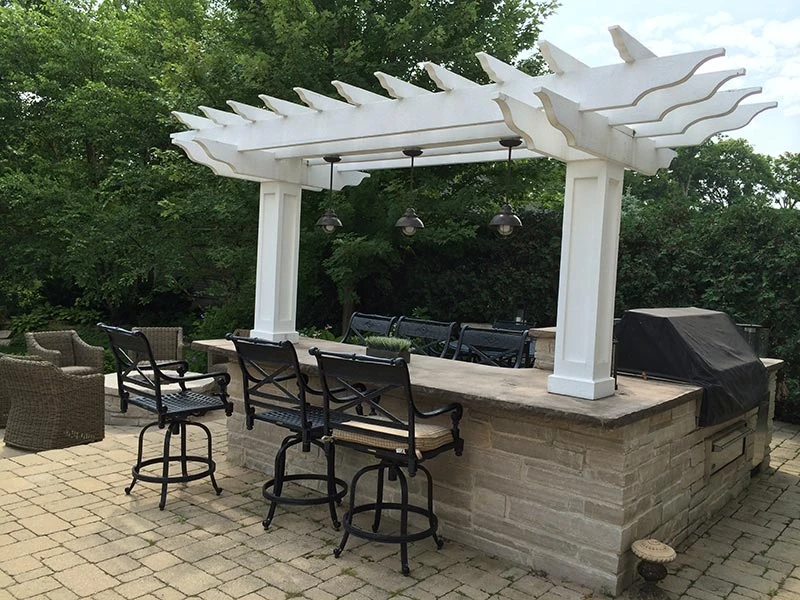
Properly anchored pergola structures stand firm through Georgia's seasonal wind and rain events — the difference starts below grade.
Wind Load and Soil Bearing Capacity — What Needs to Be Calculated
Wind load calculations for pergolas are not guesswork. Georgia is in a moderate wind zone, with design wind speeds typically in the 115–130 mph range depending on the specific jurisdiction and exposure category. For a pergola with solid or semi-solid roofing material — polycarbonate panels, wood slats at close spacing, or a full timber roof — the effective wind area increases significantly compared to an open lattice design. This means the forces transmitted to each post base are higher than a simple visual assessment would suggest.
Soil bearing capacity is the other variable that is almost never assessed before a residential pergola installation. Georgia's Piedmont region — which includes Gwinnett, Forsyth, Hall, and surrounding counties — is characterized by residual clay soils that expand when wet and contract when dry. This movement, repeated seasonally, applies cumulative stress to footings that are too shallow or too narrow. A soil bearing test or at minimum a visual assessment of existing soil conditions should inform footing size before the project begins.
At Timberstone Landscape, as a Techo-Bloc Preferred Contractor serving Grayson, GA and the greater Northeast Atlanta area, every covered structure project begins with a site evaluation that includes drainage observation, soil conditions, and the structural requirements of the specific design. We do not use one-size-fits-all anchoring solutions because Georgia properties are not one-size-fits-all environments. Learn more about our hardscaping services and our design-build process.
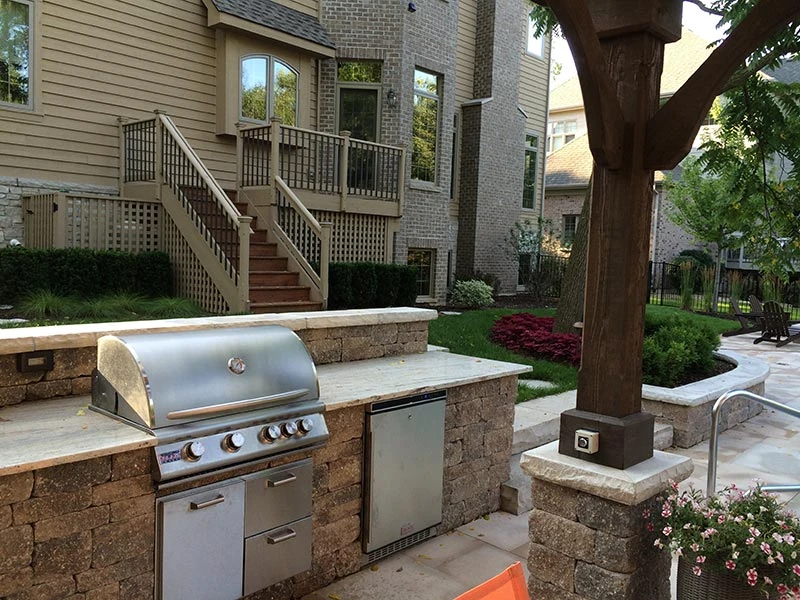
A properly anchored pergola is built to outlast the cosmetic finishes applied to it — the foundation work is what makes 20-year performance possible.
Build a Pergola That Holds
Free consultations. Serving Northeast Atlanta within 40 miles of Grayson.
Request a Free ConsultationTimberstone Landscape is based in Grayson, Georgia and serves the greater Northeast Atlanta region within 40 miles: