
Why Georgia Homeowners Should Design Landscapes Around Water Management First
Georgia's rainfall pattern is not gentle or consistent — it is characterized by intense events: an inch or more falling in 30 minutes during summer thunderstorms, followed by weeks of no measurable rain during August drought. A landscape designed without explicit attention to how it will handle both extremes will be perpetually stressed. Plants drown in the wet periods and parch in the dry ones. Planting beds that redirect drainage become moisture problems. Turf areas that cannot absorb runoff become saturated paths to the foundation.
The most durable Georgia landscapes — in Gwinnett, Forsyth, Hall, Fulton, and surrounding counties — are designed with water management as the organizing principle, not an afterthought. Before plant selection, before bed layout, and before hardscape design, the question of how water moves across the property during a significant rain event determines which locations can support what plant communities and where drainage infrastructure is required to make other elements viable.
Georgia's Dual Water ChallengeManaging Excess — Directing Heavy Rain Away From Structures
Georgia's summer rain events are brief, intense, and capable of generating several inches of runoff in short periods. For residential properties in Northeast Atlanta, the critical drainage direction is away from the foundation, away from patio surfaces, and toward drainage outlets or bioretention areas where water can be absorbed or conveyed without damage. This requires positive grade — a minimum of 2% slope away from the foundation for at least 6 feet before any grade change — maintained consistently around the entire building perimeter.
Landscape bed configurations can disrupt positive grade by creating berms or flat areas that pond water against the foundation. A raised bed installed against the house for aesthetic reasons — to soften the foundation line, to create planting height — requires careful drainage detail at its rear edge to prevent water from backing up against the foundation wall. This is not an unusual design challenge; it is a standard Georgia condition that requires explicit design attention in any landscape that includes foundation plantings.
"In Georgia, the landscape design question is not 'where should plants go?' — it is 'how does water move across this property in a 1-inch rain event, and what does that mean for every planting and every drainage decision?'"
Managing Drought — Irrigation, Plant Selection, and Retention
The opposing challenge — the July-August dry period that follows Georgia's wet spring — requires landscape design that retains adequate soil moisture during the dry spells that follow intense rain events. Organic mulch at 3-inch depth is the first tool: it reduces evaporation from the soil surface, moderating the drying effect of summer heat and sun. Deep-rooted plants, selected for their ability to access moisture at lower soil levels, are more drought-resilient than shallow-rooted alternatives that depend entirely on surface moisture.
Drip irrigation targeted at the root zone of valuable plantings bridges the gap between Georgia's inconsistent rainfall and the moisture requirements of established plants. It is not a replacement for thoughtful plant selection — a plant that requires consistent moisture and has been installed in a dry, well-drained location will stress regardless of irrigation input if the irrigation cannot match the demand. But for plants appropriately matched to their locations, supplemental drip irrigation during dry spells produces significantly better establishment and longevity outcomes than rainfall-only dependence.
- Positive grade: minimum 2% slope away from foundation for 6+ feet around building perimeter
- Bed drainage: raised beds near foundation require rear-edge drainage detail to prevent water pooling
- Organic mulch: 3-inch depth reduces evaporation during dry spells, modulates moisture cycling
- Plant selection for dual stress: choose plants adapted to alternating wet and dry conditions (most Georgia natives)
- Drip irrigation: targeted at root zone, bridges gap between inconsistent rainfall and establishment needs
- Drainage conveyance: swales, French drains, or catch basins where surface runoff concentrates
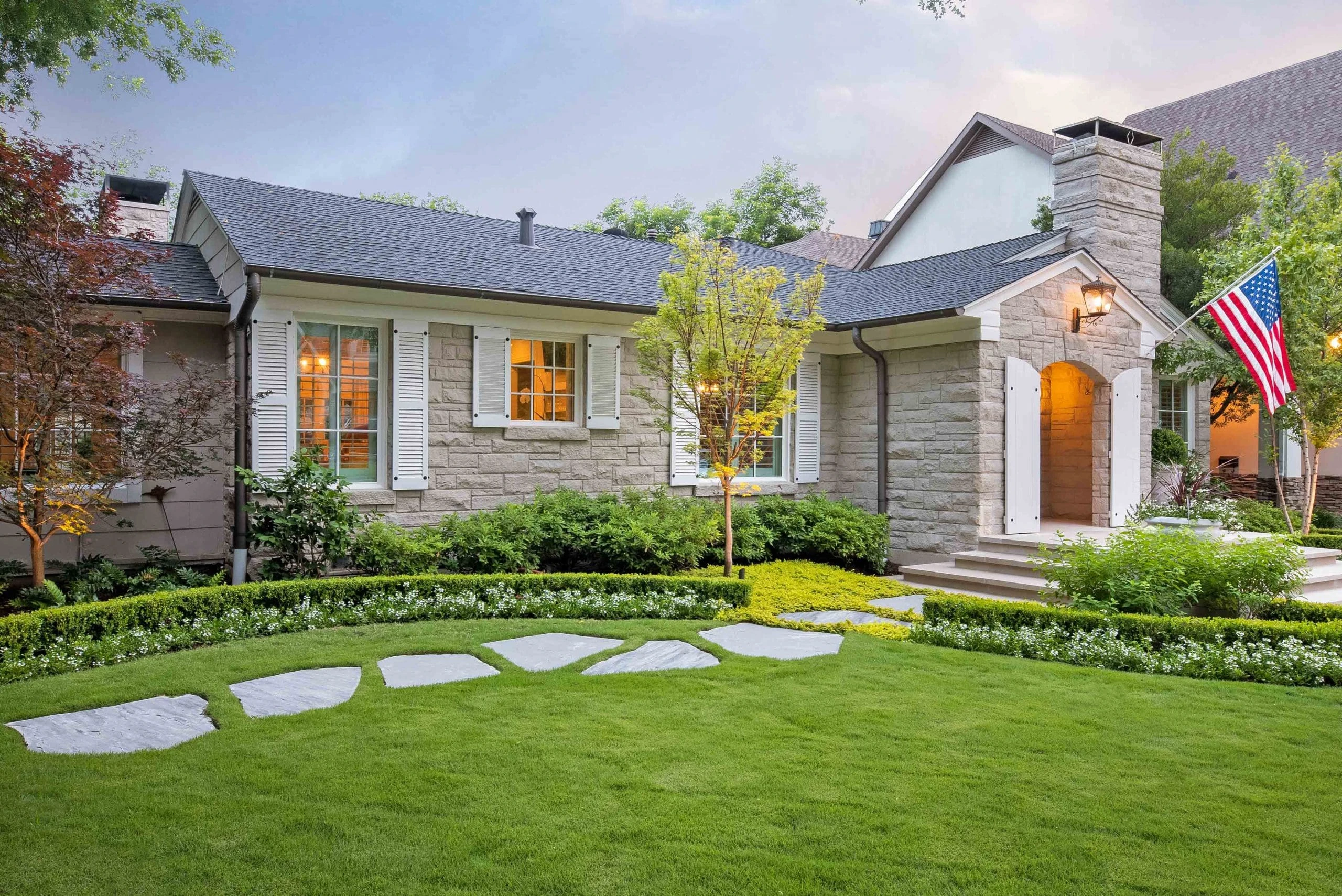
Water management is not a separate landscape concern — it is the organizing logic that determines which plants belong in which locations and where drainage infrastructure is required.
How Drainage and Irrigation Inform Plant Selection in Northeast Atlanta
The practical implication of water-first landscape design is that plant selection is made after drainage and irrigation decisions are made, not before them. Once the drainage pattern is mapped and the irrigation zones are defined, the plant selection for each zone can be matched to the actual moisture availability at each location — not the theoretical moisture that the general climate provides. A low spot that collects and holds water for 48 hours after rain is a candidate for water-tolerant species (Louisiana iris, swamp milkweed, sweetbay magnolia), not for standard landscape shrubs that will root-rot in those conditions.
Timberstone Landscape approaches residential landscape design throughout Gwinnett, Forsyth, Hall, Fulton, and surrounding counties with water management as the first design discipline. As a Techo-Bloc Preferred Contractor based in Grayson, GA, our site analysis always includes drainage observation and moisture mapping before plant selection begins. This sequence — drainage first, then plant selection — is what produces landscapes that perform through Georgia's alternating wet and dry cycles without chronic replanting, drainage intervention, or foundation concerns. Explore our hardscaping services and our design-build process.
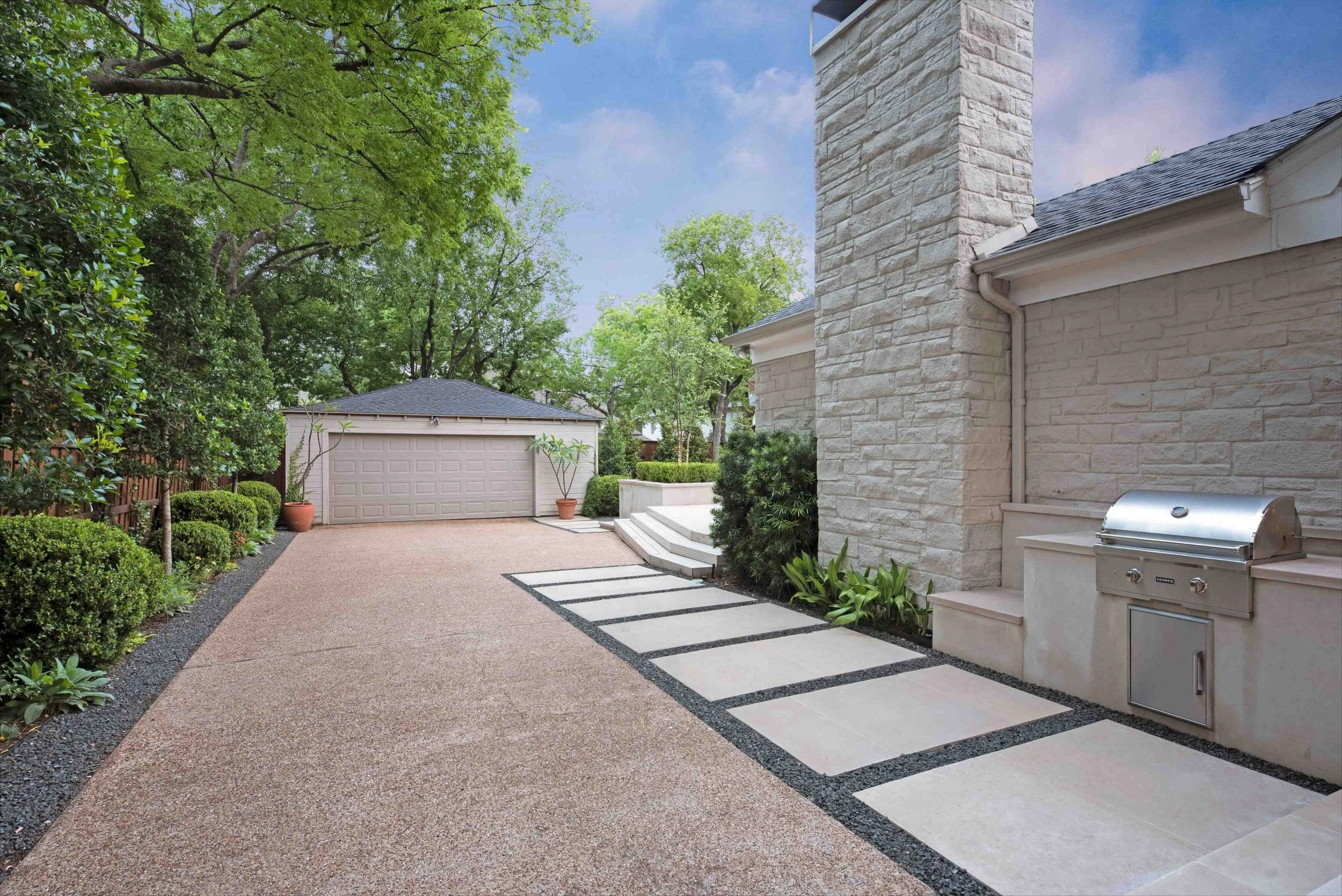
Georgia's intense rain events and summer droughts demand a water-first approach to landscape design — the sites that handle both extremes well are the ones designed for them from the start.
Design Your Landscape Around What Georgia Does to It
Free consultations. Serving Northeast Atlanta within 40 miles of Grayson.
Request a Free ConsultationTimberstone Landscape is based in Grayson, Georgia and serves the greater Northeast Atlanta region within 40 miles: