
Why an Outdoor Kitchen Without a Covered Structure Fails in Georgia's Climate
Georgia is not a climate that forgives an uncovered outdoor kitchen. The combination of relentless summer heat, intense UV radiation, daily afternoon thunderstorms from May through September, and the occasional freezing rain event in winter creates conditions that make an exposed outdoor kitchen not just uncomfortable to use, but actively destructive to the materials and appliances within it. An outdoor kitchen without a covered structure in Georgia is an investment that fails in stages — first in usability, then in appearance, then in the appliances themselves.
This is not a marginal issue. Georgia homeowners who build outdoor kitchens without covered structures report the same pattern consistently: the kitchen gets used enthusiastically for the first season, then avoidance begins as the summer heat makes uncovered outdoor cooking genuinely miserable, then the frequency drops below what justifies the investment. The kitchen that was intended to be the family's primary entertaining space becomes a weekend-only fair-weather feature — and a fair-weather feature in Georgia amounts to about four months of usable season per year.
Why Georgia's Climate Demands CoverageThe Summer Heat and UV Problem
Georgia's summer brings outdoor temperatures that regularly reach 95 to 100 degrees Fahrenheit, with heat indices exceeding 105 degrees on humid days. Cooking at a grill in direct sunlight in these conditions is not comfortable — it is a physical challenge that most people avoid by instinct. The radiant heat from the uncovered surface compounds the ambient temperature: a dark paver surface in direct Georgia summer sun can reach 130 to 150 degrees surface temperature, making the surrounding area measurably hotter than the air temperature alone.
UV exposure is equally destructive over time. Grill surfaces, appliance finishes, countertops, and cabinet faces all experience accelerated aging under direct Georgia UV. Stainless steel oxidizes faster under direct UV exposure. Concrete counters without UV-stable sealers fade within two to three seasons. Wood elements in outdoor kitchen structures — cutting board inserts, decorative panels, structural members of a pergola without UV treatment — degrade visibly. A covered structure eliminates or substantially reduces UV exposure for everything beneath it, extending the life of every material in the outdoor kitchen by years.
"Georgia's afternoon thunderstorm season eliminates outdoor kitchen use on the most common summer afternoons — the covered structure is what allows the kitchen to function on exactly those days."
The Thunderstorm Season and the Case for a Solid Roof
Georgia's afternoon thunderstorm pattern between May and September is the most significant climate argument for covered outdoor kitchens. These storms arrive with little warning, drop significant rainfall in short periods, and pass within 30 to 60 minutes. An outdoor kitchen under a solid roof cover continues operating through these events — guests move under cover, cooking continues, and the storm becomes atmosphere rather than a disruption. An uncovered kitchen shuts down completely, and the food, supplies, and appliances get wet.
The covered structure options for Georgia outdoor kitchens range from a pergola with shade fabric or polycarbonate panels (partial weather protection, primarily UV) to an attached solid-roof patio cover (full rain protection, maximum protection for all seasons) to a freestanding pavilion with full roof (maximum flexibility, best for kitchens not adjacent to the house wall). Each structure type has different cost implications, different connection requirements with the house structure, and different performance characteristics in Georgia's specific climate conditions.
- Attached solid-roof patio cover — best option for kitchens adjacent to the house, full weather protection
- Freestanding pavilion — best for kitchens positioned away from the house, maximum layout flexibility
- Pergola with polycarbonate panels — budget-friendly, significant UV protection, partial rain protection
- Pergola with shade fabric — UV protection, minimal rain protection, lower cost entry point
- Retractable awning — flexible coverage, limited for cooking use, better for dining zones
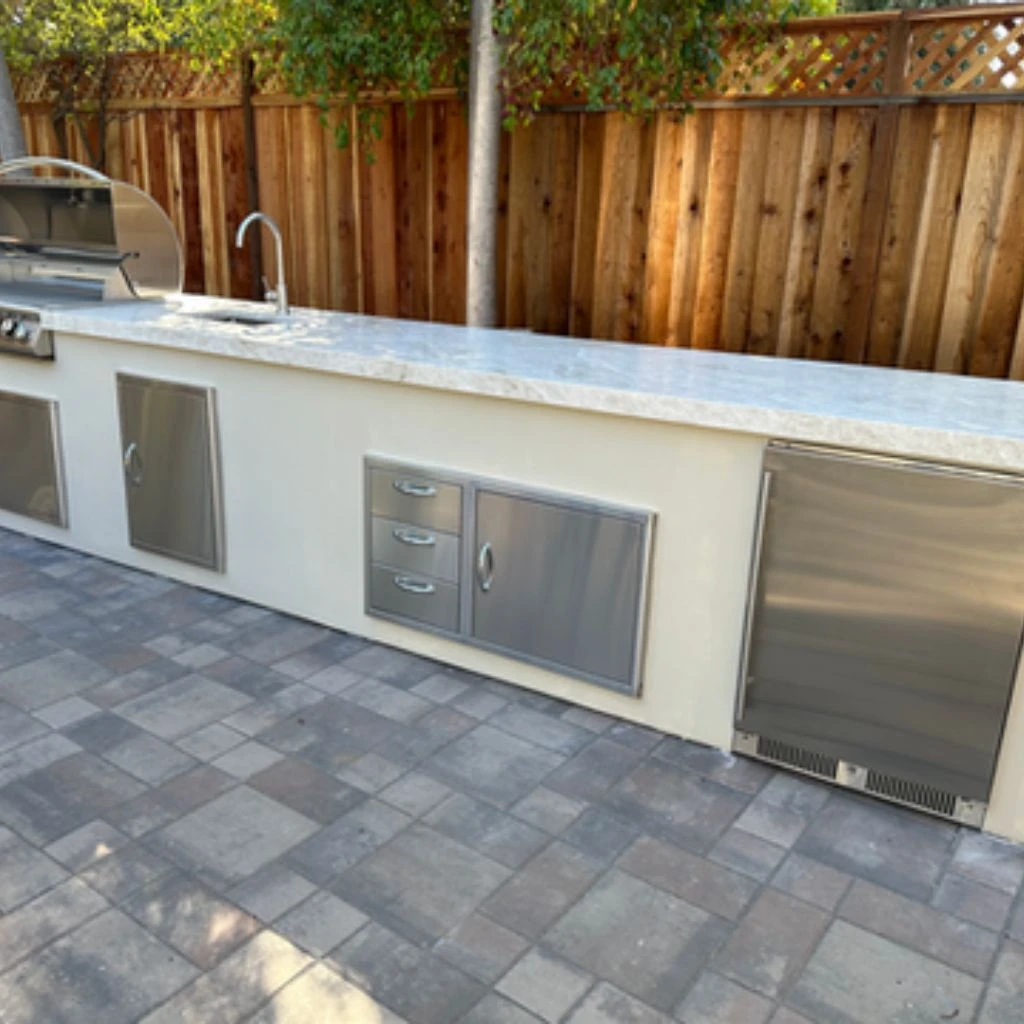
A covered outdoor kitchen in Georgia — the structure that converts a four-month amenity into a ten-month outdoor room.
What the Covered Structure Investment Actually Costs vs. What It Returns
The covered structure adds cost to an outdoor kitchen project — typically $8,000 to $25,000 depending on scale, material, and whether it is attached or freestanding. That cost is frequently cited by homeowners as the reason they delay the structure to a "phase two" that never materializes. The alternative framing: the covered structure is the investment that converts the outdoor kitchen from a seasonal amenity into a year-round outdoor room. Without it, the kitchen is a fair-weather feature. With it, it is a primary living space for ten months of the Georgia year.
Timberstone Landscape serves Georgia homeowners across Gwinnett, Forsyth, Hall, Fulton, Cherokee, and surrounding Northeast Atlanta counties with outdoor kitchen and covered structure design and installation. Our outdoor features services always include covered structure as part of the complete kitchen design scope, and our design-build process ensures structure type, roof material, and kitchen layout are designed together from the first consultation.
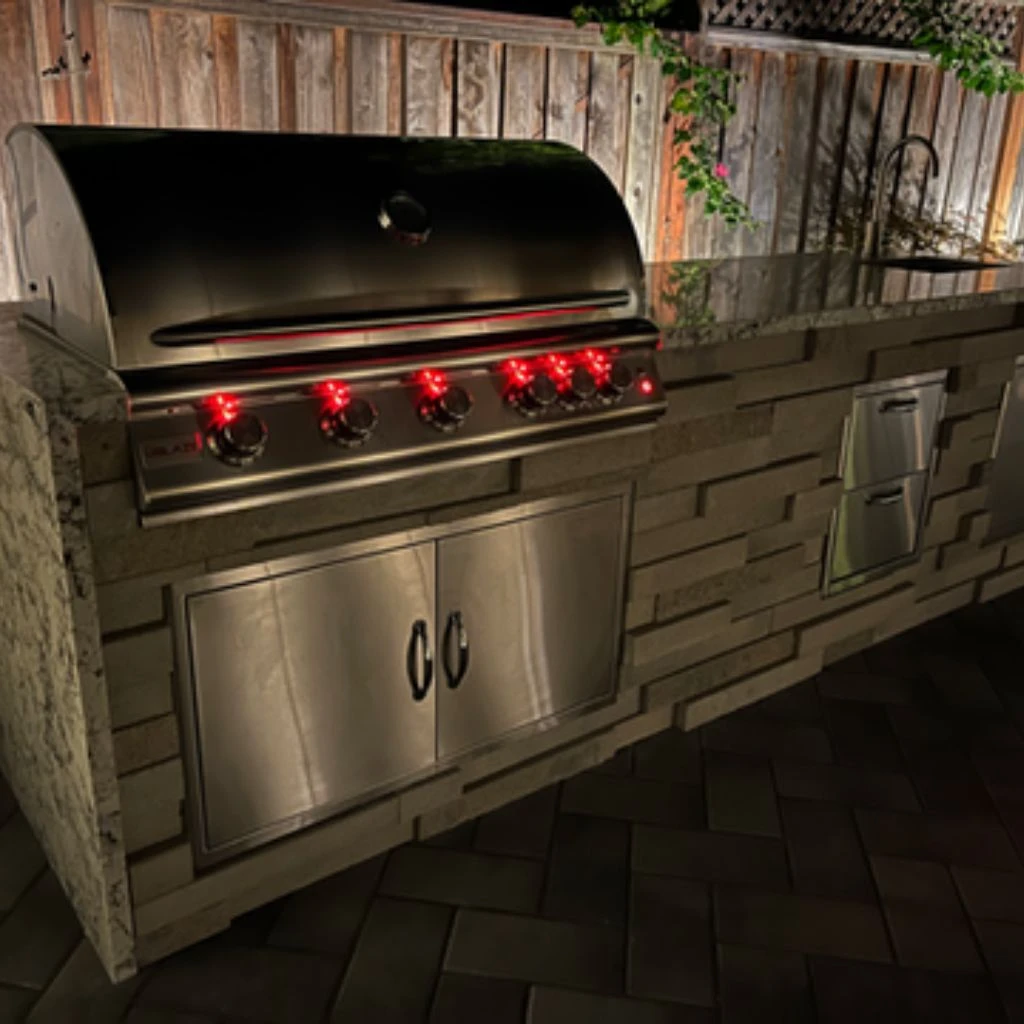
The covered structure is not optional in Georgia — it is the investment that makes the outdoor kitchen usable for ten months rather than four.
Build a Georgia Outdoor Kitchen That Works in Every Season
Free consultations. Serving Northeast Atlanta within 40 miles of Grayson.
Request a Free ConsultationTimberstone Landscape is based in Grayson, Georgia and serves the greater Northeast Atlanta region within 40 miles: