
What Professional Landscape Design in Georgia Looks Like for a Residential Property
Most Georgia homeowners who have hired a landscaper have received a plant list, not a landscape design. A plant list is what a contractor plans to install and what it will cost. A landscape design is the analytical and compositional work that precedes and informs the plant list — the site analysis, the design intent, the spatial organization, and the plant selections made with explicit reference to mature sizes, seasonal performance, and the specific conditions at every location on the property. The two deliverables look superficially similar and are fundamentally different.
Understanding what a professional landscape design actually includes helps homeowners evaluate proposals accurately, ask better questions, and avoid the situation where a beautiful plan gets installed quickly without the foundational work that would make it perform as intended. The design is not the drawings — it is the thinking that produces the drawings, and that thinking is where the long-term value is created or missed.
The Design DeliverableSite Analysis — The Step That Determines Everything Else
A professional landscape design begins with a site analysis that most landscape contractors skip because it takes time and does not produce billable material quickly. The site analysis includes: observation of drainage patterns during or immediately after significant rain, soil type assessment (texture, drainage rate, pH), sun and shade mapping at different times of day and different seasons, existing root zone mapping for mature trees, and documentation of overhead utilities, buried lines, and drainage infrastructure that will constrain plant placement and bed configuration.
The drainage observation component is particularly important in Northeast Atlanta's clay-dominant soils. A designer who visits a property only during dry conditions cannot see where water moves after a significant rain event, where it pools, where it accelerates as it leaves turf and enters planting beds, or where it approaches the foundation. These patterns determine which plants can succeed in which locations — a planting bed that pools water after rain will kill drought-tolerant plants and sustain moisture-tolerant ones, regardless of what a sun exposure map suggests. Site analysis that includes drainage behavior is non-negotiable for Georgia landscape design.
"The difference between a landscape design and a plant list is not the drawings — it is the site analysis that precedes them. The analysis is what makes the design respond to the actual property rather than to a generic template."
The Concept Plan, Plant Schedule, and Phasing
The concept plan is the spatial document — typically a scaled drawing of the property with planting zones, bed boundaries, hardscape relationships, and the organizational logic that gives the landscape its structure. For a residential property, the concept plan should address the street view composition, the entry approach, the foundation planting relationship to the house, the transition from maintained landscape to natural or semi-natural areas, and the spatial organization of the outdoor living zones. The concept plan is not a plant-by-plant specification — it is the compositional framework that the plant schedule fills in.
The plant schedule is the detailed document: every species specified, its mature size and habit, its spacing at installation (based on mature dimensions), its water and sun requirements, and its role in the seasonal color sequence. A complete plant schedule allows an installer to implement the design accurately without interpretation — every decision about spacing, placement depth, and companion planting has already been made. The phasing plan sequences the installation over multiple seasons or budget cycles without losing compositional coherence, specifying which elements are foundational (to be installed first) and which are enrichment (to be added as budget allows).
- Site analysis: drainage observation, soil assessment, sun/shade mapping, root zone and utility documentation
- Concept plan: scaled spatial document with zones, bed boundaries, and compositional logic
- Plant schedule: species, mature sizes, spacing, water/sun requirements, seasonal role
- Phasing plan: installation sequence over multiple seasons or budget cycles
- Maintenance brief: first-year irrigation, pruning timing, mulch schedule, establishment expectations
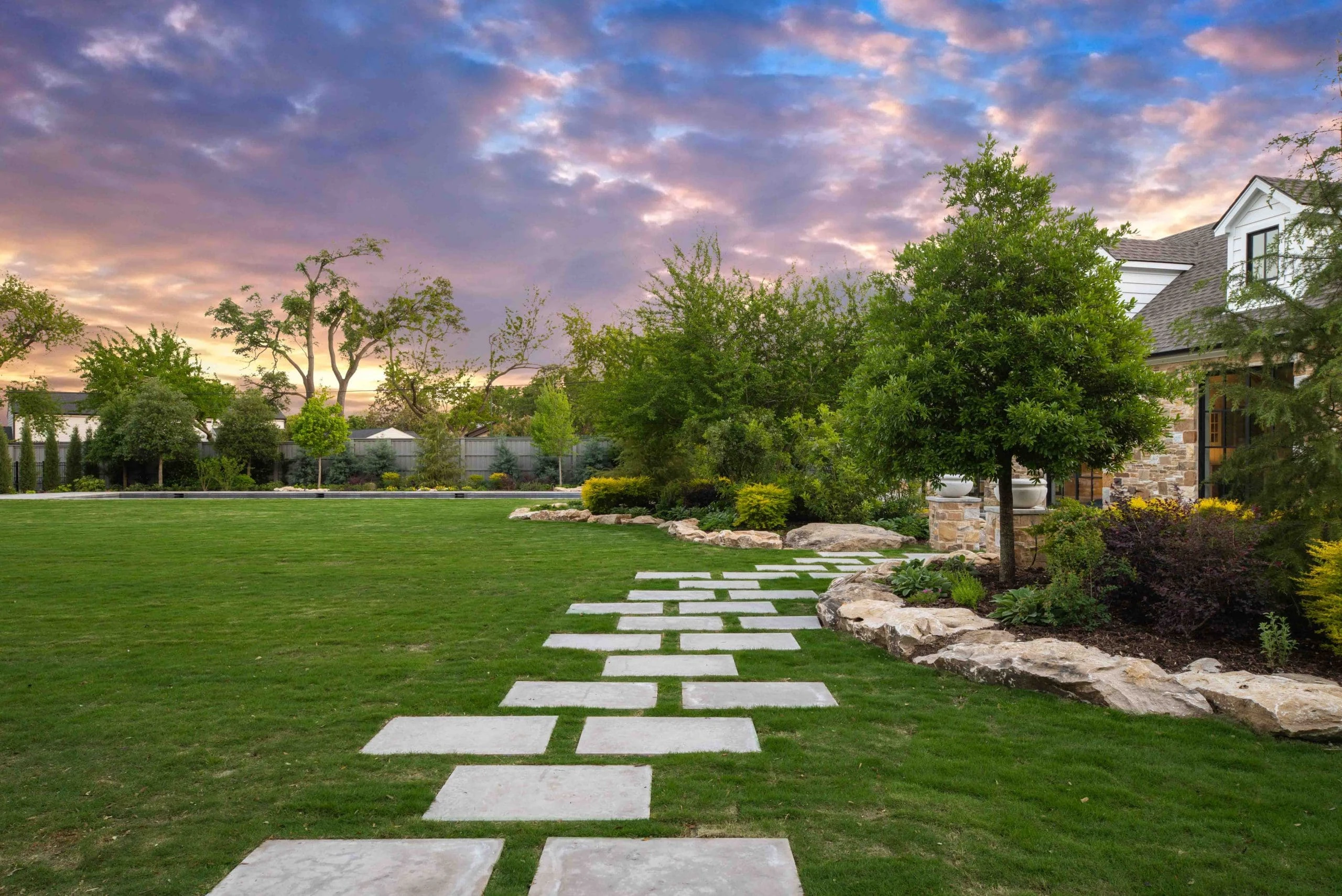
A professional landscape design delivers a system — site analysis, concept plan, plant schedule, and phasing — not just a list of plants and a price to install them.
What Separates a Design From a Plant List — And Why It Matters
The practical consequence of receiving a plant list instead of a design is that every plant placement decision defaults to the installer's preference or habit rather than to site analysis and compositional logic. The result is a landscape that may include perfectly good plants installed in wrong locations, at wrong spacings, without reference to mature sizes, and without the organizational framework that makes a landscape read as intentional rather than collected. These are not problems that become apparent at installation — they are problems that emerge at year three, five, and ten, when the spacing choices and site-mismatch selections have had time to express their consequences.
Timberstone Landscape provides professional landscape design services for residential properties throughout Gwinnett, Forsyth, Hall, Fulton, and surrounding counties in Northeast Atlanta. As a Techo-Bloc Preferred Contractor based in Grayson, GA, our design process always begins with site analysis and produces a complete design deliverable — not a plant list. Every landscape we install is a designed landscape. Review our hardscaping services and our design-build process.
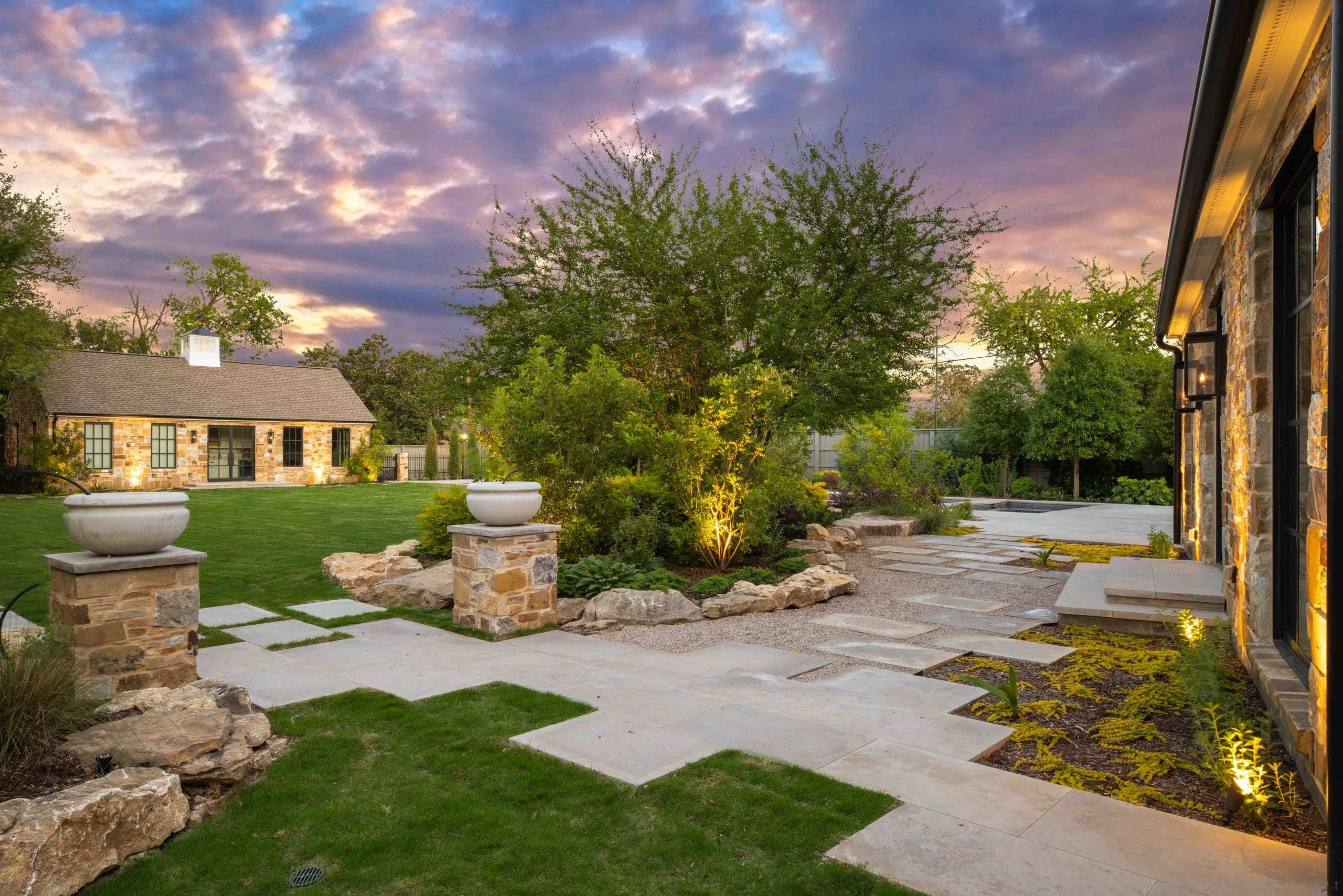
A professionally designed Georgia landscape is built on analysis before installation — the work that ensures every plant and every placement decision is deliberate, not intuitive.
Get a Design, Not Just a Plant List
Free consultations. Serving Northeast Atlanta within 40 miles of Grayson.
Request a Free ConsultationTimberstone Landscape is based in Grayson, Georgia and serves the greater Northeast Atlanta region within 40 miles: