
What Makes a Covered Outdoor Kitchen Different From an Open-Air Build in Georgia
A covered outdoor kitchen is not simply an open-air kitchen with a roof added as an afterthought. The presence of a structure overhead changes the design requirements in ways that affect ventilation, electrical layout, lighting integration, and the long-term safety of the installation. Georgia homeowners who conflate the two approaches often discover, after the build is complete, that their covered kitchen underperforms in the ways that matter most.
The most common version of this mistake: a pergola or solid roof structure is installed above an existing or planned outdoor kitchen without accounting for the fact that cooking under a covered space concentrates smoke, grease vapor, and heat in a way that an open-air installation never does. The pleasant smell of a backyard grill becomes a persistent grease accumulation problem on a pergola beam when there is no plan to manage it.
Ventilation and ClearanceManaging Grease, Smoke, and Heat Under a Covered Structure
Outdoor kitchens with grills and smokers generate heat, grease-laden vapor, and combustion byproducts. In an open-air environment, natural airflow disperses all of this without any intervention from the designer. Under a covered structure, the physics change completely. A solid roof with no ventilation strategy will trap heat during summer cooking sessions, create a visible smoke haze during use, and allow grease to accumulate on overhead surfaces over time.
The clearance requirement between the cooking surface and any combustible overhead material is not a design preference — it is a safety specification. For standard grill hoods under a covered structure, most manufacturers and fire codes require a minimum of 36 inches of clearance from the cooking grate to any combustible overhead material, and higher clearances for wood structures. Pergola beams are typically combustible. A structure designed without this clearance built in is a liability, not an upgrade.
"The roof changes everything — ventilation, electrical routing, lighting placement, and clearance requirements all need to be designed for the covered condition from the start, not retrofitted after the structure goes up."
Electrical Outlet Placement and Lighting Integration
Open-air outdoor kitchens typically place electrical outlets in the base cabinetry and rely on ambient natural light or freestanding fixtures. Covered outdoor kitchens create the opportunity — and in many cases the necessity — to integrate electrical systems into the overhead structure. Task lighting directly above the cooking and prep surfaces improves usability dramatically, especially for evening use during Georgia's long outdoor season from April through October.
Outlet placement under a covered structure should follow the same logic as an interior kitchen: convenience at the prep surface, dedicated circuits for high-draw appliances like refrigerators and built-in grills, and weatherproof GFCI protection on every outlet. The covered structure also makes it practical to install ceiling fans above the dining area, which improves comfort significantly during Georgia's humid summers and extends the season into early fall evenings. All of this needs to be planned before the structure frame is set — retrofitting electrical through finished overhead beams is expensive and disruptive.
- Minimum 36" clearance from cooking grate to combustible overhead material
- Ventilation openings or ridge vents in solid roof structures above cooking zones
- GFCI weatherproof outlets at counter height along the kitchen run
- Dedicated 20A circuit for built-in grill ignition and accessories
- Integrated task lighting above prep and cooking zones on separate switch from ambient lighting
- Ceiling fan rough-in above dining zone for warm-weather comfort
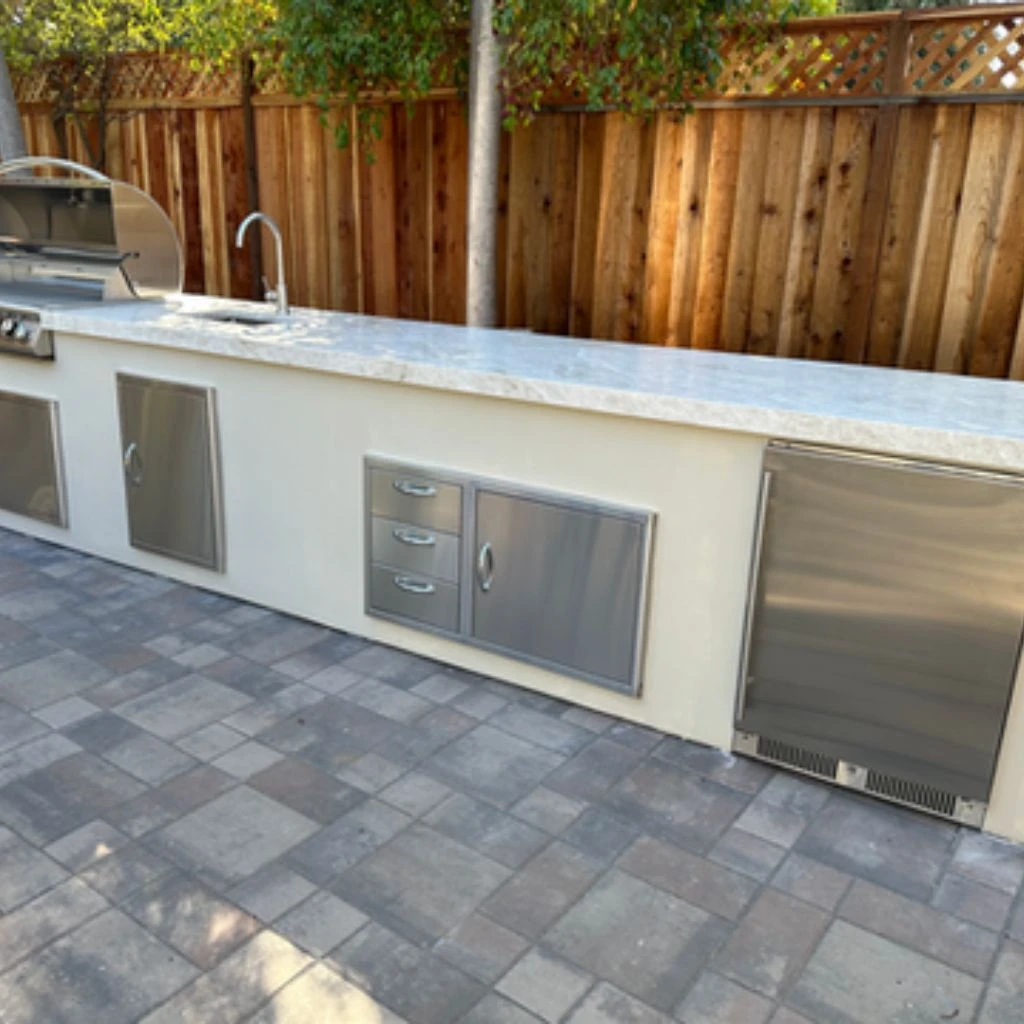
Covered outdoor kitchens require deliberate design for ventilation, lighting, and electrical — the covered structure changes every trade coordination decision.
How the Covered Structure Changes the Social Experience
Beyond the technical requirements, the covered outdoor kitchen creates a fundamentally different social experience than an open-air build. The defined overhead plane creates a room-like enclosure that anchors the social space in a way that an open patio cannot replicate. Guests gather within the covered area, the cooking zone and the conversation zone coexist in a defined space, and the covered space remains usable during light rain — a significant advantage in Georgia's afternoon thunderstorm season.
The covered structure also makes audio integration practical. Outdoor speakers mounted to the overhead structure deliver better sound distribution than grade-level speakers and are protected from direct weather exposure. Ceiling fans installed in the covered space are not subject to the maintenance issues that affect freestanding pedestal fans. These details accumulate into a qualitatively different outdoor experience — one that feels intentional rather than improvised.
Timberstone Landscape, based in Grayson, GA, designs covered outdoor kitchens throughout Gwinnett, Forsyth, Hall, Fulton, and surrounding counties in Northeast Atlanta. As a Techo-Bloc Preferred Contractor, we approach every covered structure project with the technical rigor and design integration that produces spaces that perform as intended — not just on the day of completion, but for the decade that follows. Review our hardscaping services or explore the design-build process.
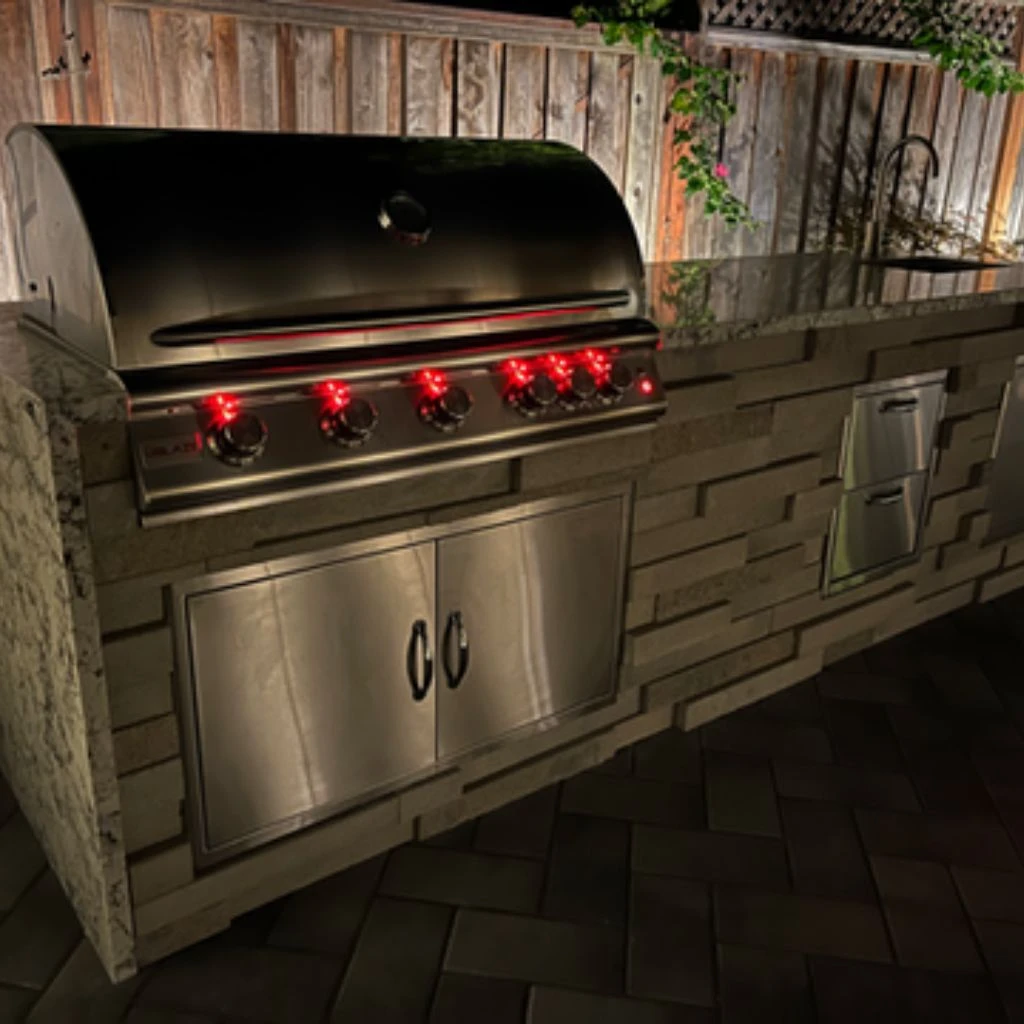
A well-designed covered outdoor kitchen becomes the anchor of the outdoor living space — structurally sound, functionally complete, and seasonally versatile.
Design Your Covered Outdoor Kitchen
Free consultations. Serving Northeast Atlanta within 40 miles of Grayson.
Request a Free ConsultationTimberstone Landscape is based in Grayson, Georgia and serves the greater Northeast Atlanta region within 40 miles: