
What Decatur GA Outdoor Projects Actually Require — From Grading to Final Finish
Most Decatur homeowners start their outdoor project conversation at the finish line — the patio surface, the wall texture, the stone color. The contractors worth hiring start three steps earlier, with what's under the surface and how the site drains.
DeKalb County properties vary dramatically in their site conditions. Decatur's older in-town neighborhoods — Oakhurst, Winnona Park, Medlock Park — often have decades of layered landscaping choices, compacted soil, and drainage patterns that don't cooperate with new construction. Newer builds near Avondale Estates or Clarkston might have cleaner slates but different grading challenges. No two projects start from the same place.
Understanding the full process — not just the pretty parts at the end — helps Decatur homeowners make better decisions, ask better questions, and avoid the mistakes that send projects sideways.
Phase 1: Site Assessment and Grading
Before a single paver is ordered or a wall block is delivered, Timberstone evaluates the existing site conditions. What is the current drainage pattern? Where does water move after rain? Are there low spots that pool, or grade issues that will undermine new hardscaping within a few years?
Grading — adjusting the slope and contour of the ground — often needs to happen before anything else. A patio installed on improperly graded ground will drain toward the house, create standing water at its edges, or shift as the soil moves. Getting the grade right first is the difference between hardscaping that lasts twenty years and hardscaping that needs rebuilding in five.
"Every beautiful outdoor project you see started with unglamorous work: excavation, grading, base preparation. The finish is only as good as what's underneath it."
Phase 2: Base Preparation and Drainage Systems
After grading, the base goes in. For paver installations, this means excavating to depth, installing a compacted aggregate base, and in many cases adding drainage infrastructure — channels, catch basins, or perforated pipe — that routes water away from structures and low areas.
- Excavation depth depends on soil type and load requirements — residential patios typically 6–8 inches
- Compacted crushed aggregate base provides structural support and drainage capacity
- Edge restraints installed before surface materials prevent lateral spreading over time
- Bedding sand layer is screeded level before pavers are placed — precision matters here
- Polymeric sand joints lock the surface and prevent weed infiltration once compacted
Timberstone is a Techo-Bloc Preferred Contractor (Techo-Pro), which means these installation standards meet Techo-Bloc's certification requirements — not just industry minimums. For Decatur homeowners investing in premium materials, that installation quality is what ensures the warranty holds and the surface performs.
Phase 3: Surface Installation and Final Finish
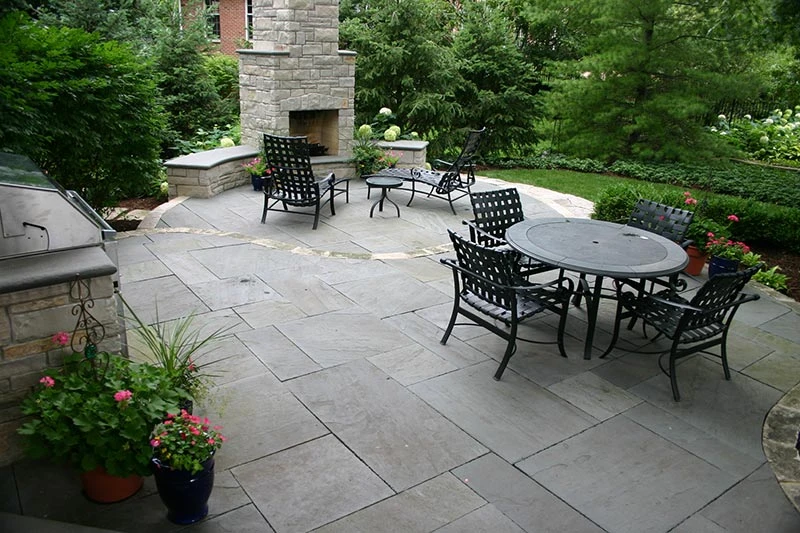
This is the part homeowners see: paver laying, wall construction, step installation, and the final sealing or joint sand application that locks everything in place. It's the most visible phase but represents only about a third of the total labor in a well-executed project.
For Decatur projects, this phase also often includes integration with existing landscaping — working around mature trees, tying into existing walkways, and ensuring new hardscaping transitions cleanly to lawn areas and planting beds. Done right, it looks like it was always there.
The final finish — sealing, joint sand compaction, edge cleanup — is also where quality of craft shows most. Misaligned patterns, uneven joints, poor cuts around curves: these are the signs of rushed work. Timberstone's crew takes the time to get the details right because that's what the surface looks like every day for the next two decades.
Start Your Decatur Project the Right Way
Serving Decatur, Tucker, Stone Mountain, Dunwoody, Chamblee, and all of DeKalb County.
Get a Free Estimate