
What a Custom Pergola Contractor in Gwinnett County Actually Brings to a Build
Hiring a custom pergola contractor in Gwinnett County is not the same as hiring a general handyman to build a pergola. The distinction matters because building a pergola that performs correctly in Georgia's climate — that remains structurally sound through wind events, that meets Gwinnett County's permit requirements, and that integrates properly with the surrounding patio and outdoor features — requires a specific combination of engineering knowledge, local code familiarity, and construction experience that a general handyman typically does not have.
The pergola contractor market in Gwinnett County includes landscaping and hardscape contractors who build pergolas as a core service, general contractors who add pergola work as a supplemental offering, and handymen who build pergolas as a one-off task. The quality gap between these categories is wide — and it is not always obvious from a sales conversation which category a given contractor falls into. Knowing what a qualified pergola contractor brings to a project helps homeowners ask the right questions before signing a contract.
Structural EngineeringWind Load Calculations and Concrete Footing Specifications
Georgia's Gwinnett County falls within a wind speed design zone that requires pergola structures to be designed for specific lateral and uplift load resistance. A qualified pergola contractor understands the local wind load requirements and designs the structural system — post size, footing depth, footing diameter, connector hardware specification — to meet those requirements. Concrete footing depth is not arbitrary — it is calculated based on the post load, the footing diameter, and the soil bearing capacity. In most Gwinnett County residential lots, pergola post footings should be a minimum of 24 to 36 inches deep, with an 18 to 24-inch diameter footing to distribute the load effectively.
A handyman who builds pergolas on weekend projects may anchor posts in 8-inch diameter holes backfilled with concrete, which is the standard fence post installation method. A fence post and a pergola post serve different structural functions — a fence post handles primarily lateral fence panel load, while a pergola post handles vertical dead load from the roof structure plus lateral and uplift load from wind events. The engineering requirements are different, and the footing specifications reflect that difference. A qualified pergola contractor knows this distinction and specifies the footing accordingly. A handyman often does not.
"A pergola contractor and a handyman building a pergola are not the same thing. The difference is visible in the footing specification long before the first board goes up."
Permit Navigation, Lumber Grades, and Electrical Rough-In
Gwinnett County requires a building permit for pergolas and covered structures that exceed certain dimensions or that are attached to the house. The permit submission requires a site plan, structural details, and (for attached structures) a connection detail showing how the ledger board is fastened to the house framing. A qualified pergola contractor has submitted Gwinnett County permit applications before — they know the required documentation, the typical review timeline, and the inspection checkpoints that must be scheduled during construction. A handyman who pulls permits at all typically does so infrequently and may not be familiar with Gwinnett's specific submission requirements, which can result in permit delays or requests for additional information that extend the project timeline.
Lumber grade selection for pergola framing is another area where contractor knowledge produces meaningful results. Not all pressure-treated lumber is equivalent — the treatment retention level (measured in pounds per cubic foot of preservative) determines the lumber's appropriate application. Lumber for ground contact (posts set in soil or concrete) requires a higher retention level than lumber for above-ground use. A qualified contractor specifies the correct retention level for each element of the structure. Electrical rough-in for lighting and ceiling fans in a pergola requires coordination with a licensed electrician and needs to happen during framing — before any sheeting or roofing is installed. A contractor who builds pergolas regularly has established working relationships with electrical subcontractors and includes this coordination in the standard project scope. Timberstone Landscape, based in Grayson at the heart of Gwinnett County, builds custom pergolas throughout the county with proper structural engineering, permit navigation, and integrated electrical coordination. As a Techo-Bloc Preferred Contractor, Timberstone brings the same material standards to covered structures that characterize our paving work. Our outdoor features and design-build process pages outline how we approach each pergola project from design through completion.
- Wind load calculations determine footing specifications — not arbitrary rule-of-thumb depths
- Gwinnett County permits require site plans and structural details — a qualified contractor knows the submission process
- Lumber grade selection must match application — ground contact requires higher treatment retention than above-grade
- Electrical rough-in for lighting and fans must be coordinated during framing, not retrofitted
- Span calculations determine beam and rafter sizing — undersized members deflect under load over time
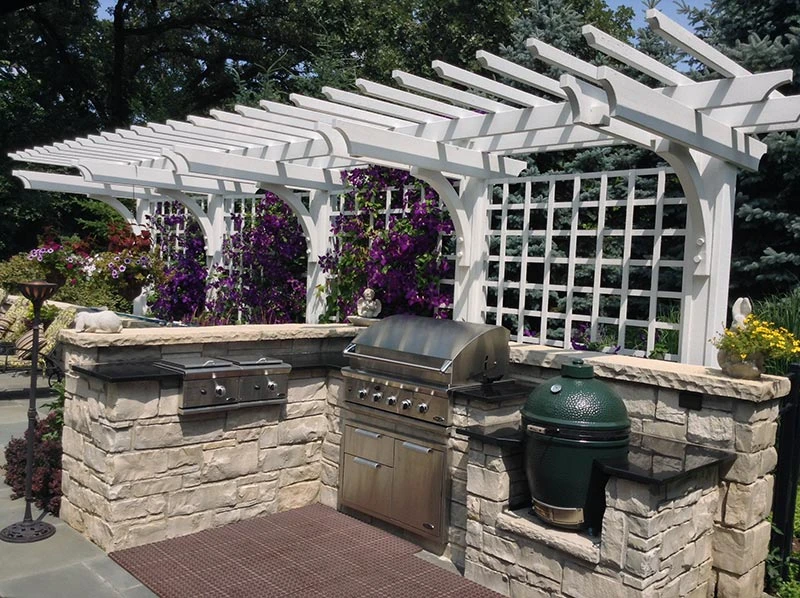
A qualified pergola contractor in Gwinnett County brings structural engineering, permit navigation, and integrated electrical coordination that a handyman approach cannot replicate.
What Span Calculations Mean for Beam and Rafter Sizing
Beam and rafter sizing in pergola framing is determined by the span — the unsupported distance between posts — and the load the framing must carry. A 2x8 rafter spanning 10 feet behaves very differently from a 2x8 rafter spanning 16 feet. At 10 feet, the deflection under live load (a layer of snow, a sustained wind load, the weight of a hanging fan or planter) is within acceptable limits. At 16 feet, the same 2x8 will deflect visibly under load and will develop a permanent sag over years of sustained dead load. A qualified contractor calculates the required member sizes for each span using established span tables or engineering calculations. A handyman often uses the same framing dimensions regardless of span length.
The consequences of undersized framing are not immediately visible at installation — the pergola looks correct when newly built. The sag develops gradually over one to three years as the wood absorbs seasonal moisture cycles and the member gradually deforms under sustained load. By the time the sag is visible, the framing has permanently deformed and cannot be corrected without disassembly and replacement of the undersized members. Timberstone Landscape's Gwinnett County pergola builds use properly sized framing for every span — the specifications are calculated during the design phase, documented in the permit submission, and confirmed during the Gwinnett County building inspection. Homeowners who invest in a custom pergola through Timberstone can have confidence that the structural engineering is correct from day one.
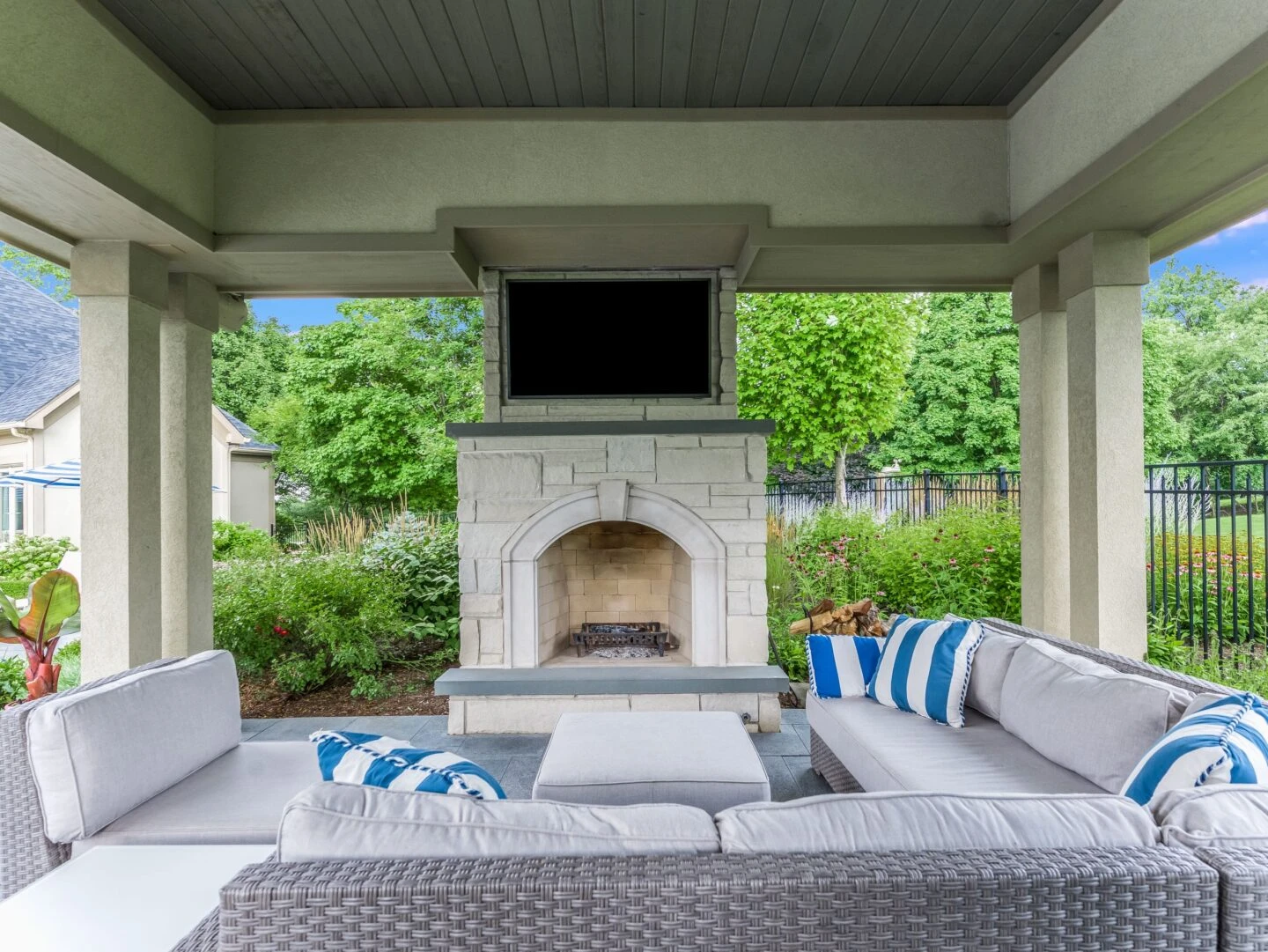
Timberstone Landscape custom pergolas in Gwinnett County are engineered, permitted, and built to structural specifications that produce results lasting decades rather than seasons.
Work With Gwinnett County's Custom Pergola Specialists
Free consultations. Serving Northeast Atlanta within 40 miles of Grayson.
Request a Free ConsultationTimberstone Landscape is based in Grayson, Georgia and serves the greater Northeast Atlanta region within 40 miles: