
The Complete Pergola Buying Guide for Georgia Properties — What Actually Lasts
Georgia homeowners invest in pergolas for shade, structure, and the visual anchor they provide to an outdoor living space. But the pergola market has expanded rapidly, and not everything being sold will survive Georgia's combination of summer UV intensity, humidity, and the occasional severe storm. Understanding what materials, construction methods, and attachment details actually hold up in this climate is the essential first step before you buy or build.
This guide is for Georgia homeowners in Gwinnett, Forsyth, Cherokee, and the surrounding counties who are evaluating pergola options — whether freestanding or attached, wood or aluminum, kit or custom. The right choice depends on your priorities, your budget, and the honest acknowledgment that Georgia is not a forgiving climate for structures that were not designed for it.
Material GuideWood vs. Aluminum vs. Vinyl — What Georgia's Climate Decides
Cedar and pressure-treated lumber remain popular pergola materials for their natural appearance and structural capability. Cedar is naturally rot-resistant and holds finishes well, but in Georgia's humidity and UV environment, untreated cedar will gray and check significantly within three to five years without regular staining or sealing. Pressure-treated pine is a cost-effective structural material but requires paint or stain to be visually acceptable — bare pressure-treated wood weathers poorly in Georgia. Wood pergolas also require periodic inspection for rot at posts and beam connections, particularly where wood contacts soil or concrete footings.
Aluminum pergola systems have become the dominant premium option in Georgia for good reason. Powder-coated aluminum does not rot, warp, fade, or require painting. It handles Georgia's UV intensity and humidity cycle without deterioration and is typically the lowest-maintenance option available. The tradeoff is cost — quality aluminum pergola systems are significantly more expensive than wood — and some homeowners find the appearance less warm than natural wood. Vinyl pergolas sit between wood and aluminum in price but have real structural limitations in larger spans and do not hold up as well as aluminum in Georgia's thermal cycling conditions.
"A pergola that needs repainting every two years in Georgia is not a low-maintenance addition. It is a recurring maintenance obligation that compounds over the life of the structure."
Freestanding vs. Attached — What the Structural and Code Implications Are
Attached pergolas — those connected to the home's structure — require careful flashing and connection detailing to prevent water infiltration at the junction. In Georgia's rainfall environment, an improperly flashed pergola attachment will direct water into the wall assembly, leading to rot, mold, and structural damage to the home. Most Georgia jurisdictions require a building permit for attached structures, and the connection method must be engineered to satisfy local wind load requirements, particularly in the upper Gwinnett and Cherokee County areas that see occasional severe thunderstorm wind events.
Freestanding pergolas avoid the attachment problem but require adequate footing depth for structural stability. Georgia's soil conditions — particularly clay-heavy lots — affect frost depth and bearing capacity calculations. A freestanding pergola installed on inadequate footings will rack and shift over time. The standard approach for most Northeast Atlanta freestanding pergolas is a concrete caisson footing of adequate diameter and depth, with the post set in the footing rather than surface-mounted. Surface-mounted post bases are acceptable for light decorative pergolas but inadequate for anything spanning more than twelve to fourteen feet.
- Aluminum powder-coat: lowest maintenance, highest durability, best long-term value in Georgia
- Cedar: best natural appearance but requires regular finishing to prevent checking and graying
- Pressure-treated: economical structural option but requires paint or stain for acceptable appearance
- Attached pergolas: require permit, engineered connection, and proper flashing in all Georgia jurisdictions
- All pergolas: need adequate footing depth — surface-mounted posts are inadequate for span pergolas
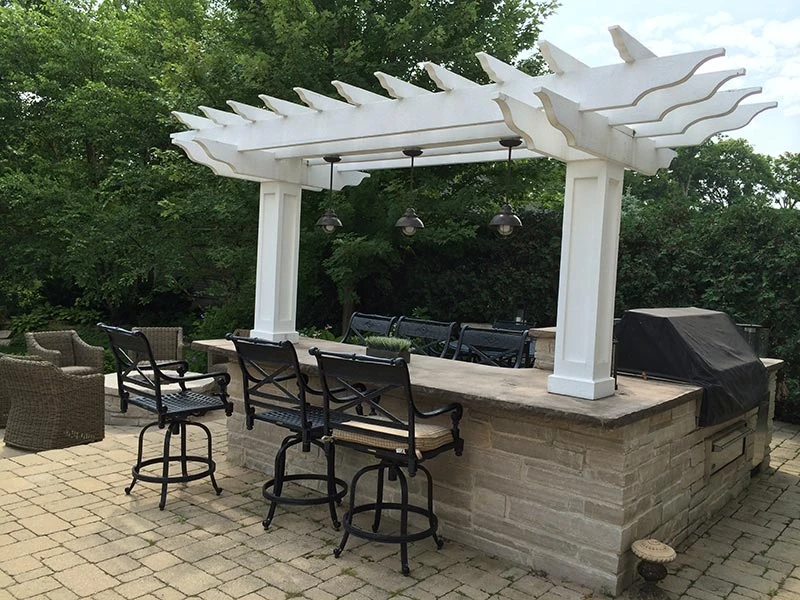
A properly designed pergola creates a defined outdoor room and provides the visual and functional anchor that transforms a patio into a living space.
How Timberstone Designs and Builds Pergola Structures Across Northeast Atlanta
Timberstone Landscape designs and builds pergola structures throughout Gwinnett, Forsyth, Cherokee, and the surrounding Northeast Atlanta counties. Our pergola projects are integrated with the overall outdoor living design — connected to paver patios, integrated with lighting plans, and coordinated with any adjacent outdoor kitchen or fire feature work. We do not sell pergolas as isolated products; we design them as components of a cohesive outdoor space.
As a Techo-Bloc Preferred Contractor (Techo-Pro), our hardscape surrounds for pergola structures — including paver patios, seating walls, and integrated planters — are built to the same standards as our standalone hardscape work. The result is a structure that looks intentional and performs durably across Georgia's full climate range. Our pergola and outdoor structures services cover design, permitting, and full installation.
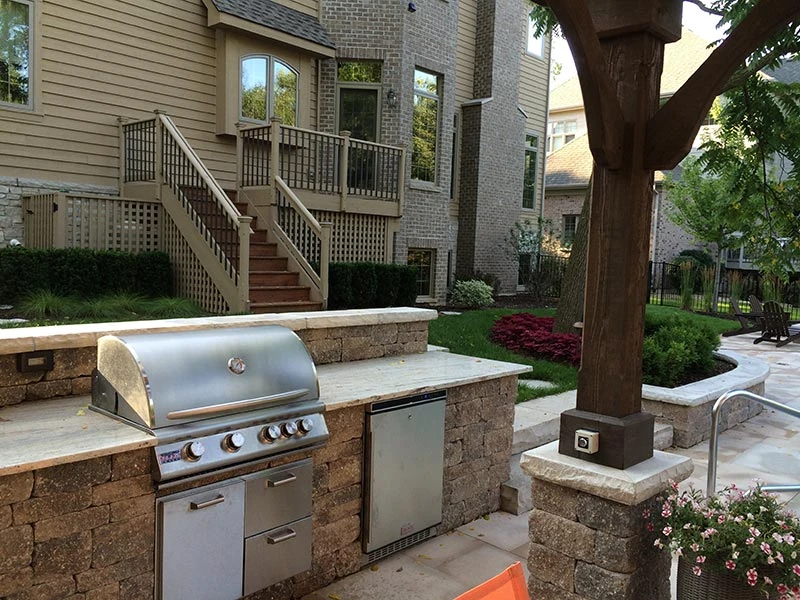
The best pergola projects in Northeast Atlanta integrate structure, hardscape, lighting, and landscape into a single cohesive outdoor living experience.
Ready to Add Structure to Your Outdoor Space?
Free design consultations for pergola and outdoor living projects across Northeast Atlanta.
Request a Free ConsultationTimberstone Landscape is based in Grayson, Georgia and serves the greater Northeast Atlanta region within 40 miles: