
The Complete Outdoor Lighting Guide for Georgia Homeowners — How to Layer Light That Lasts
Outdoor lighting done well does three things simultaneously: it extends the functional hours of your outdoor living space, it enhances the property's visual impact after dark, and it provides the security coverage that makes your home a less attractive target. Most outdoor lighting installations accomplish one of these objectives adequately and neglect the other two entirely. A layered lighting system — designed with all three purposes in mind from the start — is both more effective and more resilient than a single-purpose installation.
Georgia's nine-month outdoor season makes outdoor lighting a genuine investment in usable property — not just an aesthetic add-on. An outdoor living space that's only functional until sunset is a space you're using roughly half the hours it could deliver. Properly designed lighting extends that usability and defines the property's visual identity in a way that daytime landscaping alone cannot. But the system has to be designed as a system — not assembled fixture by fixture from whatever was on sale at the home center.
The Three LayersTask Lighting — Where Function Has to Come First
Task lighting serves specific functional purposes: illuminating cooking surfaces in an outdoor kitchen, lighting steps and grade transitions, providing adequate brightness for outdoor dining without creating glare. This layer has the least tolerance for aesthetic compromise — a cooking surface with inadequate light is a safety issue, and steps that aren't clearly illuminated are a liability issue. Task lighting should be planned first and sized to actually meet the functional requirement, not sized down to match a budget line.
In Georgia's outdoor living contexts, task lighting applies to outdoor kitchen work surfaces, grill stations, step risers on grade changes, and any transition between patio levels. Low-voltage LED fixtures in these applications last eight to twelve years with minimal maintenance, consume very little power, and provide the directed brightness that functional outdoor tasks require. The color temperature matters here: 3000K (warm white) is the standard for outdoor cooking and dining — cool white (5000K+) creates clinical light that's uncomfortable for extended outdoor use.
"Outdoor lighting that only works aesthetically in one photograph is not outdoor lighting — it's a staged photo. Real outdoor lighting systems are designed to perform across every condition and every hour."
Accent Lighting and Landscape Lighting — Creating Visual Depth
Accent and landscape lighting are the layers that define the property's visual character after dark. Uplighting significant trees — particularly Southern Magnolias, mature oaks, and ornamental specimens — transforms a daytime landscape element into a dramatic night feature. Grazing light across a paver patio surface from a low fixture angle reveals the texture and pattern of the hardscaping that flat downlighting erases. Path lighting defines circulation routes and adds layers of depth to the planting beds along walkways.
The most common mistake in this layer is using too much light at too high an output — turning the yard into a stadium rather than creating the layered, atmospheric effect that makes outdoor spaces feel inviting. Accent lighting works by contrast and restraint. The dark areas between lit features are as important as the lit features themselves. This is why fixture placement and aiming angle matter as much as fixture selection — and why this layer requires a design eye, not just a fixture catalog.
- Task lighting: function first — cooking surfaces, step transitions, dining areas at correct brightness and color temperature
- Uplighting: best for signature trees and architectural elements — reveals vertical structure that daytime views flatten
- Grazing light: low-angle fixtures reveal paver texture and hardscape patterns that downlighting obscures
- Path lighting: defines circulation, adds layering, prevents trip hazards on grade changes
- Security zones: motion-activated or zone-controlled fixtures at entry points and perimeter — designed into the system, not bolted on after
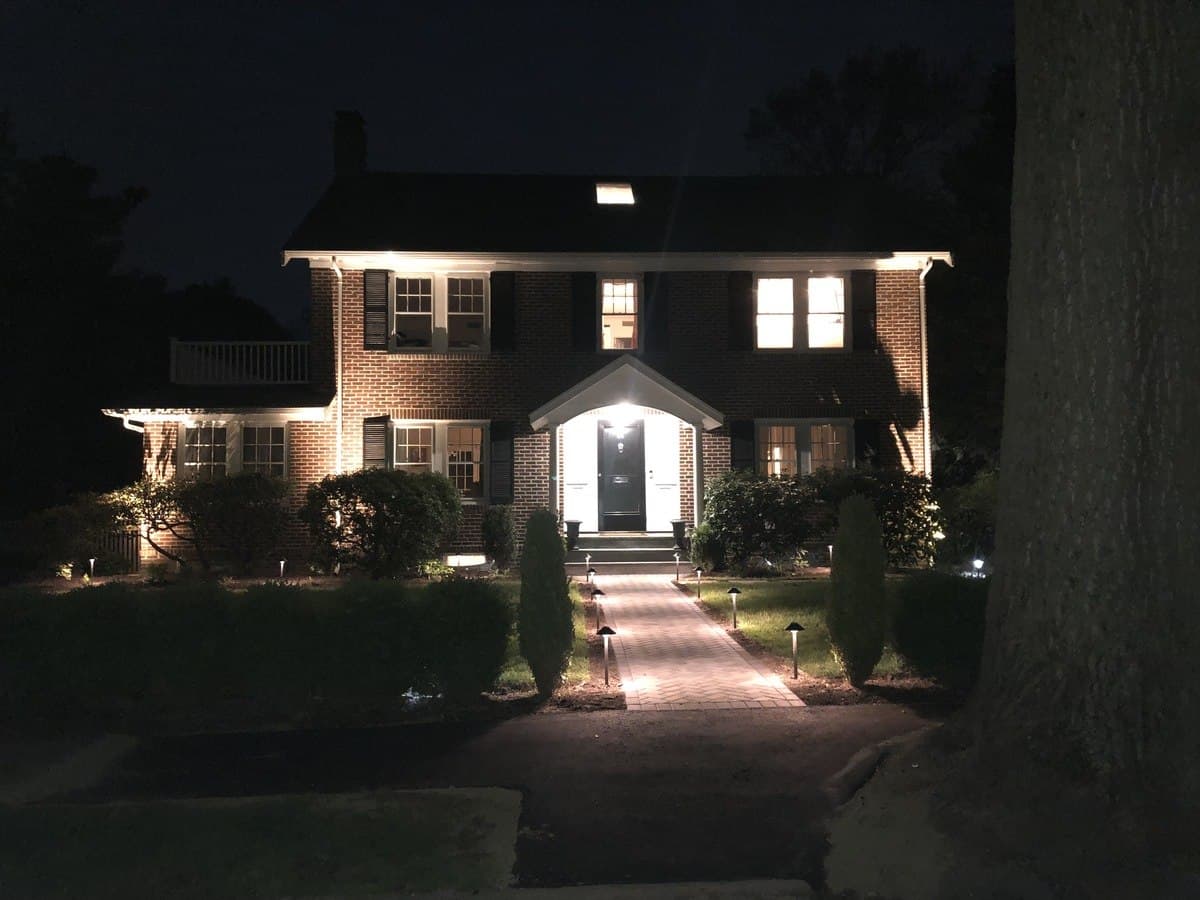
Timberstone outdoor lighting systems are designed in three layers — task, accent, and security — so every hour after sunset delivers on what the space can do.
Durability in Georgia's Climate — What Holds and What Corrodes
Outdoor lighting fixtures in Georgia are exposed to 50 inches of annual rainfall, months of high UV intensity, and temperature swings that stress connections and seals over time. Fixture material specification matters enormously. Cast brass and solid copper fixtures outlast cast aluminum and plastic by a significant margin in Georgia's outdoor conditions. Brass ages to a natural patina that actually improves visually over time; cast aluminum develops surface oxidation that requires replacement. This is a specification decision that affects a 15-year installation timeline, and it's made at the design stage when fixture grade is selected.
Low-voltage LED systems are the correct choice for Georgia outdoor lighting — energy-efficient, long-bulb-life, and compatible with smart-home control systems that allow zone control and scheduling. Transformer quality determines system reliability: an undersized or low-quality transformer becomes the failure point for the entire system within three to five years. At Timberstone Landscape, based in Grayson, we install outdoor lighting systems across the Northeast Atlanta region with commercial-grade components specified for Georgia's climate. See our outdoor and landscape lighting page or our hardscaping services to see how lighting integrates with the full project.
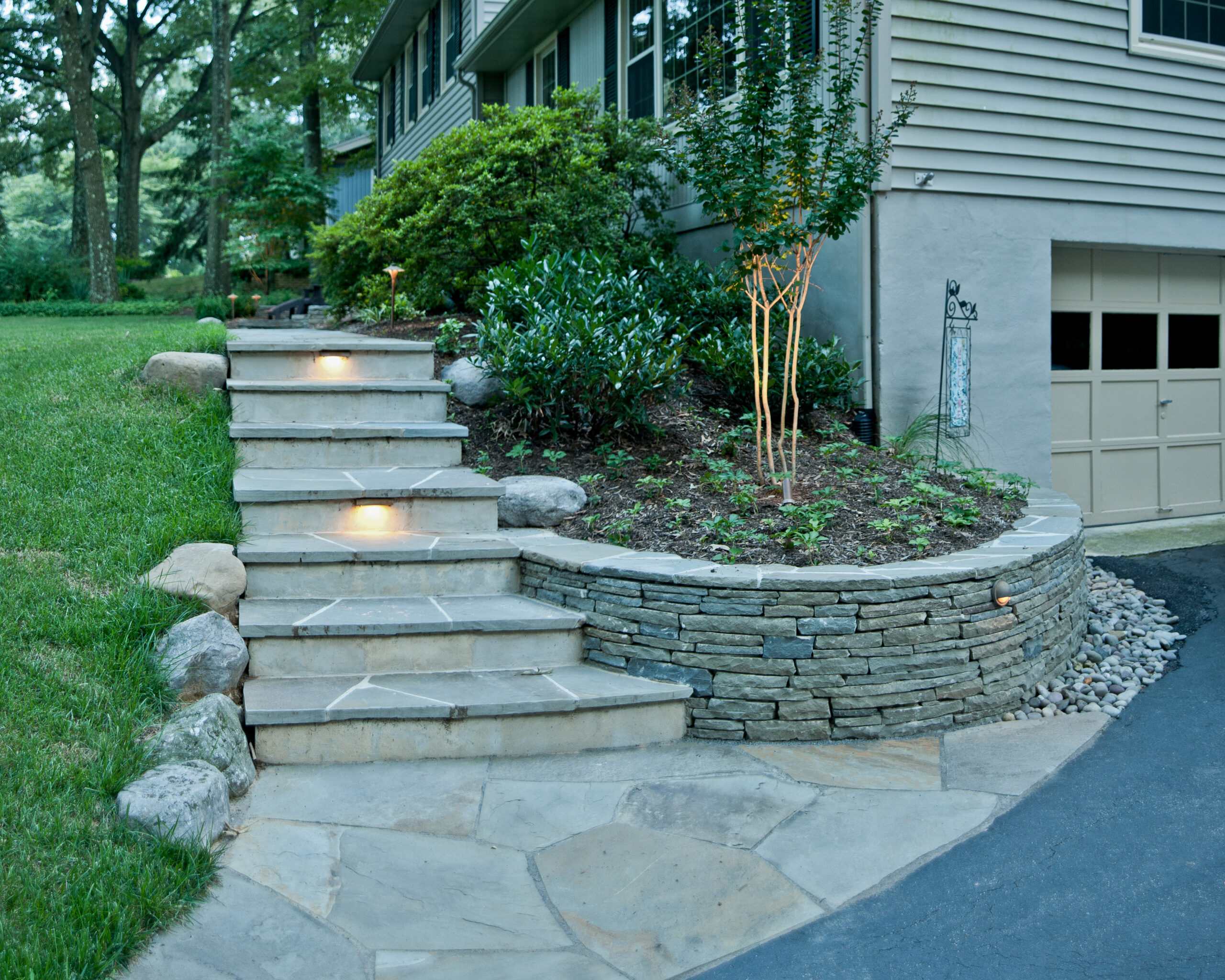
Outdoor lighting that lasts — three layers, commercial-grade components, and designed for Georgia's full weather range.
Outdoor Lighting That Lasts — Layered, Not Just Plugged In
Free lighting consultations. We design systems that layer task, accent, and security lighting — built to last through Georgia weather.
Request a Free ConsultationTimberstone Landscape is based in Grayson, Georgia and serves the greater Northeast Atlanta region within 40 miles: