
How Winder GA Homeowners Are Solving Drainage and Grading Problems With Hardscape
Winder and Barrow County represent one of the more drainage-challenged residential markets in the Northeast Atlanta region. The county's terrain combines rolling topography with significant variation in soil permeability — from dense clay in the low areas to sandy loam on the ridges — and many residential properties were developed without the drainage infrastructure that would properly manage the rainfall patterns the region receives. For Winder homeowners who deal with standing water, erosion, or soggy yard zones after every significant rain, hardscaping is not just an aesthetic investment. It is a functional engineering solution when it is designed correctly.
The relationship between drainage and hardscaping is bidirectional and consequential. A well-designed hardscape can solve drainage problems that have plagued a property for years — by regrading surfaces, introducing collection points, redirecting water away from structures, and creating permeable zones where infiltration is desirable. A poorly designed hardscape can make the same drainage problems dramatically worse — by increasing impervious surface coverage without providing corresponding drainage capacity, or by directing water toward low points that were already problematic.
Drainage and Hardscape DesignHow Slope, Swales, and Catch Basins Work Together
Slope management is the most fundamental tool in drainage design, and it begins before the first paver is placed. Every hardscape surface must have a designed drainage slope — typically a minimum of 1/8 inch per foot away from any structure — that directs surface water to a designated collection or dispersal point. When this slope is absent or incorrectly directed, water ponds on the surface, infiltrates through joints into the base aggregate, and eventually reaches the subgrade where it creates the freeze-thaw and saturation conditions that produce surface failure.
Swales — shallow, graded channels that collect and convey surface water — are frequently used at the perimeter of hardscape installations in Winder's Barrow County conditions to intercept upslope water before it reaches the installed surface. A swale upstream of a patio or walkway that is positioned on a downhill slope can dramatically reduce the drainage load the hardscape installation must manage. Swales can be vegetated for a natural appearance or lined with gravel or paver materials for a more finished look — and they can be designed as landscape features rather than purely functional elements.
"In Winder's terrain, the drainage plan comes before the design plan. Every hardscape decision follows from understanding where water comes from, where it goes, and what you need it to do differently."
Catch Basins, Permeable Pavers, and the Full Range of Solutions
Catch basins — below-grade collection points connected to underground drainage pipe — are used when surface swales alone cannot handle the drainage volume or when the installation context does not allow for a swale at the needed location. A catch basin at the low point of a patio, connected to a perforated or solid drain pipe that daylights at a downslope location, provides positive drainage for the surface that no amount of slope adjustment can replicate. For Winder properties where the backyard is the terminal collection point for a significant uphill drainage area, catch basins are often the difference between a functional outdoor space and a seasonal pond.
Permeable pavers represent a different approach to the same problem — rather than collecting and redirecting surface water, they allow it to infiltrate through the joint system into a deep aggregate reservoir below the surface, where it percolates into the native soil at a controlled rate. In Barrow County's variable soil conditions, permeable pavers require careful soil evaluation before specification — the native soil must have adequate permeability to accept the infiltration rate, and the aggregate reservoir must be sized to handle design storm volumes without overflowing. Where the conditions are right, however, permeable pavers convert what was previously a drainage liability into a site that manages its own stormwater.
- Drainage slope: minimum 1/8" per foot across all hardscape surfaces, directed away from structures
- Perimeter swales: intercept upslope water before it reaches the installed hardscape surface
- Catch basins: provide positive drainage at low points where surface slope alone is insufficient
- Permeable pavers: allow infiltration through the joint system where native soil permeability supports it
- Underground pipe: connects drainage components and routes water to appropriate discharge points
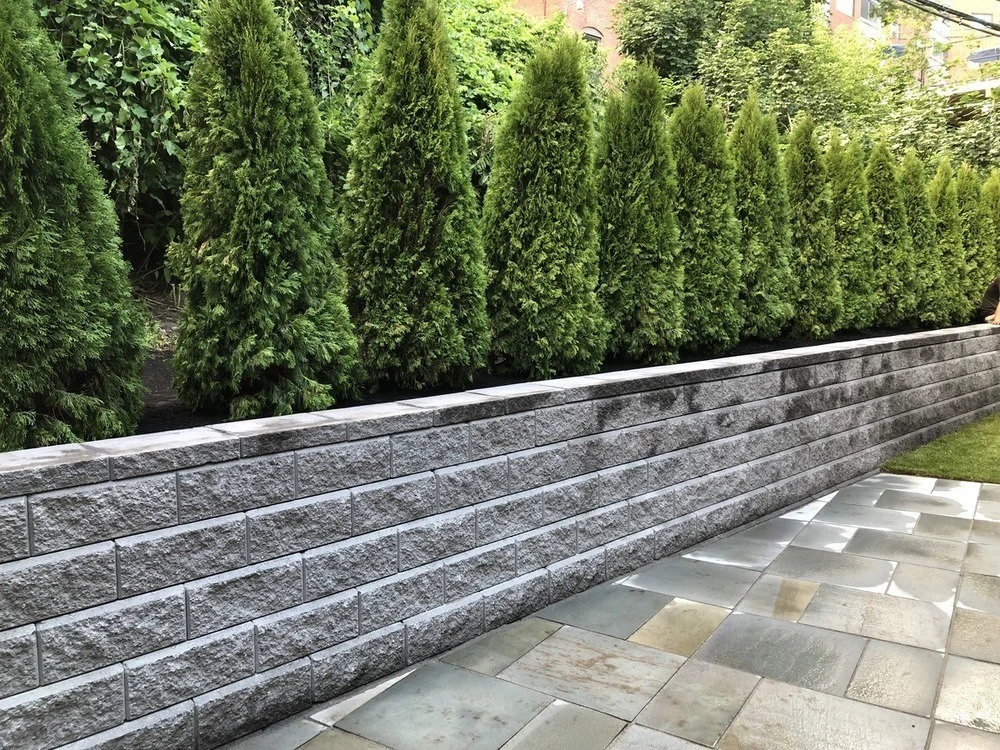
Drainage and hardscape design are inseparable in Winder's Barrow County — surface water management must be planned before any installation decisions are made.
How Timberstone Approaches Drainage-Challenged Projects in Winder
Timberstone Landscape approaches every project in Winder and Barrow County with a drainage assessment before any design work begins. We walk the site during or after rainfall whenever possible to observe where water travels, where it collects, and what the existing grade conditions do with it. This observation phase informs the drainage strategy that becomes embedded in the hardscape design — not bolted on afterward as an afterthought.
As a Techo-Bloc Preferred Contractor based in Grayson, GA, we serve Winder and Barrow County as part of our broader Northeast Atlanta service area, which includes Gwinnett, Forsyth, Hall, Fulton, and Jackson counties. Our hardscaping services include full drainage planning integrated into every patio, walkway, and retaining wall project we design. Our design-build process ensures the drainage solution that was designed is the drainage solution that gets built — not value-engineered away during installation.
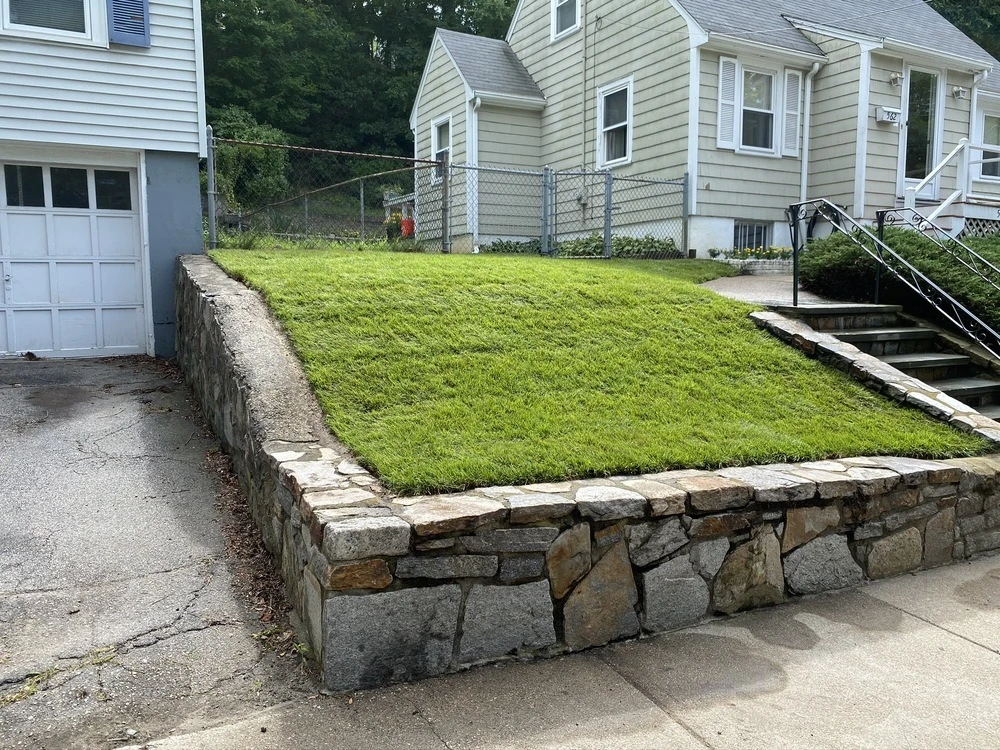
Properly designed hardscape in Winder resolves drainage problems that have defined how a property functions — transforming a liability into a managed asset.
Solve Your Winder Drainage Problems With Hardscape That Works
Free consultations for hardscaping projects across Northeast Atlanta.
Request a Free ConsultationTimberstone Landscape is based in Grayson, Georgia and serves the greater Northeast Atlanta region within 40 miles: