
How to Integrate a Fire Feature Into a Multi-Level Patio Without Breaking the Design
Multi-level patios are one of the most compelling hardscape designs available to Georgia homeowners — and one of the most challenging to add fire to without creating a design conflict. The wrong fire feature placement on a multi-level layout feels forced, creates safety complications, or isolates the fire from the seating zones it's meant to serve. The right placement makes the entire outdoor space feel like it was designed around that single glowing focal point.
The challenge is that multi-level designs already have inherent visual complexity — changes in elevation, transition materials, and multiple defined zones. Adding a fire feature to this kind of layout requires understanding how the levels relate to each other and where fire naturally fits within that hierarchy. Get it right and the fire feature becomes the design anchor that gives the whole space coherence. Get it wrong and you have a beautiful patio with an awkward fire element that nobody quite knows how to use. Integration is the operative word — a fire feature on a multi-level patio should feel designed in from the beginning, not added later.
Where Fire Features Work Best on Multi-Level Designs
Placement PrinciplesThe most successful fire feature placements on multi-level patios share a common characteristic: the fire is visible from multiple levels but surrounded by seating on at least one level. That positioning creates a shared focal point across the entire outdoor space without requiring guests to congregate at a single elevation.
- Lower level anchor: Positioning the fire feature on the lower patio level — surrounded by lounge seating — while the upper level provides elevated views of the fire creates a naturally hierarchical space. Upper-level guests look down at the fire; lower-level guests sit around it.
- Transition level feature: On three-level designs, placing a fire feature at the middle level creates a visual transition point between the upper dining or kitchen zone and the lower lounge area. This placement works well for linear fire bowls or rectangular fire tables.
- Retaining wall integration: Built-in fire bowls or fire pots integrated into retaining walls at level transitions are one of the cleanest ways to add fire to a multi-level design without consuming patio floor space. The fire becomes an architectural element of the wall itself.
- Seating wall + fire combination: A curved or straight seating wall on the lower level with an integrated fire bowl at the center point combines retaining function, seating, and fire in a single cohesive element — eliminating the need to treat the fire feature as a separate design decision.
"On a multi-level patio, the fire feature earns its place by serving multiple zones simultaneously — visible from the upper level, seatable at the lower level, and structurally part of the transition between them."
Safety and Code Considerations on Elevated Patios
Structural and Safety PlanningMulti-level patios introduce specific safety considerations for fire features that flat patios don't require. Any fire feature positioned near a level change must maintain minimum clearances from the edge — typically at least four feet from any drop-off greater than 18 inches. This is a safety requirement independent of aesthetics, and it should influence placement decisions from the earliest planning stages.
Gas line routing for fire features on multi-level designs requires planning the conduit path through or under the hardscape structure before any concrete or paver installation begins. Retrofitting a gas line to a finished multi-level patio is significantly more expensive and disruptive than routing it correctly during construction. This is one of the strongest arguments for designing fire features as part of the original hardscape project rather than adding them later.
Why Timberstone Plans Fire Into Multi-Level Designs From the Start
The Timberstone ApproachTimberstone Landscape has built multi-level hardscape and fire feature combinations across Grayson, Buford, Suwanee, Cumming, and throughout Northeast Atlanta. As a Techo-Bloc Preferred Contractor (Techo-Pro), Victor and the Timberstone team have access to engineered hardscape systems that allow fire feature integration at any level of a multi-tier design — including retaining wall-integrated fire features, seating wall fire pots, and flush-mounted fire bowls. These features aren't added to the hardscape — they're built into it from the foundation up.
Every multi-level project that will include a fire feature gets its gas rough-in planned at the structural design stage. That decision prevents the most common and most expensive mistake in multi-level patio fire feature projects: building first and adding fire later.
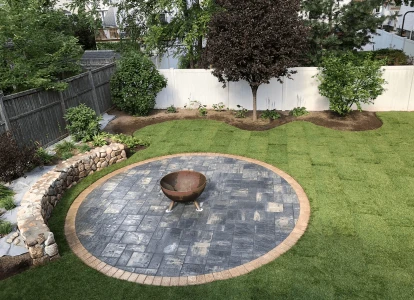
A fire feature planned into a multi-level patio from the start feels architectural — not like an appliance dropped into finished hardscape.
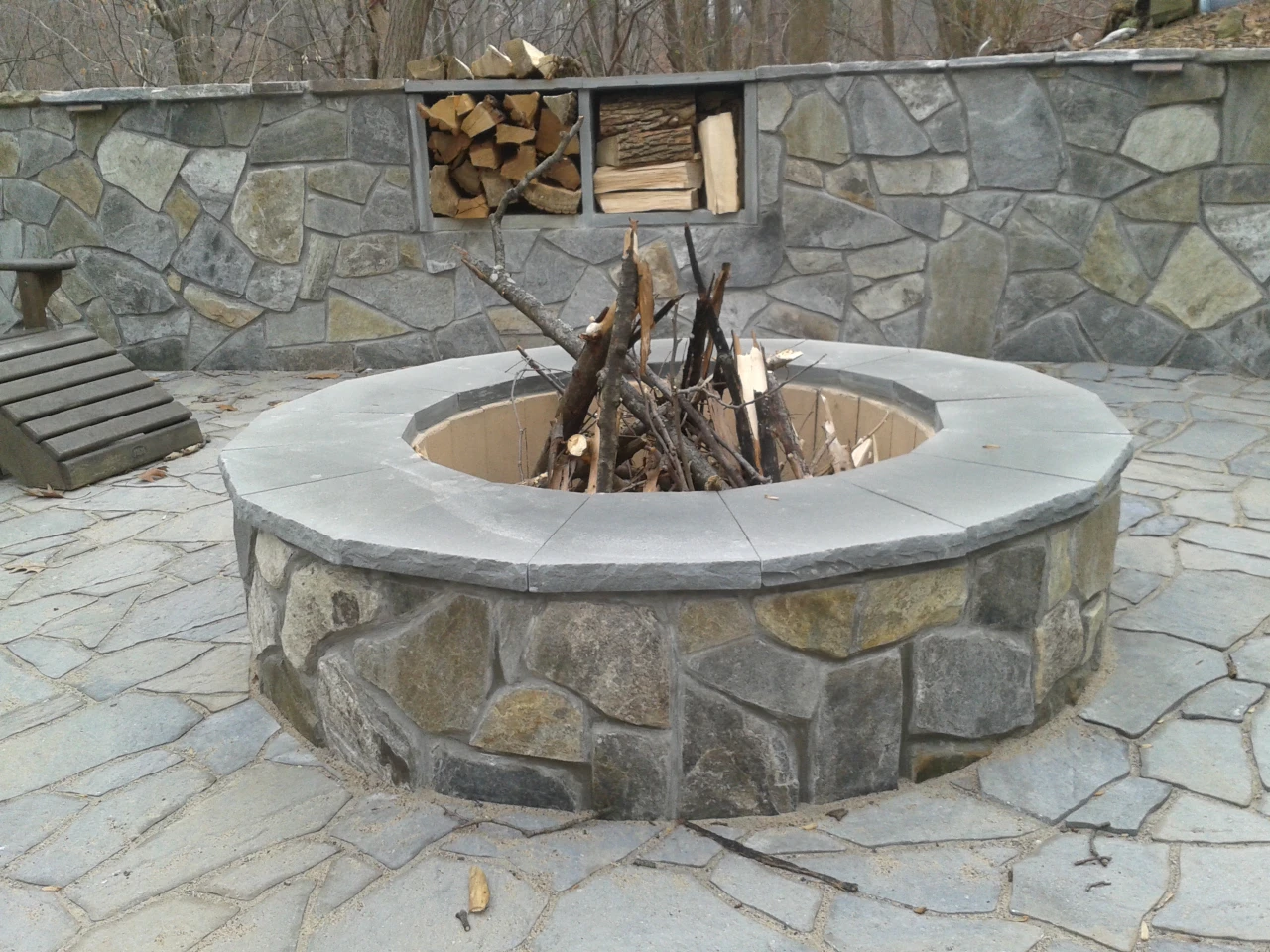
Multi-Level Patios and Fire Features Built in Northeast Atlanta
Timberstone Landscape serves Grayson, Lawrenceville, Buford, Suwanee, Cumming, and throughout Northeast Atlanta. Free design consultations.
Get a Free Estimate