
How to Design an Outdoor Living Space Around a Pool — What the Layout Has to Solve Before Anything Gets Built
A pool is the anchor of a backyard — and also the most demanding layout constraint you'll face when designing the outdoor living space around it. Every other element has to relate to it correctly: the kitchen needs to face the pool without serving smoke into the pool deck seating; the shade structure needs to provide coverage without creating a safety blind spot; the traffic path from the house to the pool has to stay clear regardless of where seating and cooking zones sit. Solving these relationships before anything is built is the entire job of outdoor living design around a pool.
Most outdoor living spaces around pools are designed additively — one element at a time, each one chosen without a resolved relationship to the pool and to each other. A covered pavilion gets added two years after the pool. An outdoor kitchen gets added three years after the pavilion. Each addition makes sense on its own and creates a traffic or flow problem with what came before. The result is a backyard that has every element a homeowner wanted and still doesn't feel right to live in. The sequencing problem is what design-before-build solves.
Layout FirstThe Zone Framework — How Every Pool Yard Divides
Every pool-centered outdoor living space divides into four functional zones: the pool deck zone (immediate surround, wet surface, lounge access), the cooking and dining zone (kitchen, grill, table seating — typically 15 to 20 feet from pool edge), the shade and relaxation zone (covered pavilion or pergola, deep seating, fire feature if included), and the transition zone (path from house to pool deck, towel and equipment storage access). Each zone needs to be sized appropriately, positioned correctly relative to the pool and to each other, and separated by clear, intuitive circulation paths.
The most common zone planning failure: placing the cooking zone too close to the pool deck. An outdoor kitchen that's positioned 8 to 10 feet from the pool edge creates a noise conflict (grill use during pool parties), a safety conflict (open flames and hot surfaces adjacent to the wet surface transition), and a practical conflict (children and wet traffic moving through an active cooking zone). Fifteen to twenty feet from pool edge is the minimum that creates a workable separation — and it requires that the full yard depth is accounted for at the design stage, before any component is placed.
"Pool yard design problems are almost always zone relationship problems — elements placed without resolving how they interact with each other and with the pool."
Surface Transitions — The Technical Design Problem Most Projects Skip
A pool deck transitions to the outdoor living space hardscaping at one or more points — and the grade, drainage, and material transition at each of these points requires explicit design decisions. The pool deck surface needs to drain toward the pool or toward designated drainage points — not toward the adjacent hardscape area. If the paver patio level is below the pool deck level, every rain event that exceeds the pool deck's drainage capacity will sheet onto the patio. If the transition is handled as a level connection rather than a properly graded edge, standing water between zones becomes a permanent seasonal problem.
Material transition design is the other component of this problem. The pool deck surface — typically a slip-resistant concrete, travertine, or paver material — transitions to the outdoor living area hardscaping at a joint or step. How that joint is detailed, both structurally and visually, determines whether the transition reads as an intentional design feature or an after-the-fact connection. A border course in a contrasting paver or material at the transition point creates definition. A hidden edge where the pool deck material simply ends creates ambiguity. This is a detail decision with both aesthetic and structural implications that needs to be made at the design stage.
- Pool kitchen minimum separation: 15–20 feet from pool edge — close enough to serve, far enough for safety
- Shade structure placement: positioned to cover seating without creating blind spots to the pool from inside the house
- Traffic path to pool: must remain clear from the back door through all other zones — a direct, obvious route
- Drainage at surface transitions: pool deck and patio grades must be designed together to prevent water sheeting between zones
- Material transition detail: border course or step treatment defines the transition and prevents structural edge failure
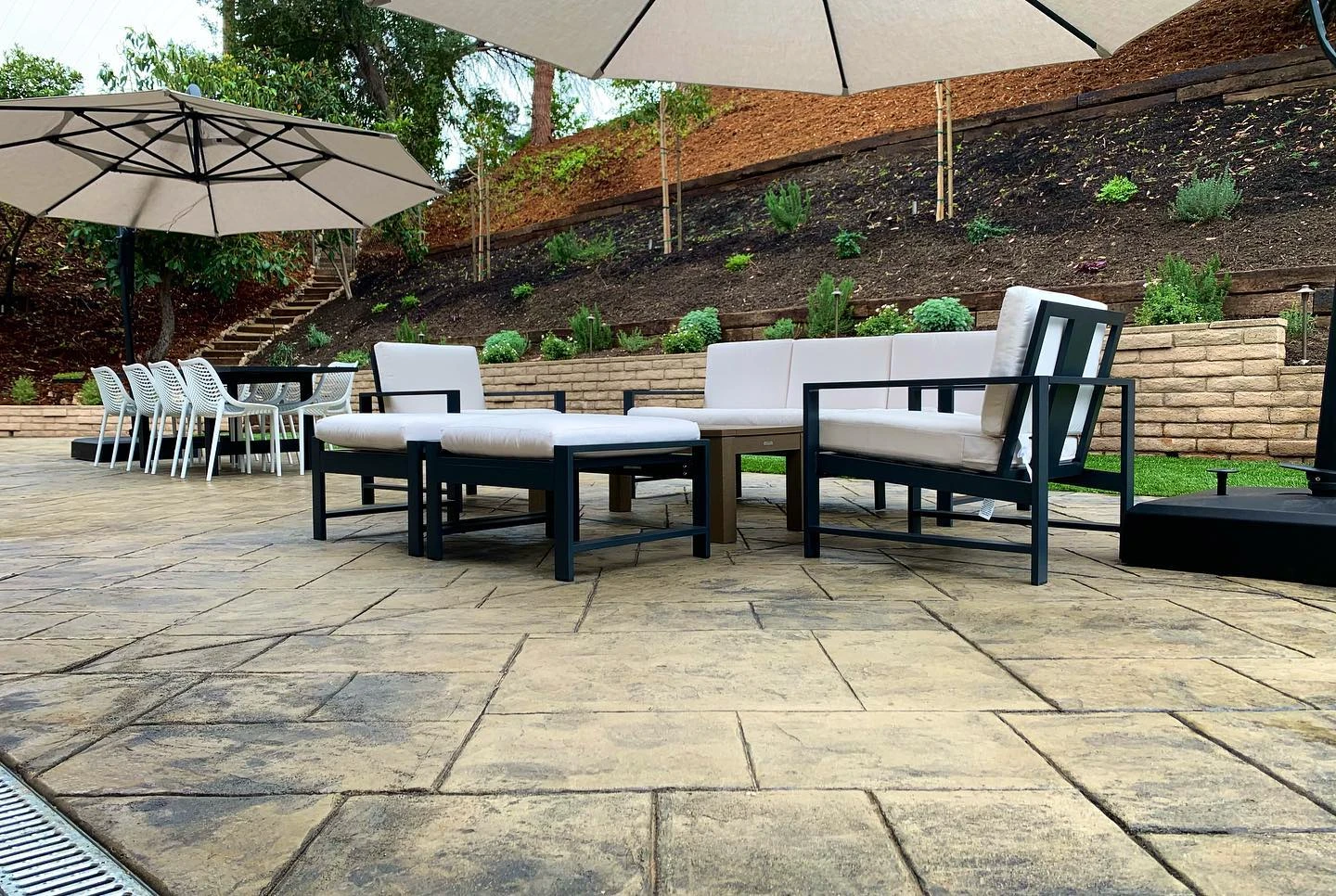
Timberstone designs outdoor living spaces around pools as one integrated layout — zones, traffic paths, and surface transitions resolved before any stone is placed.
Starting With a Site Analysis — What the Design Process Requires
A properly designed pool-centered outdoor living space starts with a site analysis that accounts for the pool's position relative to the house, the existing grade and drainage characteristics, the sun path across the property in summer and winter, the prevailing wind direction, and the primary traffic paths as they exist. These conditions can't be changed — they can only be worked with or against. A shade structure placed without regard to summer sun position will be in the wrong place when the shade is most needed. A kitchen placed without regard to prevailing wind will have smoke problems on most days it's used.
At Timberstone Landscape, based in Grayson, Georgia, we design outdoor living spaces around pools across the Northeast Atlanta region — Gwinnett, Forsyth, Hall, Fulton, and surrounding counties. Every project starts with a site analysis that establishes the conditions the design has to work with, then develops zone placement, traffic paths, and surface transitions as a resolved layout before any material selection or product specification begins. See our outdoor kitchen and fire features or our pool decks and water features to start the conversation.
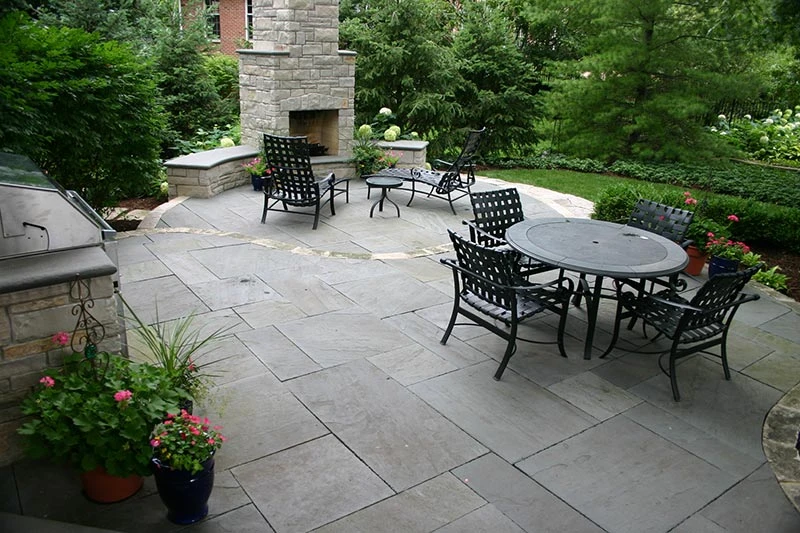
Every Timberstone outdoor living project starts with a resolved layout — because a pool yard that doesn't flow well is one you stop using within a season.
Pool-Centered Outdoor Living — Designed Before It's Built
Free design consultations. We solve the layout problems — traffic flow, zones, surface transitions — before any stone is placed.
Request a Free ConsultationTimberstone Landscape is based in Grayson, Georgia and serves the greater Northeast Atlanta region within 40 miles: