
How to Choose Between a Pergola and a Solid Roof Patio Cover in Georgia
The decision between a pergola and a solid roof patio cover is one of the most consequential outdoor structure choices a Georgia homeowner makes — because it determines the fundamental experience of the covered space for the life of the structure. A pergola (open or louvered) and a solid roof cover deliver very different combinations of light, air, rain protection, and architectural character. Getting this choice right requires clarity on how the space will be used, what weather conditions must be managed, and what the architectural context of the home demands.
Both options are legitimate, well-established solutions for Georgia's outdoor living market. Both are used in Gwinnett, Forsyth, Hall, Fulton, and surrounding counties by homeowners who are satisfied with their choice. The question is not which is objectively better but which is better for a specific homeowner's priorities, property, and home architecture. A decision framework helps clarify the answer.
The Core Trade-OffRain Protection vs. Light and Air: The Fundamental Decision
A solid roof patio cover provides complete, reliable rain protection. During Georgia's afternoon thunderstorms — which can arrive suddenly and deliver significant rainfall — a solid roof cover keeps the patio fully dry. Outdoor furniture, cushions, grills, and kitchen appliances under a solid roof do not get wet. Outdoor entertaining does not have to be interrupted when rain arrives. For homeowners who prioritize uninterrupted outdoor use regardless of weather, a solid roof cover is the correct specification.
A pergola — even a louvered one with louvers in the closed position — has some limitation compared to a solid roof. A louvered pergola with fully closed aluminum louvers provides excellent rain protection during moderate rain but may allow some mist infiltration during wind-driven heavy rain. An open lattice pergola provides essentially no rain protection. The trade-off for the open or louvered option is the open-air experience — natural light, sky visibility, air movement, and a sense of being genuinely outdoors rather than in a covered outdoor room. For homeowners who want to feel the open-air connection even when protected from sun and occasional rain, a louvered pergola delivers that experience; a solid roof does not. For homeowners who need absolute rain protection and value the outdoor experience less than the weather reliability, a solid roof cover is the right answer.
"A solid roof cover makes the space work in any weather. A pergola makes the space feel like being outside. Choose based on which you'd regret not having."
Permit Categories, Cost Ranges, and Architectural Context
Permit category differences between pergolas and solid roof covers vary by jurisdiction but generally follow a consistent pattern in Georgia's counties. A freestanding pergola (detached from the house) that falls under a certain square footage threshold may qualify for a simple accessory structure permit. A solid roof cover attached to the house is more likely to be classified as a home addition or an attached accessory structure requiring a full building permit with structural review. The permit complexity and associated timeline are generally higher for attached solid roof covers than for freestanding pergolas in Georgia's county permitting systems.
Cost ranges for each option overlap significantly at the mid-tier. A custom-built cedar or aluminum pergola in Gwinnett County runs $10,000 to $30,000 depending on size and specification. A solid roof patio cover using standing seam metal roofing on a custom-built structural frame runs $15,000 to $45,000 for comparable sizes. The louvered pergola category — which bridges between open pergola and solid roof — runs $12,000 to $40,000. Architectural context should be the final arbiter when cost and permit categories are comparable: a home with a traditional pitched-roof architecture looks more natural with a pergola or covered porch that references the roof form, while a modern flat-roofed or contemporary home may integrate a flat solid roof cover more naturally. Timberstone Landscape, based in Grayson, GA, serves homeowners throughout Gwinnett, Forsyth, Hall, Jackson, Fulton, DeKalb, Walton, Barrow, and Cherokee counties. As a Techo-Bloc Preferred Contractor, Timberstone integrates covered structures with premium hardscape paving and outdoor features for complete outdoor living results. Our outdoor features and design-build process pages detail how we approach each covered structure decision.
- Solid roof covers provide complete, reliable rain protection — the right choice when weather reliability is the priority
- Louvered pergolas provide adjustable rain protection and open-air experience — the versatile middle option
- Open lattice pergolas provide shade but no meaningful rain protection
- Permit complexity is generally higher for attached solid roof covers than for freestanding pergolas
- Architectural context should guide the decision when cost and permit considerations are comparable
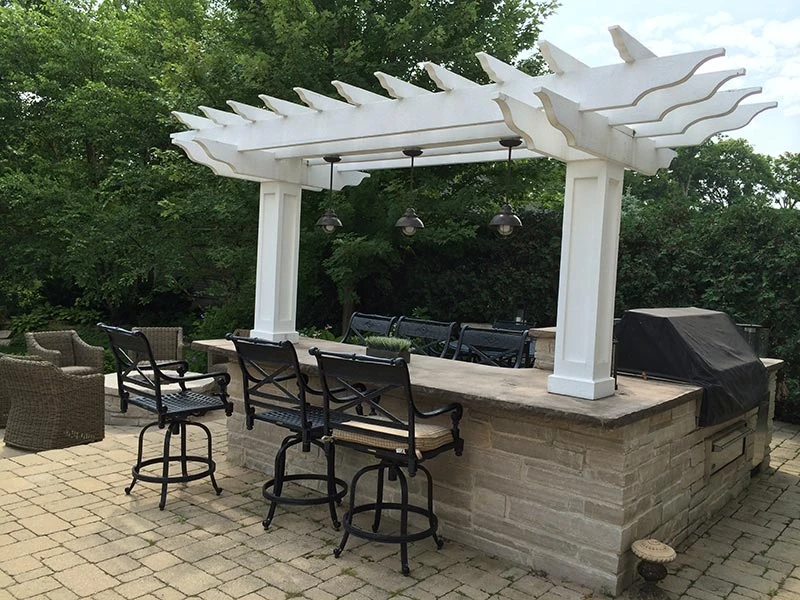
The pergola vs. solid roof patio cover decision comes down to rain protection priority, open-air experience preference, permit category, and architectural context of the home.
When the Architectural Context of the Home Decides the Question
Architecture should be the final determinant when a homeowner is genuinely uncertain between a pergola and a solid roof cover after considering the weather, permit, and cost factors. A craftsman bungalow with a wide front porch and deep exposed rafter tails looks its best with a pergola that references those architectural details — the open structure, the visible timber framing, the connection to the outdoors. Adding a solid metal roof cover to the same house creates an aesthetic conflict between the warm wood language of the house and the industrial character of a flat metal roof.
A modern transitional home with clean lines and large glass openings may integrate a flat solid roof cover — particularly one with a simple standing seam metal roof — as a natural extension of the home's architectural vocabulary. The covered patio becomes an outdoor room that reads as a deliberate extension of the interior, not an accessory. In Northeast Atlanta's residential markets, where a wide range of architectural styles coexist within the same neighborhoods, the right covered structure choice is always the one that strengthens the home's existing architectural identity. Timberstone Landscape's design process begins with the architecture — what the house looks like, how the patio will be approached, and what covered structure type reinforces the home's character — before any structural or material decisions are made. That sequence produces results that look like they belong rather than structures that were simply placed in a backyard.
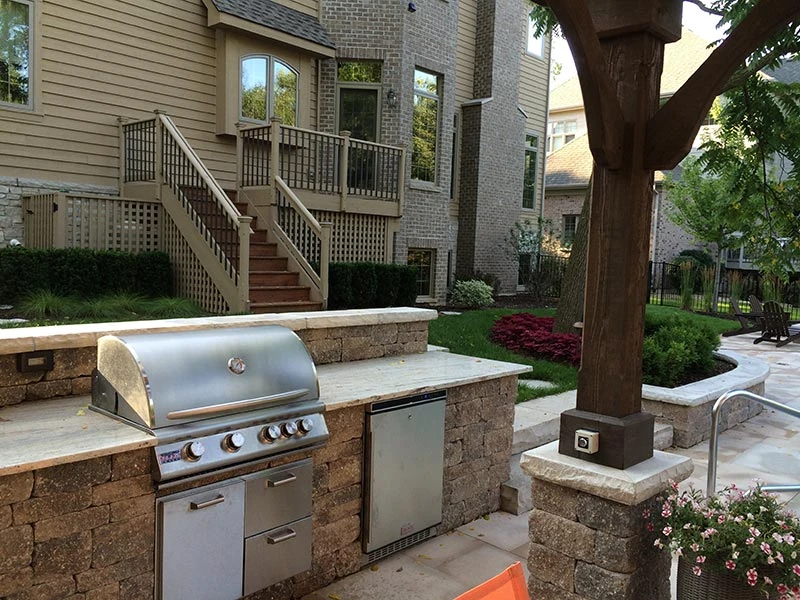
Timberstone Landscape helps Georgia homeowners choose between pergolas and solid roof covers based on weather priorities, architectural context, and how the space will actually be used.
Choose the Right Covered Structure for Your Georgia Property
Free consultations. Serving Northeast Atlanta within 40 miles of Grayson.
Request a Free ConsultationTimberstone Landscape is based in Grayson, Georgia and serves the greater Northeast Atlanta region within 40 miles: