
How Segmental Retaining Walls Differ From Poured Concrete — And Why It Matters in Georgia
Most homeowners don't give much thought to what type of retaining wall they're getting — they want the slope stabilized and they want it to look good. But the difference between a segmental retaining wall and a poured concrete wall isn't just aesthetic. It's structural, and it's especially significant in Georgia where clay soil, heavy rainfall, and freeze-thaw cycling create conditions that expose the weaknesses of monolithic concrete faster than almost any other environment.
Timberstone Landscape builds segmental retaining walls using Techo-Bloc systems as a Techo-Pro certified contractor. This article explains exactly how segmental walls differ from poured concrete, why that difference matters on Georgia properties, and what to look for when evaluating retaining wall options.
How Segmental Walls Work
A segmental retaining wall is built from individual interlocking units — concrete blocks engineered with specific geometry that allows each course to lock to the one below it while stepping back slightly (the batter angle). That setback is load-bearing geometry, not just aesthetics. The wall works with gravity, using its own mass and the interlock system to resist lateral soil pressure rather than relying on a single monolithic structure to resist everything at once.
Critically, segmental walls also allow water movement through and around them. Techo-Pro installation requires drainage aggregate behind the wall and a perforated pipe at the base — which means hydrostatic pressure from Georgia's rain events has somewhere to go rather than building up behind the wall face. Water movement is the single most common cause of retaining wall failure, and segmental systems are engineered to manage it by design.
"Poured concrete walls don't move — until they do. And when they fail, they fail completely. Segmental walls distribute stress, accommodate movement, and can be repaired without full reconstruction."
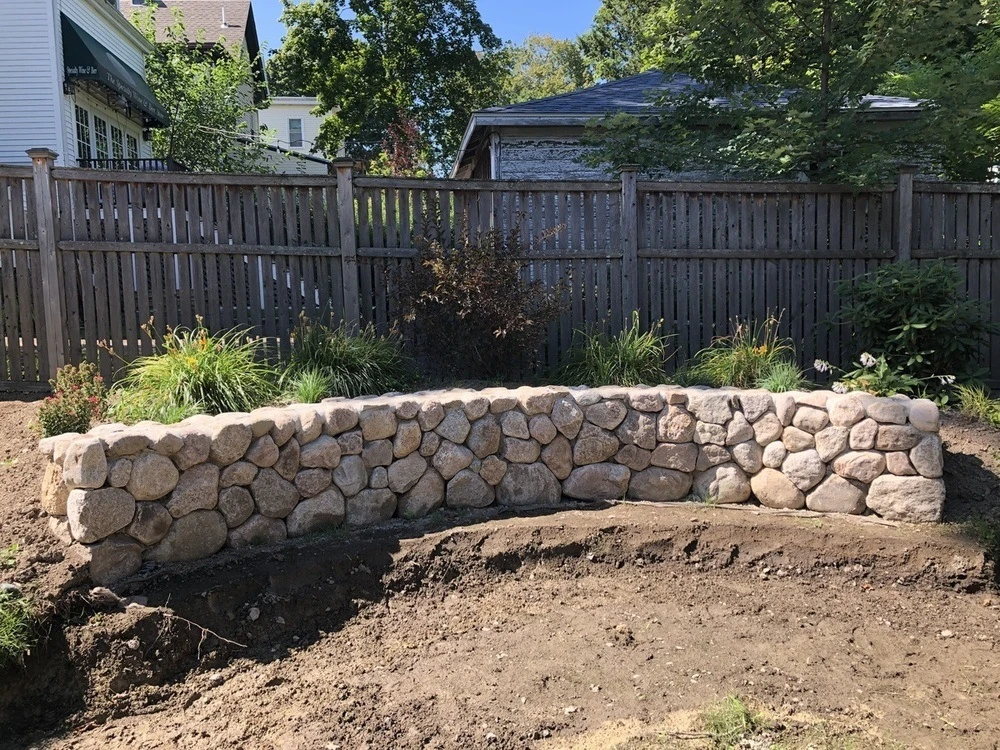
Techo-Bloc segmental wall systems combine engineered structural performance with a finished aesthetic that integrates naturally with patios, walkways, and plantings.
Where Poured Concrete Falls Short in Georgia
Poured concrete retaining walls have genuine structural strengths — particularly in commercial applications where engineering oversight and rebar placement are specified precisely. For residential applications in Georgia's specific conditions, however, poured concrete has predictable failure patterns. Control joints crack, and when they crack in the wrong place or under unexpected load, the wall bows or separates. Water that can't drain through the wall creates hydrostatic pressure that pushes the entire structure forward over time.
When a poured concrete wall fails, the repair options are limited: excavate and rebuild, or patch the crack and wait for the next failure. There's no equivalent to individual block replacement. For homeowners who invest $10,000 to $30,000 in a retaining wall system, that repair inflexibility is a meaningful risk in Georgia's demanding soil and climate conditions.
Segmental vs Poured Concrete- Segmental walls allow drainage through the system — poured concrete accumulates hydrostatic pressure
- Individual unit repair is possible with segmental walls — poured concrete requires patching or full reconstruction
- Batter angle geometry distributes soil load across the wall — monolithic concrete absorbs it at stress points
- Freeze-thaw cycling cracks monolithic concrete at control joints — segmental joints accommodate thermal movement naturally
- Techo-Bloc segmental systems provide aesthetic range that poured concrete cannot — multiple textures, colors, and cap systems
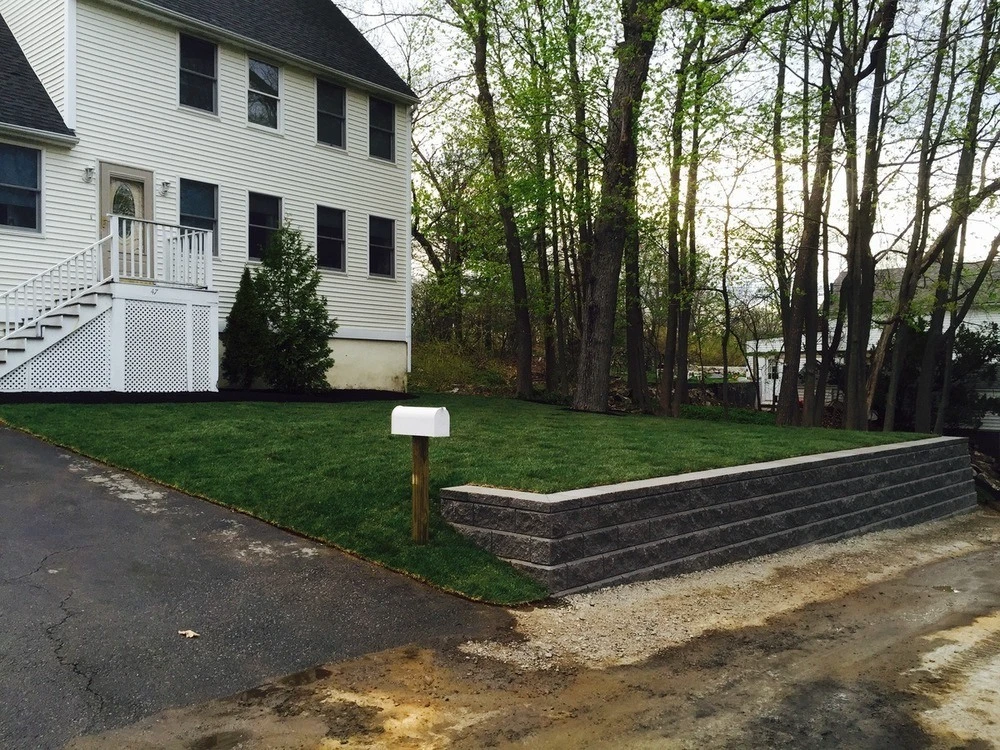
Timberstone Landscape builds segmental retaining walls to Techo-Bloc's system specifications — engineered for Georgia's clay soil, heavy rainfall, and seasonal temperature variation.
Why Timberstone Recommends Segmental Systems
After building retaining walls across Gwinnett, Forsyth, Barrow, and Jackson counties, owner Victor's position is simple: segmental systems are almost always the right choice for Georgia residential properties. The drainage design, the repair flexibility, the aesthetic options, and the structural performance under Georgia's specific conditions all favor segmental installation. Poured concrete walls make sense in specific commercial and structural contexts — not typically on residential lots with clay soil and annual rainfall of 50 inches or more.
Timberstone's Techo-Pro certification includes specific training on Techo-Bloc's wall system installation — base depth requirements, drainage specifications, grid reinforcement for taller walls, and cap unit selection. That knowledge produces walls that perform the way the engineering intends, rather than walls that look correct but fail because the installation details were shortcut.
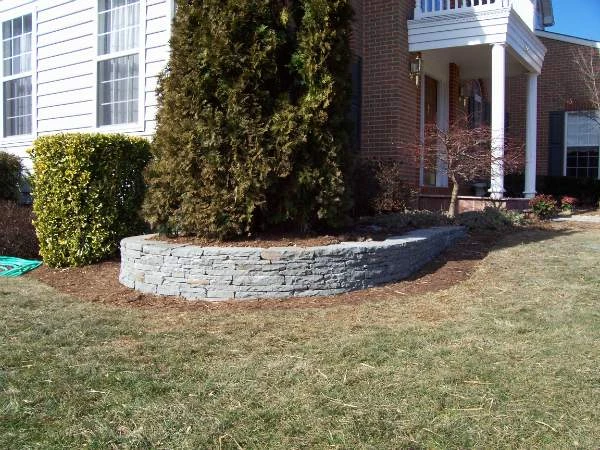
Timberstone Landscape serves homeowners across Gwinnett, Forsyth, Hall, Jackson, Barrow, and surrounding counties with engineered segmental retaining wall systems.
Retaining Walls Built for Georgia's Conditions
Timberstone Landscape builds segmental retaining walls that drain properly, hold their structure, and look exceptional for decades.
Get a Free EstimateServing Grayson, GA and surrounding Northeast Atlanta communities within 40 miles: