
How Gravity vs Anchored Retaining Walls Work — And Which Georgia Properties Need Each
Retaining walls are not one-size-fits-all structures. The same slope on two different Georgia properties may call for entirely different wall engineering depending on height, soil conditions, drainage characteristics, and what's being built on top of the retained area. Understanding the basic types — gravity walls and anchored (or reinforced) walls — helps homeowners ask better questions and evaluate contractor proposals with real knowledge.
Timberstone Landscape builds both gravity and reinforced segmental retaining wall systems across Gwinnett, Forsyth, Hall, and surrounding Northeast Atlanta counties as a Techo-Pro certified contractor. Here's how each type works, and what determines which one your property needs.
Gravity Walls — How Mass Resists Movement
A gravity wall relies on its own mass and base width to resist the lateral pressure of the retained soil. The physics are straightforward: the weight of the wall and its batter angle work against the soil's tendency to push the wall forward. Segmental gravity walls — like Techo-Bloc's Brussels and Suprema series — achieve this through stacked, interlocking units with a built-in setback that leans into the hillside.
Gravity walls are appropriate for most residential applications in Georgia when wall heights stay within three to four feet. Below that threshold, a well-built segmental gravity wall with proper drainage is structurally adequate for the soil pressures present — including Georgia's expansive clay and heavy rainfall. Above that threshold, the exponentially increasing soil pressure begins to exceed what gravity alone can reliably manage.
"The wall type is determined by the load conditions, not the aesthetic preference. A gravity wall that looks right but isn't engineered for the height and soil pressure will fail regardless of how well it's built."
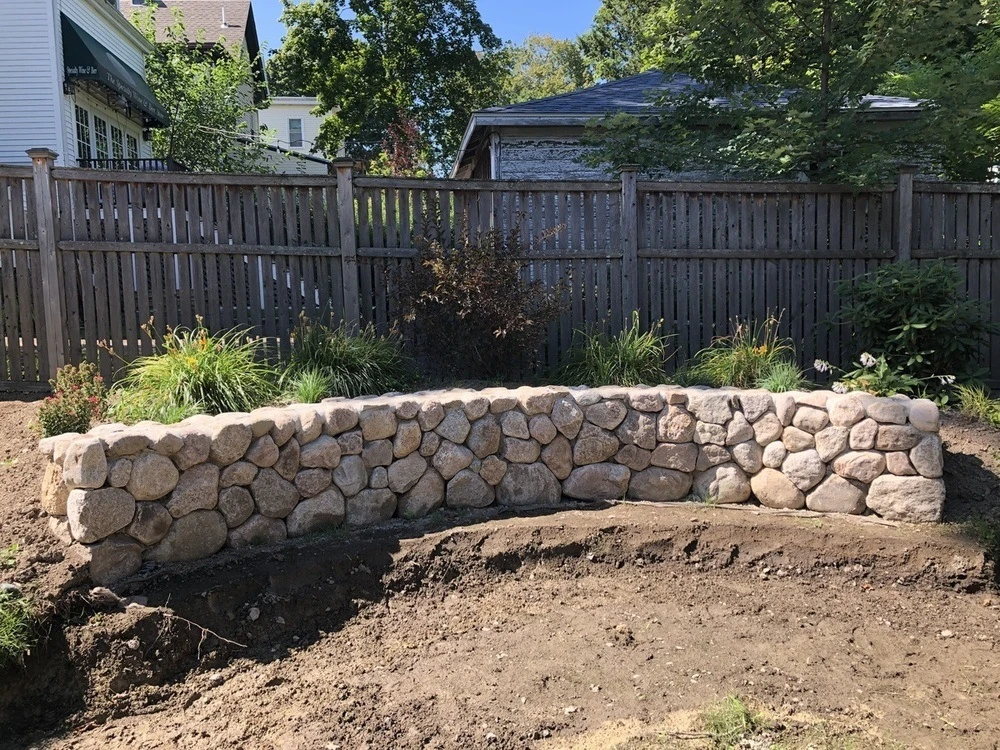
Techo-Bloc offers both gravity wall systems for standard residential applications and reinforced systems for taller walls and higher-load situations.
Anchored and Reinforced Walls — Extending the Height Limit
When wall height exceeds the gravity wall's reliable range — typically above four feet in Georgia conditions — geogrid reinforcement extends the system's structural capacity. Geogrid is a tensile mesh material placed in horizontal layers within the retained soil mass behind the wall face, extending back into the hillside at intervals determined by the wall design. The geogrid ties the wall face to the retained soil, converting the entire reinforced zone into a composite structure that resists lateral pressure across a much larger soil mass.
Techo-Pro installation training includes geogrid design specifications — how far back the grid must extend, the spacing between layers vertically, and the connection method to the wall units. These specifications aren't optional. Geogrid installed at incorrect depth, spacing, or extension length provides substantially less reinforcement than the design requires — a failure mode that doesn't announce itself until the wall is already moving.
Choosing the Right Wall Type- Gravity walls: appropriate for heights up to 3–4 feet with standard soil conditions and drainage
- Reinforced walls: required for heights above 4 feet, heavy surcharge loads (driveways, structures above the wall), or poor drainage conditions
- Tiered systems: use multiple gravity walls to manage grade changes that would require a single very tall reinforced wall
- Georgia clay soil: adds to the required specification — expansive soil generates higher lateral pressure than standard fill
- Techo-Pro certification: ensures geogrid specification, drainage design, and base prep match the wall's engineered requirements
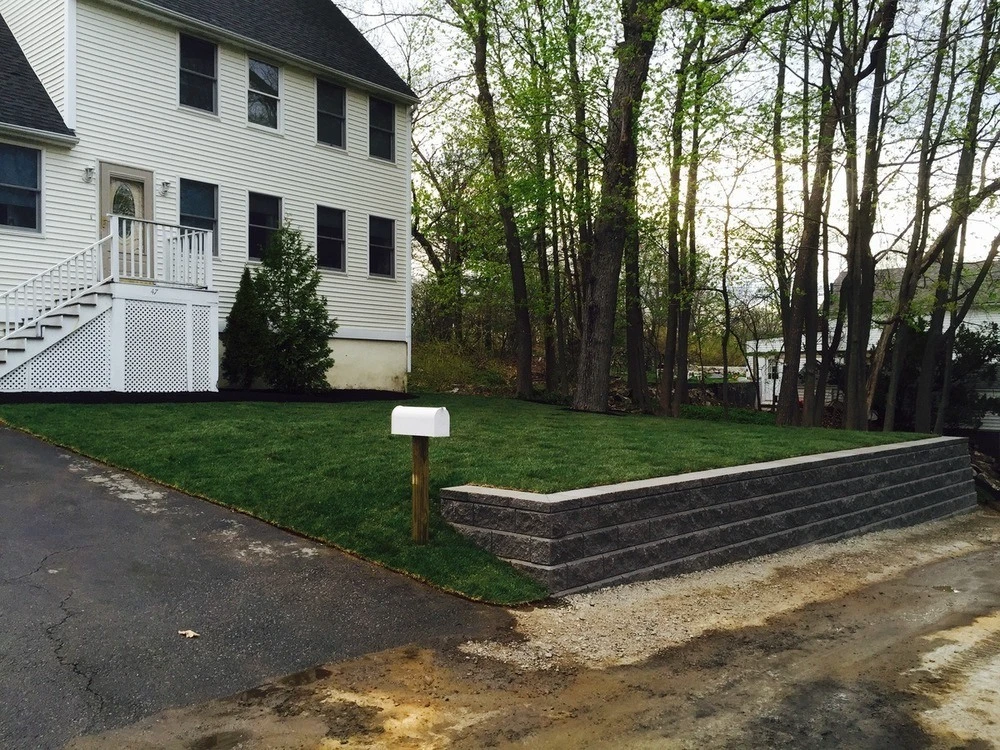
Timberstone Landscape's Techo-Pro certification covers both gravity and geogrid-reinforced wall systems — ensuring the right engineering approach for every project.
What Timberstone Recommends During Assessment
When Timberstone evaluates a retaining wall project, the wall type determination happens before any product discussion. We assess the height, evaluate the soil conditions, identify drainage patterns, and determine whether there are structures or high-load areas above the retained zone — driveways, patios, or outbuildings that add surcharge pressure to the wall. That assessment drives the engineering approach, which then drives the product selection.
For most Georgia residential properties in the three- to four-foot range, a well-built Techo-Bloc gravity wall with proper drainage handles the conditions completely. For taller walls, steeper slopes, or surcharge-loaded situations — which are common on properties in Cumming, Braselton, Canton, and the hillier communities around Northeast Atlanta — reinforced systems are the only responsible choice. We always tell clients which they actually need, not just which one they might prefer based on cost alone.
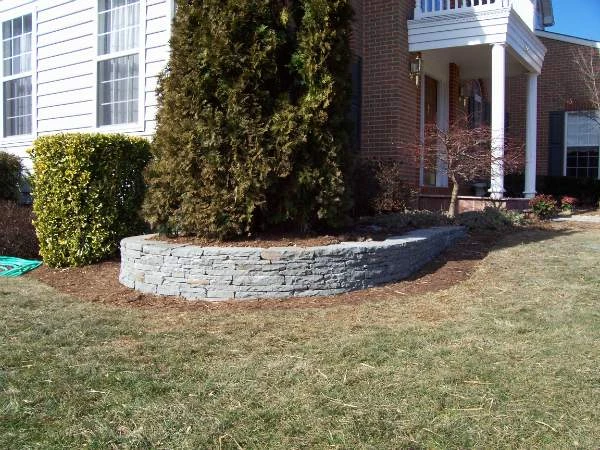
Timberstone Landscape serves homeowners across Gwinnett, Forsyth, Hall, Jackson, and surrounding Northeast Atlanta counties with engineered retaining wall systems.
Get the Right Retaining Wall for Your Georgia Property
Timberstone Landscape assesses your slope conditions and recommends the engineered wall system that's built for long-term performance.
Get a Free EstimateServing Grayson, GA and surrounding Northeast Atlanta communities within 40 miles: