
How to Light a Paver Patio the Right Way — The Technique Most Landscape Lighting Gets Wrong
A paver patio is one of the most technically interesting surfaces to light well — and one of the most commonly lit poorly. The texture, the joint pattern, the material color variation, the border definition — all of these qualities that make an architectural paver patio visually compelling during the day are qualities that poorly placed lighting completely erases at night. Getting patio lighting right is a placement and angle problem before it's a fixture selection problem.
Most patio lighting installations make the same fundamental error: they light the patio from above and from the perimeter, creating flat, even illumination that tells you where the patio is but nothing about what it looks like. The paver pattern disappears under flat downlighting. The border course loses definition. The texture that took significant material investment to achieve reads as flat grey under overhead flood coverage. The technique that actually works is the opposite — low-angle grazing light that rakes across the surface and makes the texture visible.
The TechniqueGrazing Light — Why Angle Changes Everything on a Paver Surface
Grazing light works by placing fixtures close to and low on the paver surface — typically along the patio border or integrated into retaining wall faces adjacent to the patio — and directing light at a shallow angle across the surface. The shallow angle creates shadow in the recessed joints between pavers and highlights the raised surface of each unit. The result is dramatically different from overhead lighting: the patio reads as a textured, dimensional surface rather than a flat plane.
The specific effect depends on paver profile. A tumbled paver with significant surface variation creates strong shadow contrast under grazing light. A smooth-faced contemporary paver creates a more subtle but still striking texture reveal. Techo-Bloc's Blu 60mm and Raffinato collections are particularly well-suited for grazing light because of their clean but slightly varied face profiles — they read beautifully at low angle in a way that looks intentional rather than accidental. This is a material-lighting interaction that's worth understanding before both decisions are made, because they're most powerful when chosen to work together.
"Flat downlighting erases everything that makes a paver patio interesting. Low-angle grazing light reveals all of it."
Border Lighting and Step Integration — The Details That Define the Space
Patio border courses are a natural location for lighting integration — either as in-paver LED lights set flush in the outer border course, or as low-profile fixtures positioned just beyond the border edge aimed inward. In-paver LED fixtures from manufacturers like Techo-Bloc's Illuma series are designed specifically for this application — they're set into the paver bed during installation, wired to a low-voltage transformer, and create a defined luminous edge that frames the patio geometry without fixtures visible above the surface. This is the cleanest approach from a visual integration standpoint and has no above-surface fixture to catch lawn mowers or foot traffic.
Step risers are the other critical lighting location on a patio with grade change. Riser-integrated step lights — flush-mounted fixtures in the vertical face of each step — illuminate the tread below without creating glare for users approaching from above or below. They define the step geometry clearly, prevent trip hazards, and add architectural dimensionality to the grade transition that significantly improves both safety and visual quality after dark. These need to be planned during patio design — they cannot be added cleanly after installation without partial demolition of the step assembly.
- Grazing light from low-angle fixtures: reveals paver texture and joint pattern that downlighting erases
- In-paver LED border lights: cleanest integration — set flush during installation, no above-surface fixtures
- Step riser lights: safety requirement and architectural detail — plan during patio design, not after
- Color temperature 2700K–3000K for paver surfaces: warm white enhances the natural stone and concrete tone
- Fixture placement should be planned with patio installation — retroactive lighting always involves compromise
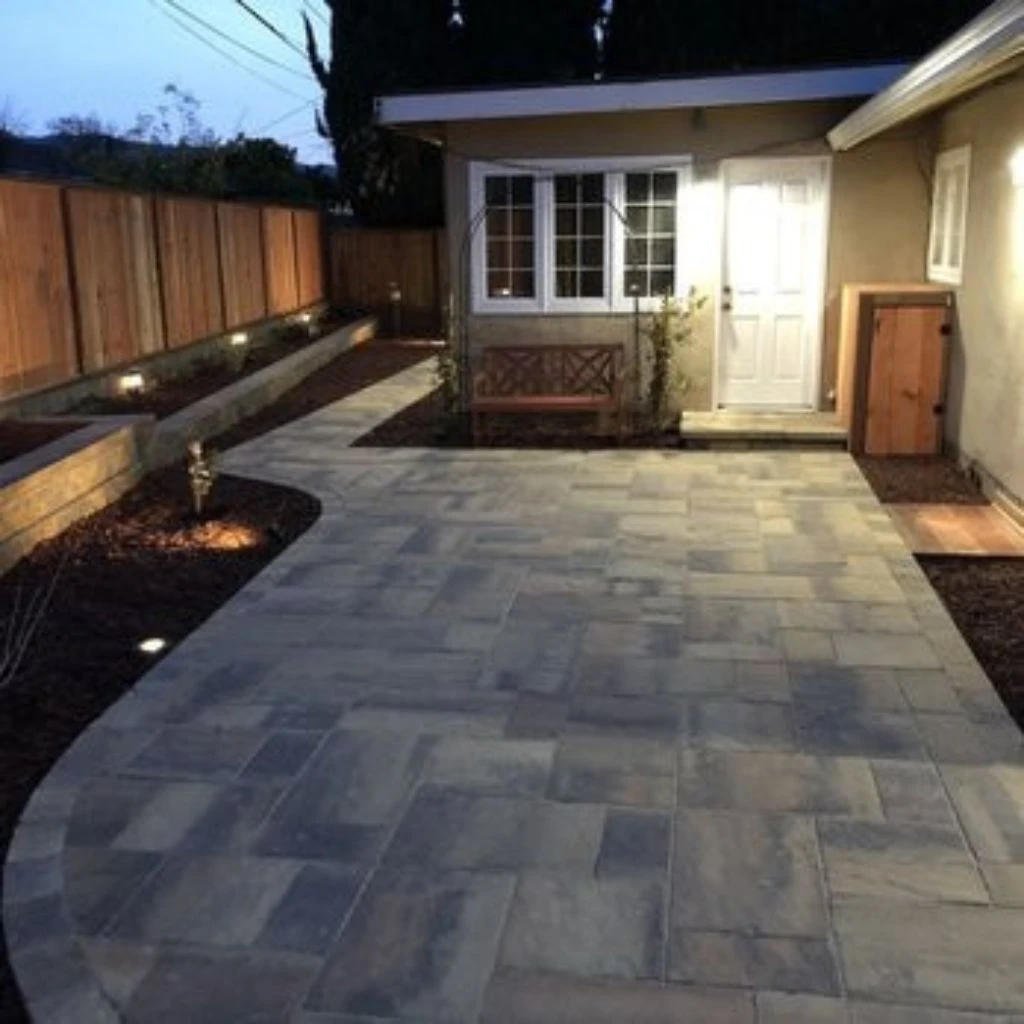
Timberstone integrates patio lighting into the hardscape design — placement, fixture grade, and conduit routing planned before the first base layer is compacted.
Planning Lighting With the Patio — Not After It
The most important structural point about patio lighting: conduit routing has to happen during base preparation, before the paver surface is set. Every low-voltage wire run needs to pass through a protective conduit sleeve under the patio to reach the fixture locations. Installing lighting after patio completion means lifting pavers, cutting channels, running conduit, and re-bedding the affected area — all of which disturbs the joint sand and creates visible seams in the surface if not done carefully. Every patio we build at Timberstone Landscape includes conduit routing for anticipated lighting locations as a standard part of base prep, because the cost of doing it at installation is minimal and the cost of retroactive installation is significant.
Timberstone Landscape is based in Grayson, Georgia, and we install paver patios and outdoor lighting systems across the Northeast Atlanta region — Gwinnett, Forsyth, Fulton, Hall, and surrounding counties. As a Techo-Bloc Preferred Contractor, we have direct access to Techo-Bloc's Illuma lighting line and their full paver product range, so material and lighting can be specified together. See our outdoor lighting page or our hardscaping services.
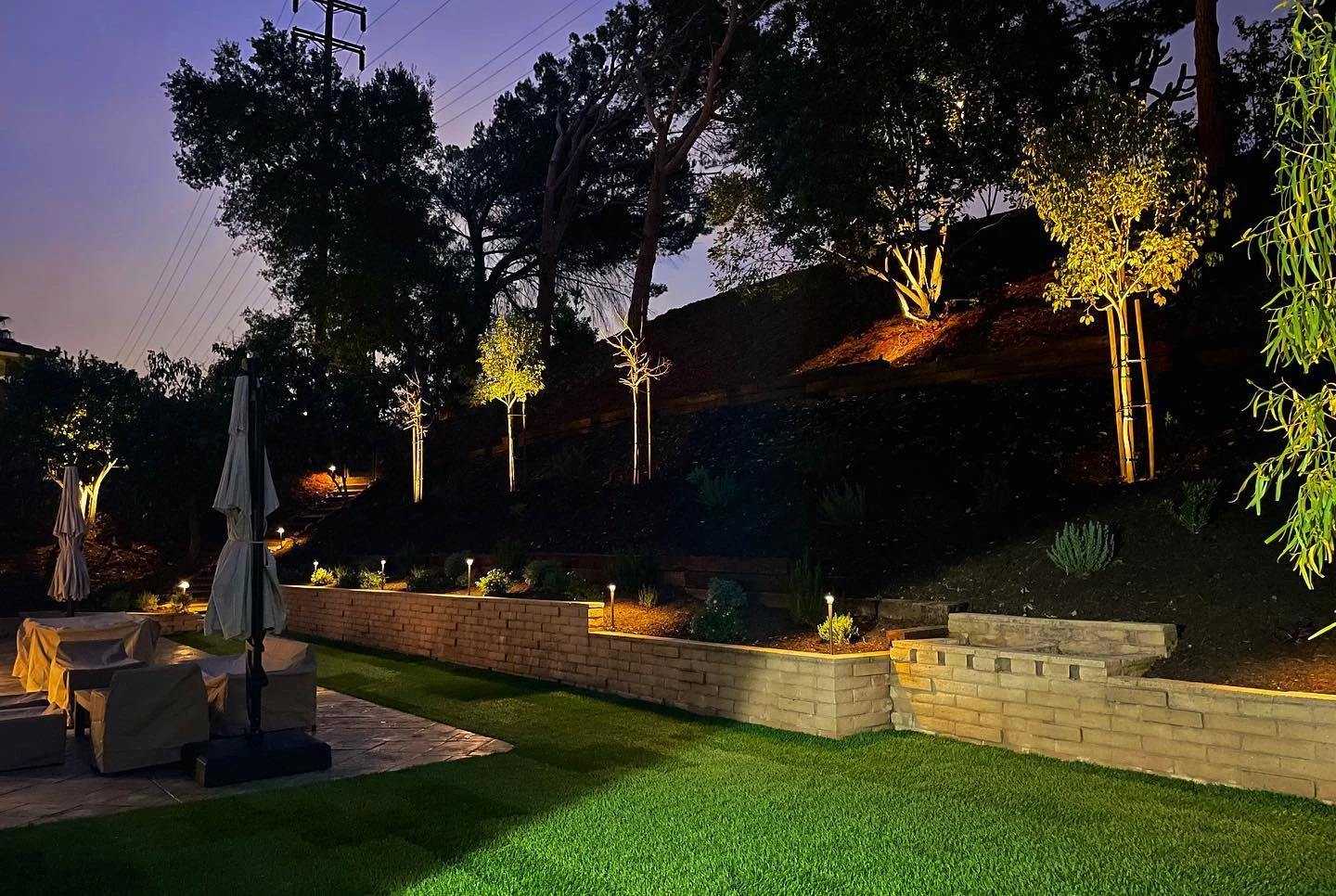
Patio lighting planned at the design stage — conduit, placement, and fixture grade specified before the base is poured.
Paver Patio Lighting Done Right — Not Just Done
Free lighting consultations. We show you the placement and fixture approach most installs get wrong — before you commit to fixtures.
Request a Free ConsultationTimberstone Landscape is based in Grayson, Georgia and serves the greater Northeast Atlanta region within 40 miles: