
Fencing Options for Georgia Homeowners — What Wood, Vinyl, and Aluminum Actually Do at Five Years
Every fencing material looks acceptable at installation. The conversation worth having is what each one looks like at five years in Georgia's climate — and what it costs to get there. Georgia's humidity, UV intensity, and clay soil conditions create a testing environment that reveals material quality more clearly than any product brochure. The decisions homeowners make based on installation-day appearance frequently require replacement or significant maintenance expense by the time the warranty period expires.
The three materials that dominate Georgia residential fencing — wood, vinyl, and aluminum — each have a genuinely different value proposition, and each performs differently in the specific conditions of Georgia's Piedmont region. The right choice depends on your application (privacy, perimeter, decorative), your maintenance tolerance, your aesthetic requirements, and the proximity of the fence to ground moisture. Understanding what each material actually delivers long-term is the only honest way to make the decision.
Material by MaterialWood Fencing in Georgia — The Honest Five-Year Assessment
Pressure-treated wood is the most commonly installed fencing material in Georgia for a simple reason: it's the least expensive option at the point of installation. At five years in Georgia's climate, a pressure-treated wood fence without consistent sealing and maintenance shows graying, checking, and board splitting in the upper grain where UV exposure is highest, and often rot at the ground contact points where the post meets the clay soil. Georgia's wet/dry cycle — wet spring and summer, dry late summer, wet fall — accelerates moisture cycling in wood posts in ways that accelerate post failure even on pressure-treated material.
Cedar performs better than pressure-treated pine in Georgia's humidity because of its natural oil content — it resists moisture absorption more effectively and weathers more gracefully to a silver-grey if left unsealed. Cedar at five years without sealing looks intentionally weathered. Pressure-treated at five years without sealing looks neglected. If the wood aesthetic is the objective and maintenance is a realistic commitment, cedar is the correct wood choice for Georgia. If the objective is lowest upfront cost with minimal maintenance, wood of any species is not the honest answer — it's the answer that defers cost rather than reduces it.
"The cheapest fence in Georgia isn't the one with the lowest installation quote — it's the one that doesn't require replacement or significant maintenance by year seven."
Vinyl and Aluminum — Where Each Makes the Better Argument
Vinyl fencing eliminated Georgia wood fencing's primary maintenance demand — periodic painting and sealing — but introduced its own climate-specific performance variables. Standard white vinyl in Georgia fades and chalks under the UV load of a full Southern exposure within three to five years. Premium co-extruded vinyl with UV inhibitors performs significantly better but costs proportionally more. The practical difference between budget vinyl and premium vinyl is invisible at installation and significant at year four. In full-sun western exposures on Georgia properties — which describes most rear yards — UV degradation is the determining variable in vinyl performance, and material grade is the determining variable in UV degradation resistance.
Aluminum fencing is the correct choice for decorative and perimeter applications in Georgia where the objective is a clean, architectural look without a wood aesthetic. Powder-coated aluminum does not rust, does not warp, does not require sealing or painting, and holds its appearance through Georgia's full climate cycle essentially indefinitely if the coating was applied correctly at manufacture. For pool enclosures, formal garden borders, and decorative front yard applications, aluminum is the most maintenance-free option available. Its limitation is privacy: standard aluminum fence panels have gaps that provide visibility and don't serve as visual screens. For privacy applications, vinyl or wood remains the relevant category.
- Pressure-treated wood: lowest upfront cost, highest maintenance requirement in Georgia — plan for sealing every 1–2 years
- Cedar: better UV and moisture performance than pine, ages gracefully if unsealed, correct wood choice for Georgia
- Budget vinyl: fades and chalks in Georgia full-sun exposures by year 3–4 — UV inhibitor grade matters
- Premium co-extruded vinyl: performs well in Georgia, minimal maintenance, correct vinyl choice for longevity
- Powder-coated aluminum: most maintenance-free option in Georgia — correct for decorative and perimeter applications
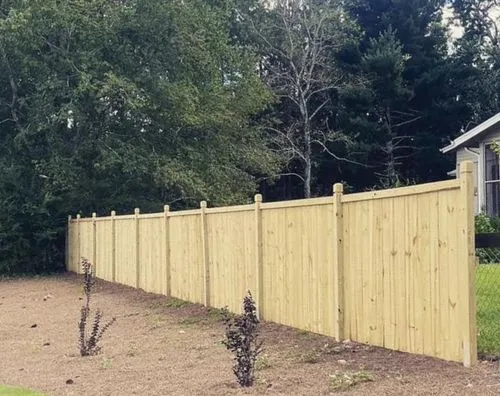
Timberstone specifies fencing materials for Georgia's climate — with a five-year performance conversation before the installation-day decision is made.
Post Installation and Grade — The Details That Determine Fence Lifespan
Regardless of fence material, post depth and setting method determine structural lifespan more than any other installation variable. On Georgia's clay soil, posts set too shallow lift and shift as the clay expands and contracts seasonally. Standard residential fencing post depth requirements — typically 1/3 of the post height plus 6 inches — are minimum specifications, not optimal ones, on clay-heavy Georgia lots. Posts on sloped properties need additional depth and sometimes concrete collar reinforcement to resist the lateral forces that slope drainage creates over time.
At Timberstone Landscape, based in Grayson, we install fencing across the Northeast Atlanta region with post depth and setting specifications appropriate for Georgia's soil conditions — not the minimum that clears inspection. We serve Gwinnett, Forsyth, Hall, Fulton, and surrounding counties. See our fencing installation page or our hardscaping services to understand how fencing integrates with the full outdoor project.
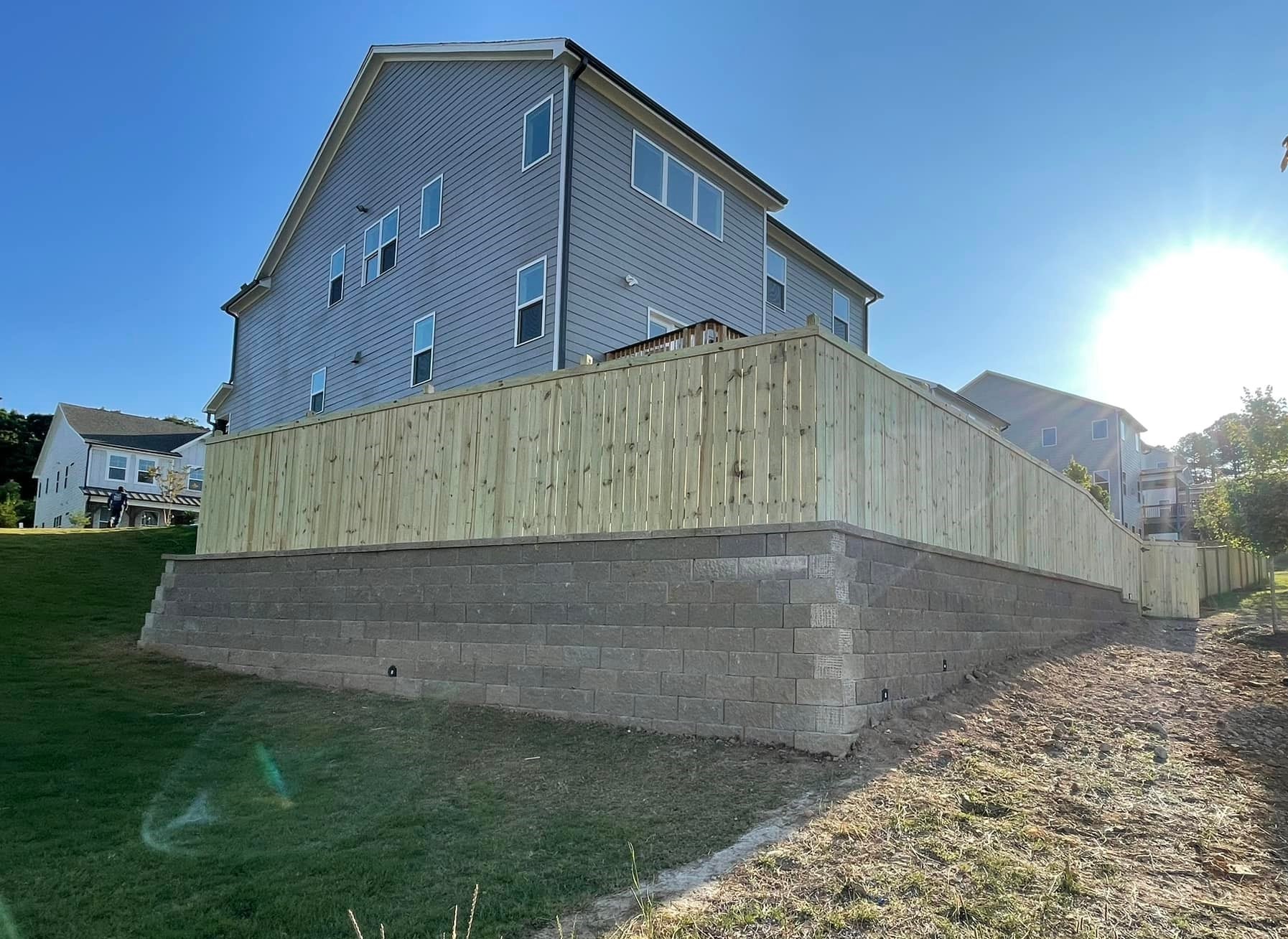
Timberstone installs fencing that holds its appearance and structure through Georgia's climate — specified for the five-year look, not just the installation-day photo.
Fencing That Still Looks Right at Five Years — Georgia
Free fencing consultations. We show you what each material does — and how each one ages in Georgia's climate.
Request a Free ConsultationTimberstone Landscape is based in Grayson, Georgia and serves the greater Northeast Atlanta region within 40 miles: